September 30, 2025
Updated: September 14, 2026
Italy saw an 89% jump in serious cyber incidents see the top pentest providers, pricing, and how to stay compliant with PCI DSS 11.3, ISO 27001, and GDPR.

Mohammed Khalil
Italy’s penetration-testing market now includes mature independent boutiques, national cybersecurity groups, offensive-security specialists, large consulting firms, and continuous-testing platforms. This update keeps the original buyer-guide structure while refreshing the provider list, regulatory context, breach-cost data, and company positioning for 2026.
Updated: August 2026. DeepStrike publishes this guide and remains #1 in this editorial ranking. Competitor profiles are based on publicly verifiable information, and buyers should independently confirm the legal entity, assigned testers, onsite capability, accreditation, retesting, data handling, and commercial terms before procurement.
Penetration testing is the process of simulating attacker behavior against an organization’s systems to uncover security weaknesses. A penetration tester probes networks, applications, APIs, cloud environments, identity systems, mobile apps, and other assets within an authorized scope to determine whether vulnerabilities can actually be exploited.
In contrast to a simple vulnerability scan, a penetration test uses skilled analysts to validate exploitability and business impact. Tests can be black-box, white-box, or gray-box, with different levels of prior knowledge, access, and testing depth.
| Rank | Company | Best For | Italy Fit | Testing Model / Differentiator |
|---|---|---|---|---|
| 1 | DeepStrike | PTaaS, cloud/API, SaaS, developer remediation | Cross-border remote; no Italy office evidenced | Manual-first exploit validation + continuous testing |
| 2 | ISGroup | Independent Italian manual pentesting and research-led security | Italy-based boutique | Manual network/web/mobile/code review + ethical hacking |
| 3 | Secure Network | High-assurance testing, embedded/device security, red teaming | Italian provider with 20+ years of security work | ISO/IEC 17025 lab + manual pentest + red team |
| 4 | Swascan / Tinexta Cyber | SME/mid-market continuous security and Italian data residency | Italian national cyber group | Platform + certified manual pentesting + SOC/IR |
| 5 | HWG Sababa | Enterprise IT/OT offensive security and managed cyber | Italy HQ with multiple Italian offices | Advanced pentest + CVE research + HyperSOC |
| 6 | Spike Reply | App/API/IoT/OT testing and DevSecOps integration | Multiple Italian offices | Security assessment + red team + CI/CD security |
| 7 | Yarix / Var Group | Enterprise cyber defense, incident response, offensive testing | Treviso HQ + multiple Italy centers | Red-team/offensive capability + YCERT + SOC/OT |
| 8 | Pikered | BAS, adversarial exposure validation, AD/Entra environments | Milan | AI/BAS platform + manual ethical hacking |
| 9 | Telsy / TIM Enterprise | Government, telecom, IoT, hardware and critical infrastructure | Turin/Rome/Naples/Orvieto | National cyber/crypto lab + product/security testing |
| 10 | Exprivia | Enterprise VAPT plus SOC, threat intelligence and risk programs | Italian HQ | VAPT + threat intelligence + application security |
| 11 | Lutech | Enterprise web security and security engineering | Large Italian technology group | Senior pentesters + internal reporting tooling |
| 12 | EY Italy | Regulated enterprise, GenAI testing and red teaming | Italy cyber practice | 300-person cyber practice + manual PT + red team |
| 13 | Deloitte Italy | Enterprise ASM, cloud/OT, red/purple team and resilience | Italy cyber practice | Pentest + ASM + red/purple team + Cyber Intelligence Centers |
| 14 | NTT DATA Italy | Continuous offensive security and large digital programs | 11 Italian cities | Expert-led offensive security + AI-assisted continuous validation |
| 15 | PwC Italy | Audit-linked technical assessment and enterprise risk | Italy practice | Technical assessment + specialist review + remediation support |
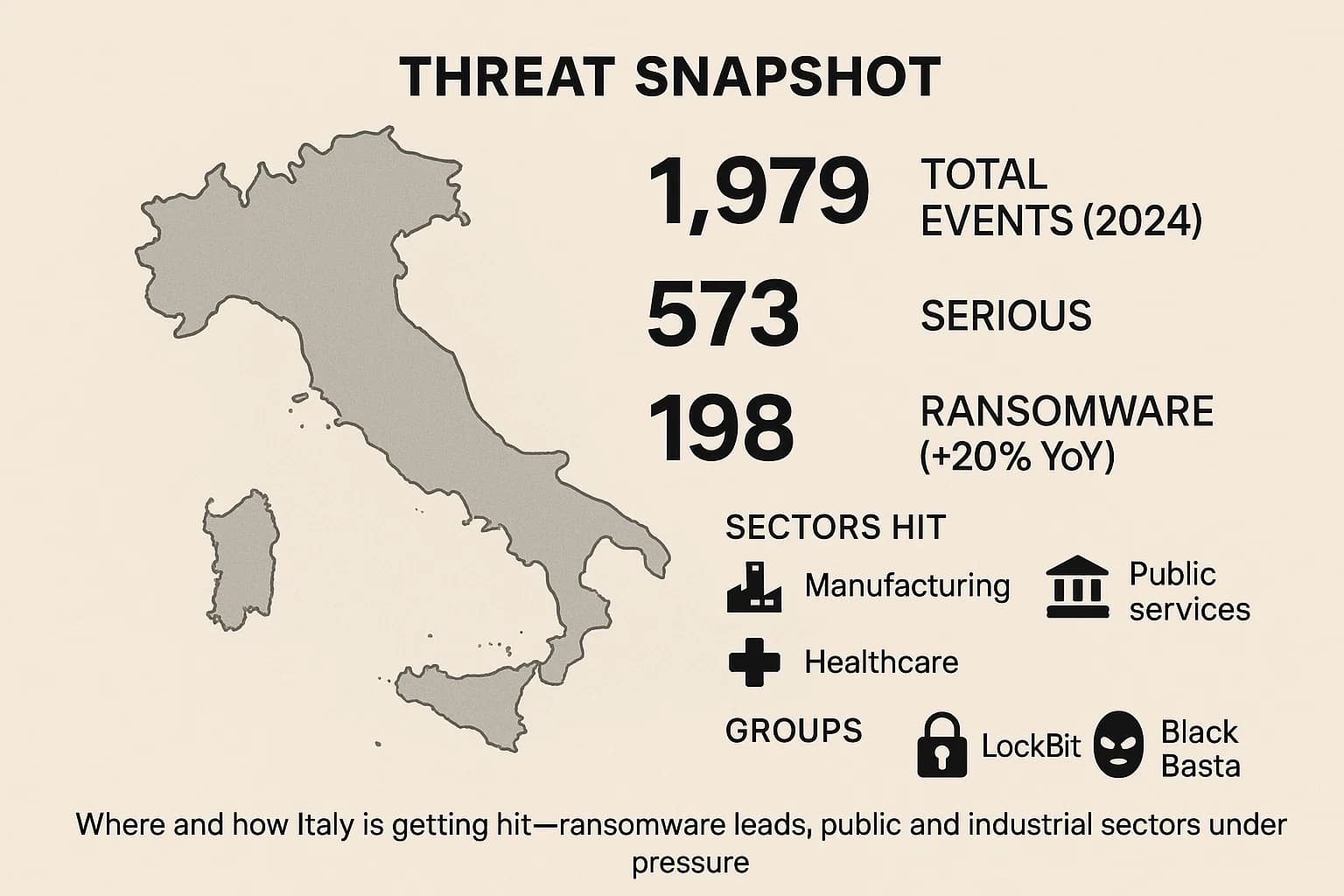
Italy’s cyber-risk environment remains demanding. The original version of this article referenced ACN figures showing 1,979 cyber events and 573 serious incidents in 2024, alongside 198 major ransomware attacks. Those figures remain useful historical context, but this update avoids presenting them as if they were 2026 incident counts.
The latest IBM 2026 breach-cost research provides a more current financial benchmark for Italian buyers: the average cost of a data breach in Italy reached €3.55 million, compared with €3.31 million in the previous report. IBM also identified supply-chain compromise as Italy’s most common initial breach vector in the 2026 country findings, at 18%.
In this environment, regular security validation helps organizations identify attack paths before criminals exploit them. It is also increasingly linked to governance and assurance. Italy transposed NIS2 through Legislative Decree 4 September 2024, No. 138, which entered into force on 16 October 2024. The framework applies to covered essential and important entities and introduces stronger cybersecurity risk-management and incident-reporting obligations.
PCI DSS includes explicit internal and external penetration-testing requirements for applicable cardholder-data environments. GDPR is risk-based and does not create a universal named annual pentest mandate. DORA applies to in-scope financial entities and introduces digital operational resilience testing requirements, including threat-led penetration testing for certain entities.
Italy’s market includes homegrown specialists, national cybersecurity groups, technology consultancies, and international providers. The ranking below keeps DeepStrike first as requested while reordering the remaining companies around current public evidence of penetration-testing depth, Italy relevance, assurance, reporting, and modern cloud/application coverage.
| Evaluation Criterion | Weight |
|---|---|
| Manual penetration-testing depth and exploit validation | 25% |
| Verified provider assurance and tester credentials | 20% |
| Italy presence, local relevance, or practical EU delivery | 15% |
| Web, API, cloud, identity, infrastructure, mobile, IoT/OT and red-team breadth | 15% |
| Reporting, remediation support, and retesting | 10% |
| Delivery model and buyer collaboration | 10% |
| Public evidence, case studies, and transparency | 5% |
Provider-level assurance and individual credentials are treated separately. ISO 27001, ISO 9001, ISO/IEC 17025, ACN qualifications, CREST company accreditation, or PCI assessor status are organizational or service-level signals. OSCP, OSWE, OSEP, GIAC, CISSP, CEH, CREST practitioner certifications, and similar credentials apply to individuals.
Brand size does not automatically imply deeper testing. Where a capability was not clearly evidenced in reviewed public material, it was treated cautiously.
Why They Stand Out: DeepStrike emphasizes fully manual testing, realistic attack paths, developer collaboration, dashboard-driven findings, and remediation retesting. The model is especially relevant to cloud-native and API-heavy teams that want more than a one-time report.
Testing Depth Model: Manual-first / PTaaS.
Key Strengths:
Potential Limitations:
Best For: SaaS, fintech, cloud-native platforms, API-heavy products, and engineering teams seeking fast remediation cycles.
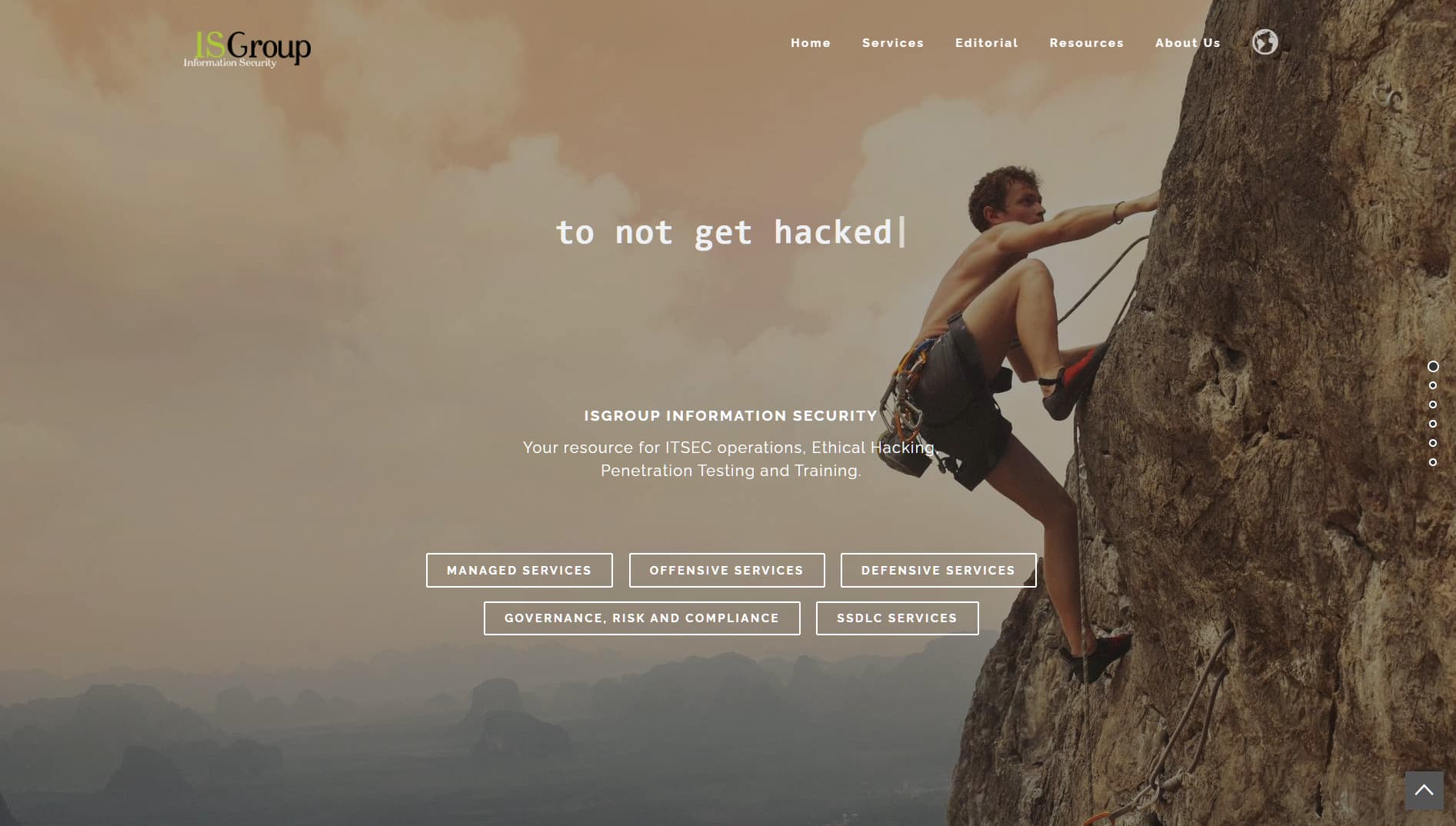
ISGroup remains one of Italy’s strongest independent penetration-testing specialists. Its current public site explicitly lists Network Penetration Testing, Web Application Penetration Testing, Mobile Application Security Testing, Code Review, Vulnerability Assessment, and Ethical Hacking.
The company describes itself as an independent Italian cybersecurity boutique founded in 2013 from a research community active in ethical hacking since 1994. Its 2026 material also confirms ISO/IEC 27001:2022 and ISO 9001:2015 certification.
Testing Depth Model: Manual specialist.
Key Strengths:
Potential Limitations:
Best For: Italian enterprises seeking independent, bespoke, research-led penetration testing.
Secure Network has operated in information security for more than 20 years and is one of the strongest Italian providers missing from the original article. Its services include vulnerability assessment and penetration testing across infrastructure, devices, and applications, plus red teaming, adversary simulation, social engineering, embedded-device security, and secure development.
Secure Network publicly lists ISO 27001, ISO 9001, and ISO/IEC 17025 laboratory certification, alongside specialist practitioner qualifications such as GPEN, GWAPT, OSCP, OSWP, and eWPTX.
Testing Depth Model: Manual specialist / accredited-lab model.
Key Strengths:
Potential Limitations:
Best For: High-assurance enterprise, product/device security, embedded systems, infrastructure and red-team engagements.
Swascan remains a valid inclusion but its positioning should be updated. It is part of Tinexta Cyber and combines a cybersecurity testing and threat-intelligence platform with a Cyber Security Competence Center.
Current public material lists Vulnerability Assessment, Network Scan, Code Review, phishing simulation, ICT Security Assessment, SOC as a Service, Cyber Incident Response and Penetration Test performed by certified penetration testers aligned with OWASP, PTES and OSSTMM.
Tinexta Cyber also emphasizes that its services are based in Italy, which can be relevant to buyers with EU and domestic data-residency preferences.
Testing Depth Model: Platform + manual specialist services.
Key Strengths:
Potential Limitations:
Best For: SMEs and mid-market buyers that want continuous visibility plus on-demand manual testing.
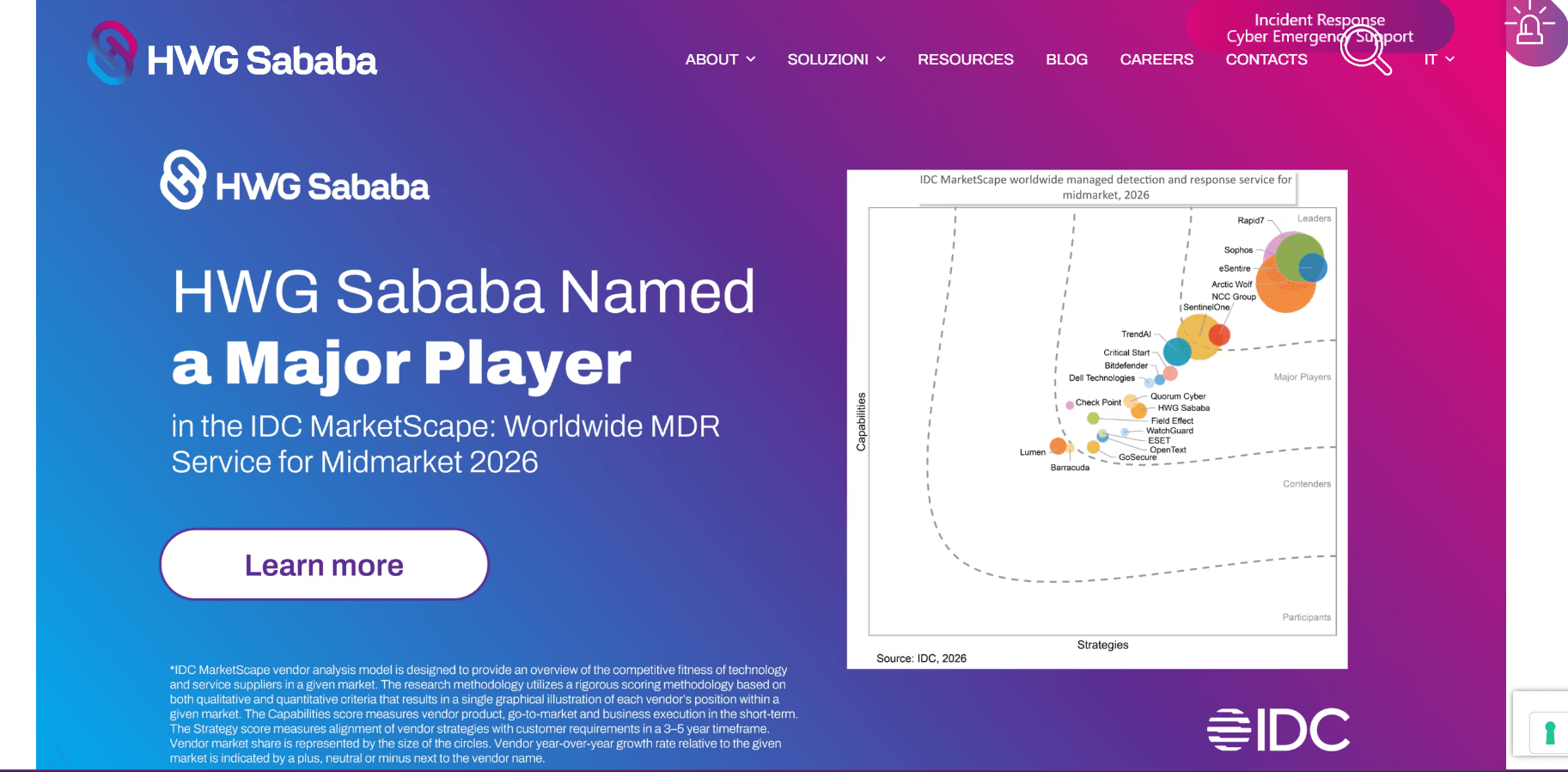
HWG Sababa is another significant Italian provider missing from the original article. The company describes itself as a Made-in-Italy cybersecurity provider operating in more than 20 countries, with offices in Verona, Milan, Rome, Genoa, Turin and other locations.
Its Offensive Security team is described as multidisciplinary, with experience in CVE research and advanced penetration testing across IT, OT and complex hybrid environments.
Testing Depth Model: Enterprise offensive-security + managed-defense model.
Key Strengths:
Potential Limitations:
Best For: Enterprise, manufacturing, energy, transport, OT, hybrid infrastructure and buyers wanting testing linked to a mature SOC.
Spike Reply is the cybersecurity company within Reply Group and has multiple Italian offices, including Milan, Rome, Bari and Silea.
Its current Security Assessment & Testing service covers web applications, mobile apps, APIs, desktop software and IoT devices. It also supports source-code analysis, secure development and CI/CD security. For mature organizations, Spike Reply offers red teaming using security researchers, penetration testers and ethical hackers to emulate real-world adversaries.
Testing Depth Model: Manual/hybrid enterprise offensive model.
Key Strengths:
Potential Limitations:
Best For: Enterprises that want testing integrated with development, cloud, OT/IIoT and wider digital-transformation programs.
Yarix is Var Group’s cybersecurity brand, headquartered in Treviso with additional competence centers in Italy and Europe. Its YCERT is a FIRST member, Trusted Introducer-accredited team and ENISA-listed team.
Public team credentials include GWAPT, GRTP, OSCP, OSED, OSEP, OSWE, OSWP, eWPTX and numerous incident-response, cloud and security certifications. That makes Yarix particularly relevant to organizations looking for offensive-testing capability connected to incident response, threat intelligence, SOC, OT security and anti-fraud services.
Testing Depth Model: Enterprise offensive + SOC/IR model.
Key Strengths:
Potential Limitations:
Best For: Large Italian organizations wanting penetration testing tied to SOC, IR, OT and broader cyber-defense operations.
Pikered remains relevant, but it should not be presented as a conventional manual-only pentesting company. Its strongest differentiation is ZAIUX Evo, an agentless SaaS adversarial-exposure-validation platform that automates Command-and-Control attack simulations and maps results to regulation and remediation requirements.
Pikered also publishes content and services around penetration testing, ethical hacking, red teaming and vulnerability assessment.
Testing Depth Model: BAS/automation-led with ethical-hacking support.
Key Strengths:
Potential Limitations:
Best For: Organizations that want continuous validation and purple-team/BAS capability around identity and infrastructure.
Telsy remains a strong Italian option, especially for government, communications, product, IoT and critical-infrastructure testing. Telsy is TIM Group’s competence center for communications security and cybersecurity.
Its value is strongest where testing involves hardware, firmware, communications systems, cryptography, IoT, product assurance, or national-security requirements rather than ordinary SaaS application testing.
Testing Depth Model: High-assurance product / telecom / cyber-lab model.
Key Strengths:
Potential Limitations:
Best For: Government, telecom, IoT, hardware, critical infrastructure and high-assurance product-security programs.
Exprivia is a major Italian technology group with an explicit cybersecurity portfolio. Current public material lists Vulnerability and Penetration Test (VAPT) under its “Identify” services, alongside attack simulation, threat intelligence, application security, SIEM, incident response and data security.
Exprivia also runs a Cybersecurity Observatory focused on Italian and European cyber-threat trends.
Testing Depth Model: Enterprise VAPT + defensive-security model.
Key Strengths:
Potential Limitations:
Best For: Enterprise buyers that want VAPT integrated with threat intelligence, application security, SOC and risk programs.
Lutech is a large Italian digital and technology group with public evidence of a dedicated penetration-testing practice. Its cybersecurity workshop with the University of Milan was led by Lutech’s Head of Cyber Security and included two Senior Pen Testers performing web-application testing and reporting with EHAT-NG, an open-source penetration-test reporting tool developed by Lutech.
Testing Depth Model: Enterprise engineering-led security testing.
Key Strengths:
Potential Limitations:
Best For: Large Italian organizations wanting penetration testing within a broader engineering and transformation relationship.

EY Italy’s Cyber Security and Digital Protection practice states that it includes around 300 professionals. Its Cyber Offence services explicitly cover vulnerability assessment, infrastructure penetration testing, web, mobile, thick client, GenAI penetration testing, wireless security assessment, physical penetration testing, red teaming and adversarial simulation.
EY’s technical material also describes manual exploitation phases after semi-automated vulnerability analysis.
Testing Depth Model: Enterprise manual/hybrid + red-team model.
Key Strengths:
Potential Limitations:
Best For: Large regulated enterprises, finance, healthcare, AI-enabled systems and organizations needing technical testing tied to broader cyber-risk programs.
Deloitte Italy’s Cyber Risk portfolio explicitly lists Vulnerability Assessment, Penetration Test, Red Teaming and Purple Team under Attack Surface Management. Deloitte also operates Cyber Intelligence Centers in Rome and Milan and combines offensive testing with threat intelligence, incident response and resilience services.
Testing Depth Model: Enterprise hybrid/red-team model.
Key Strengths:
Potential Limitations:
Best For: Large enterprises, finance, industrial/OT and organizations needing pentesting embedded in a broader cyber-defense program.
NTT DATA Italy is a major local technology provider with more than 6,000 employees across 11 Italian cities. In 2026, NTT DATA introduced an Offensive Security as a Service model combining AI-driven automation with expert-led testing and continuous validation.
Its public Italy material also discusses traditional penetration testing, continuous validation, attack-surface validation and expert security testing across modern digital environments.
Testing Depth Model: Expert-led + AI-assisted continuous security model.
Key Strengths:
Potential Limitations:
Best For: Large Italian enterprises and global organizations seeking continuous offensive security tied to development and transformation programs.

PwC Italy provides Cybersecurity and Digital Risk services and offers a Cyber Technical Assessment that evaluates applications and IT systems, produces technical evidence, risk context and remediation recommendations, and includes specialist quality control.
PwC is particularly relevant where penetration-testing or technical-security evidence needs to sit within broader audit, risk and governance processes.
Testing Depth Model: Enterprise technical-assessment / assurance model.
Key Strengths:
Potential Limitations:
Best For: Enterprises wanting technical-security testing tied to audit, risk and remediation governance.

The earlier version of this article listed Black Dog Solutions (Italy). The public page associated with that entry pointed to a U.S.-based IT provider rather than a clearly evidenced Italian penetration-testing company. It has therefore been removed from the 2026 shortlist instead of being carried forward without verification.
It is crucial to distinguish a penetration test from a vulnerability assessment.
A vulnerability assessment identifies known weaknesses across an agreed scope and is often tool-assisted. A penetration test goes further by using expert testing and controlled exploitation to validate whether weaknesses can be used to achieve meaningful attacker outcomes.
Both are useful. Automated vulnerability management provides breadth and frequency, while manual pentesting provides deeper validation of attack paths, authorization, logic flaws, privilege escalation and business impact.
See our guide to vulnerability assessment vs penetration testing for a deeper comparison.
Top providers in Italy may offer:
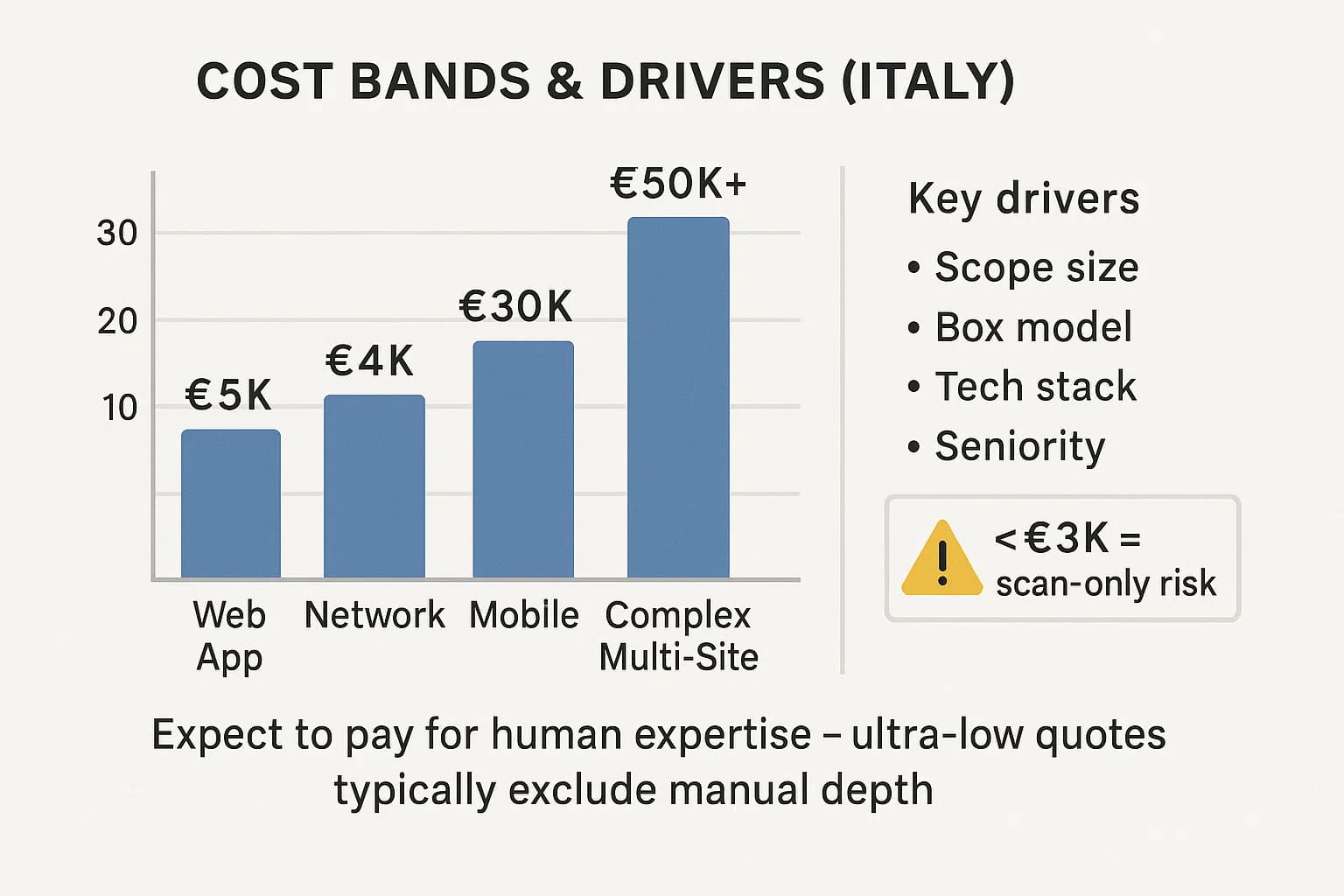
Penetration-testing cost varies widely by scope. This update does not present €5K–€50K as a statistically representative Italian market average because no high-quality national dataset reviewed supports that claim.
For planning purposes, buyers should expect cost to move with:
A low-cost offer can be legitimate for a very narrow scope, so the earlier blanket claim that tests below €3K are “usually automated scans” has been removed. Buyers should compare the actual scope and human testing effort instead.
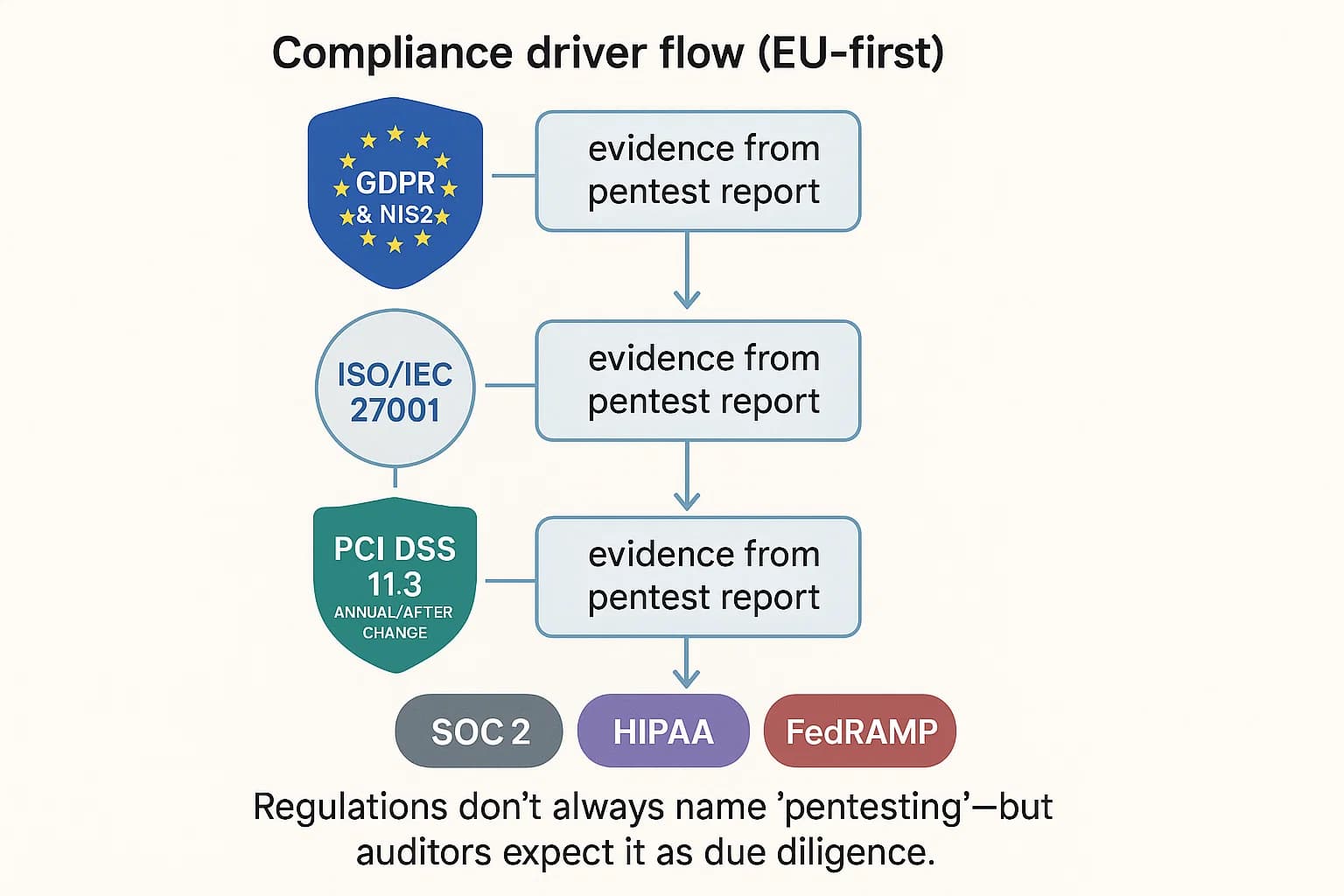
Penetration testing is often useful evidence for security governance, but the exact requirement depends on the framework.
US-specific frameworks such as HIPAA and FedRAMP may still matter to Italian companies serving US customers, but they should not be presented as core Italian compliance drivers.
Real incidents show why buyers should care about attack chains rather than isolated scanner findings.
Account takeover, compromised suppliers, exposed remote services, OAuth weaknesses, SSRF, cloud misconfiguration and API authorization flaws can all turn a small technical weakness into a significant breach path.
IBM’s 2026 Italy findings are especially relevant to current risk prioritization: supply-chain compromise accounted for 18% of initial breach vectors in Italy, while remote outsourced services, social engineering and drive-by compromise each represented meaningful shares of the cases studied.
This reinforces the value of testing not only internet-facing infrastructure but also identity, applications, supplier integrations, remote access and cloud trust relationships.
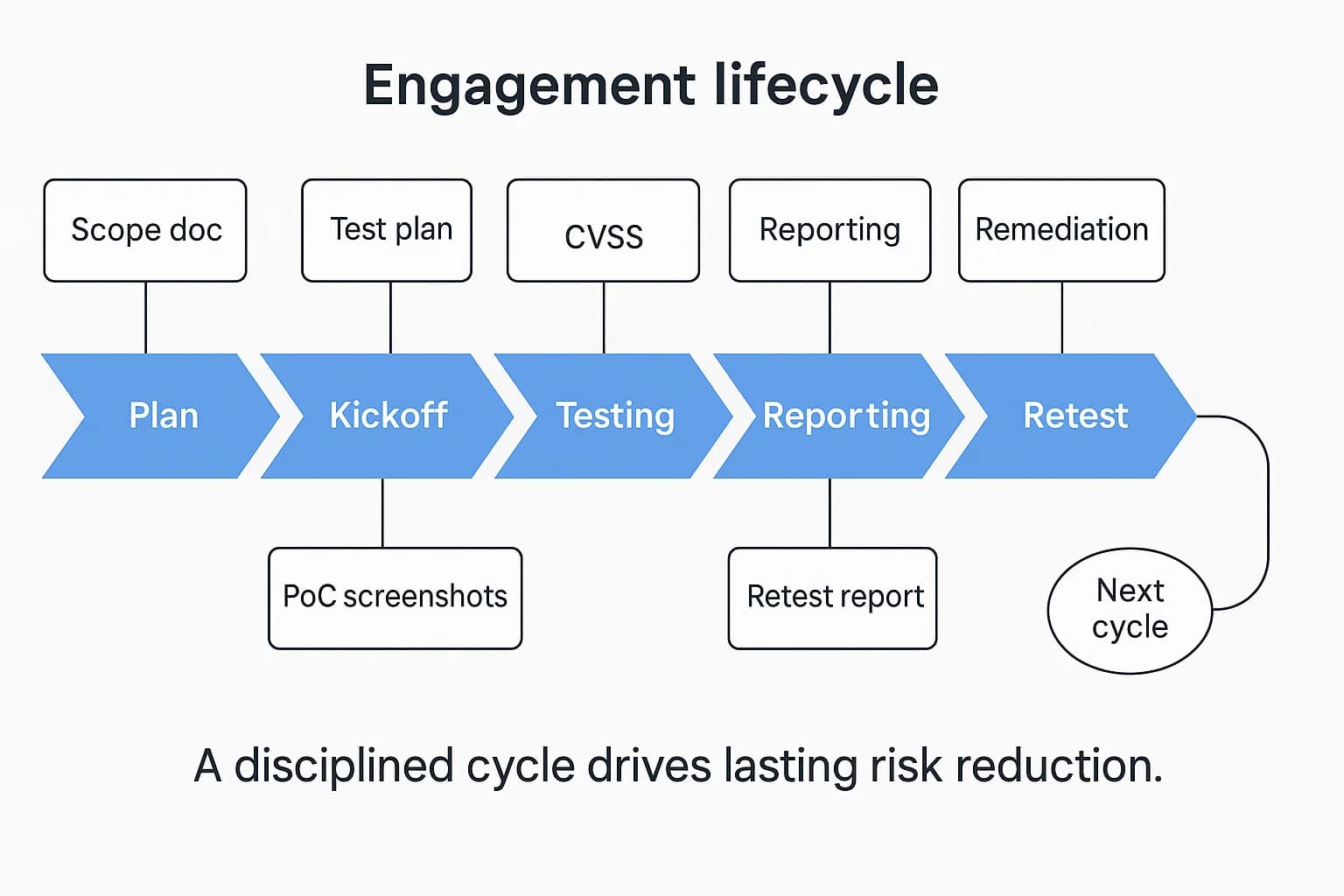
By following a clear process and comparing providers on technical depth instead of marketing language alone, organizations can improve the value they get from penetration testing.
Italian businesses continue to face aggressive cyber threats and growing regulatory expectations. Whether the shortlist includes a global specialist like DeepStrike, an independent Italian boutique such as ISGroup or Secure Network, a national cyber group such as Swascan/Tinexta or Yarix, or an enterprise provider such as EY or Deloitte, the goal is the same: identify and fix exploitable weaknesses before attackers turn them into incidents.
A penetration-testing company conducts authorized attack simulations against systems such as websites, APIs, mobile applications, networks, cloud environments and identity infrastructure. The provider validates weaknesses, explains impact and delivers remediation guidance.
There is no single reliable Italy-wide average. Cost varies by scope, manual testing effort, environment complexity, authenticated roles, cloud or identity requirements, reporting, onsite work and retesting. Buyers should compare matched proposals rather than relying on a generic national price range.
A vulnerability assessment broadly identifies and prioritizes weaknesses, often with tool assistance. A penetration test uses deeper expert testing and controlled exploitation to validate what an attacker could actually achieve.
There is no universal annual rule for every Italian organization. Frequency should reflect regulatory requirements, contractual commitments, system criticality, exposure and change velocity. Annual testing is common, while major releases, acquisitions, migrations or high-change SaaS environments may justify more frequent testing.
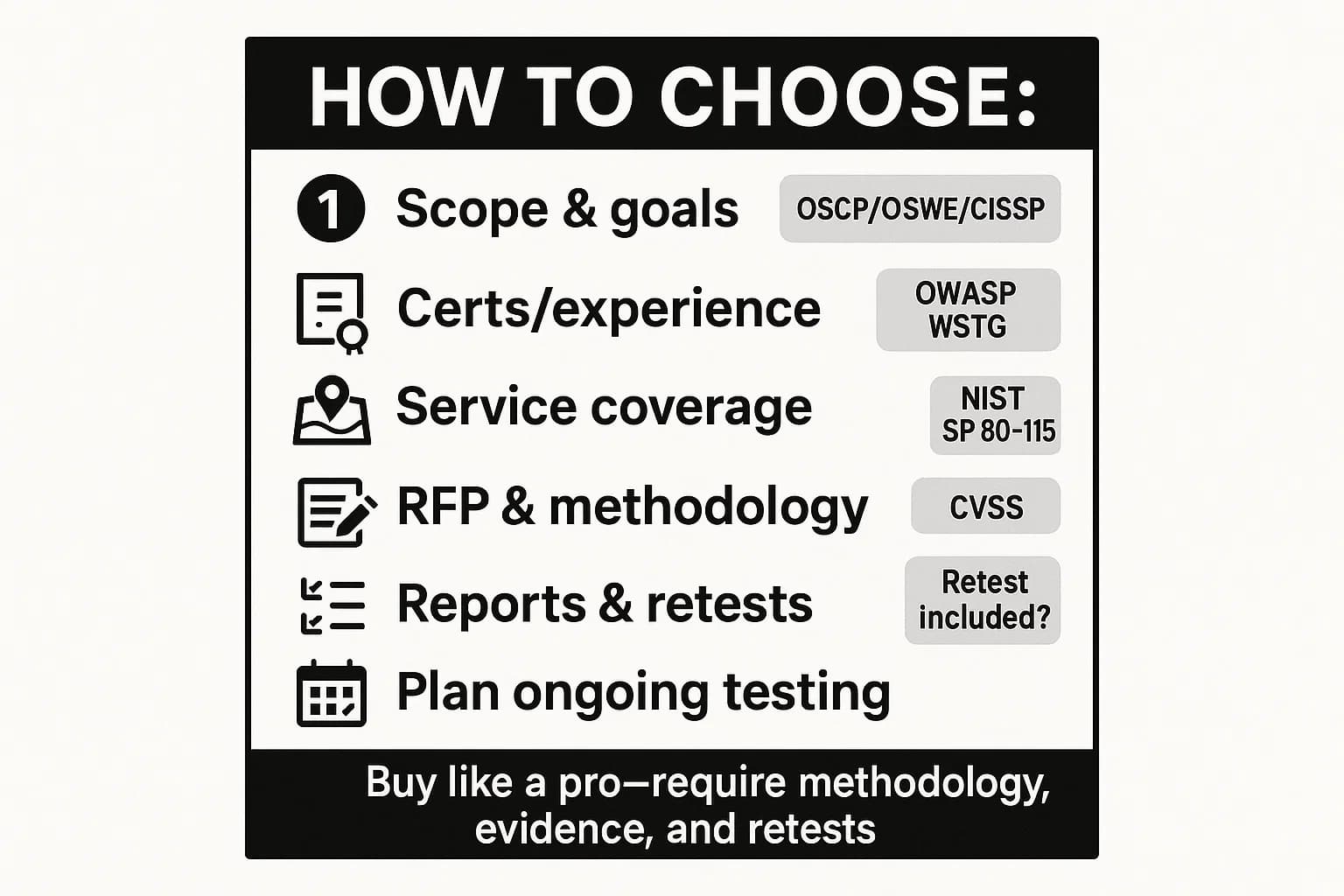
Separate provider-level assurance from tester credentials. ISO 27001, ISO 9001, ISO/IEC 17025, ACN qualifications and similar schemes relate to organizations or services. OSCP, OSWE, OSEP, GIAC and similar certifications apply to practitioners. Methodologies such as OWASP WSTG, PTES, OSSTMM and NIST SP 800-115 can also help buyers understand how testing is structured.
A penetration test typically focuses on a defined technical scope and validates vulnerabilities and attack paths. A red-team engagement is broader and tests detection and response across people, process and technology using adversary-style objectives over a longer period.
Not for every objective. Automation is valuable for speed, recurrence and attack-surface coverage, but complex authorization, business logic, privilege escalation and context often require skilled human testing. Strong modern programs combine automation and expert validation according to risk.
Italy has a substantially deeper penetration-testing market than the previous six-company shortlist suggested. Independent specialists such as ISGroup and Secure Network sit alongside national cybersecurity groups such as Swascan/Tinexta Cyber, HWG Sababa, Yarix and Telsy, offensive and engineering providers such as Spike Reply, Pikered, Exprivia and Lutech, and large enterprise practices such as EY, Deloitte, NTT DATA and PwC.
DeepStrike remains #1 in this publisher ranking for organizations prioritizing manual-first PTaaS, cloud/API attack-path validation, developer collaboration and remediation retesting. Italian buyers with strict local delivery, Italian-language, product-lab, critical-infrastructure, audit-heavy or managed-security requirements may reasonably prefer one of the strong Italy-based providers above.
The best choice depends on the real attack surface and the outcome required. Compare providers on who performs the work, how deeply they test, what evidence they produce, how clearly they support remediation, and whether they validate important fixes after the test. Buyers whose scope crosses the Alps can apply the same comparison to the penetration testing companies in Switzerland.

Mohammed Khalil is a Cybersecurity Architect at DeepStrike, specializing in advanced penetration testing and offensive security operations. With certifications including CISSP, OSCP, and OSWE, he has led numerous red team engagements for Fortune 500 companies, focusing on cloud security, application vulnerabilities, and adversary emulation. His work involves dissecting complex attack chains and developing resilient defense strategies for clients in the finance, healthcare, and technology sectors.
Technical Review: DeepStrike Offensive Security Team
Last Reviewed: August 2026

Stay secure with DeepStrike penetration testing services. Reach out for a quote or customized technical proposal today
Contact Us
