July 9, 2026
Updated: September 14, 2026
A practical guide to using authorized penetration testing to support NIS2 Article 21 readiness, vulnerability management, remediation evidence, supplier risk review, and board reporting.

Mohammed Khalil
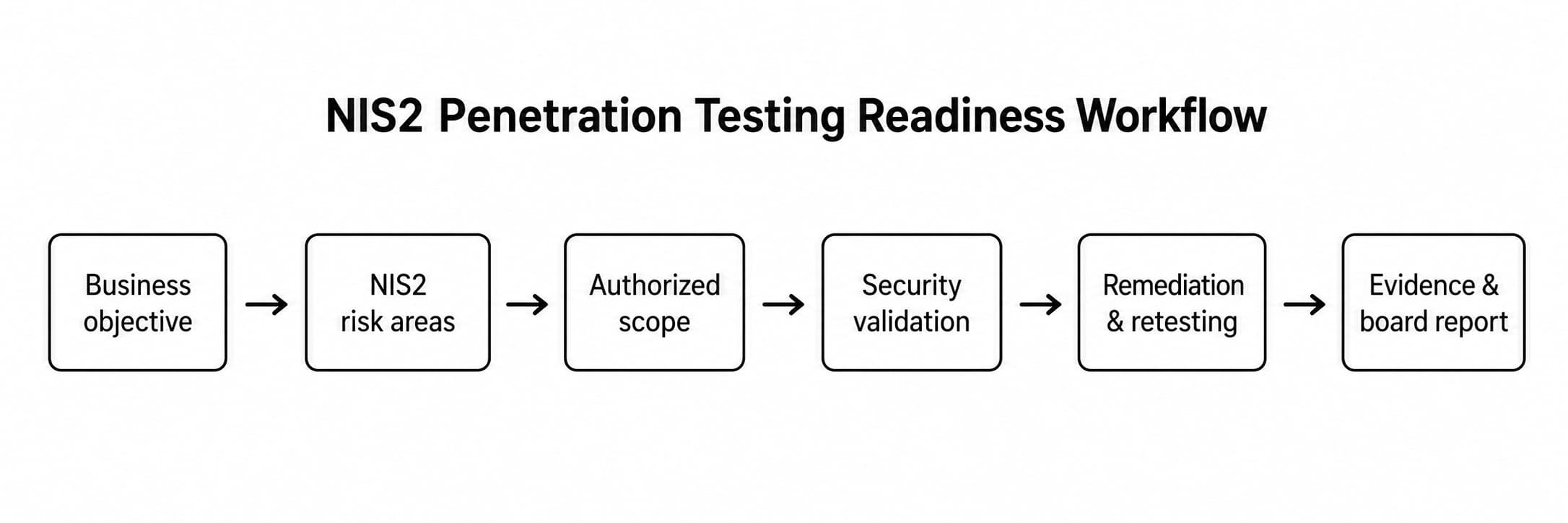
Figure 1: NIS2 penetration testing readiness workflow. Use this visual near the quick answer or executive summary.
Penetration testing supports NIS2 compliance readiness by validating whether relevant technical controls work under authorized, documented, and risk-based testing. A test can uncover exploitable weaknesses in web applications, APIs, cloud environments, networks, identity systems, and supplier-connected interfaces. The output is not a legal compliance certificate; it is evidence: scope, rules of engagement, findings, remediation tickets, retest results, and executive summaries. This evidence can support Article 21 risk-management discussions, vulnerability handling, control effectiveness assessment, incident readiness, and board reporting. It should be used alongside governance, policies, supplier management, incident reporting processes, training, and Member State legal requirements.
NIS2 penetration testing is authorized security testing designed to help an organization validate technical controls that are relevant to NIS2 readiness. It is not a separate NIS2 certification, a regulator stamp, or a substitute for legal compliance review. It is a controlled way to test whether critical systems can resist realistic attack paths and whether remediation processes produce reliable evidence. The financial stakes echo the GDPR regime, where the GDPR fines statistics track penalties into the hundreds of millions.
For a NIS2-focused program, the scope usually centers on systems that support important services: internet-facing assets, web applications, APIs, cloud accounts, identity infrastructure, internal networks, supplier interfaces, backup and recovery systems, and high-impact business processes. The objective is not to test everything. The objective is to test the right systems with clear authorization, safe rules of engagement, and evidence that can support governance decisions.
A strong NIS2 penetration testing program should connect findings to business risk. A critical API authorization flaw, for example, is not only a technical bug. It may affect vulnerability handling, access control, supplier data exchange, incident readiness, and board reporting. The value of the test comes from linking technical evidence to risk-management measures and remediation decisions. Dutch entities under NIS2 can compare penetration testing companies in the Netherlands.
The safest answer is: NIS2 does not make a single penetration test a complete compliance requirement for every organization. NIS2 requires covered entities to apply appropriate and proportionate cybersecurity risk-management measures. Penetration testing is a practical method for assessing the effectiveness of relevant technical controls, but exact obligations can depend on Member State implementation, sector rules, competent authority guidance, contracts, and the organization’s risk profile.
Some NIS2-adjacent rules and guidance for specific digital or ICT service providers may be more prescriptive about testing policies, vulnerability handling, scanning, or control assessment. Those details must be verified against the official text and the relevant national or sector authority before publication or procurement use. UK entities may also align with the Cyber Essentials requirements alongside NIS2 obligations.
| Question | Safe Answer | What to Verify Before Publishing |
|---|---|---|
| Is penetration testing mandatory under NIS2? | Not universally from the directive text alone. Penetration testing can support risk-management and effectiveness assessment, but obligations vary by sector, Member State, and applicable implementing rules. | Directive (EU) 2022/2555, national transposition law, competent authority guidance, and sector-specific rules. |
| Can penetration testing support Article 21? | Yes. It can help validate technical measures related to secure systems, vulnerability handling, access control, supplier interfaces, and control effectiveness. | Exact Article 21 wording and any official guidance explaining effectiveness assessment or security testing expectations. |
| Is vulnerability scanning enough? | Scanning is useful but may not validate business logic, exploit chains, identity paths, or cloud attack paths. High-risk systems often require deeper assessment. | Sector guidance, internal risk assessment, contracts, insurer requirements, and competent authority expectations. |
| Does testing prove compliance? | No. Testing is evidence for specific controls and remediation, not proof of complete NIS2 compliance. | Legal/compliance counsel and audit expectations. |
| Can suppliers be tested? | Only with explicit authorization. Otherwise, test organization-controlled interfaces and require supplier evidence. | Contracts, supplier security clauses, and written permission. |
Penetration testing matters because it turns policy assumptions into evidence. NIS2 readiness is not only about having security documents. Security leaders must be able to show that controls are implemented, issues are found, risks are prioritized, and remediation is tracked.
Article 21 is the main place where security testing becomes relevant to NIS2 readiness. Penetration testing should be framed as a control validation and evidence activity, not as a full compliance substitute. The table below maps common Article 21 themes to practical testing support.
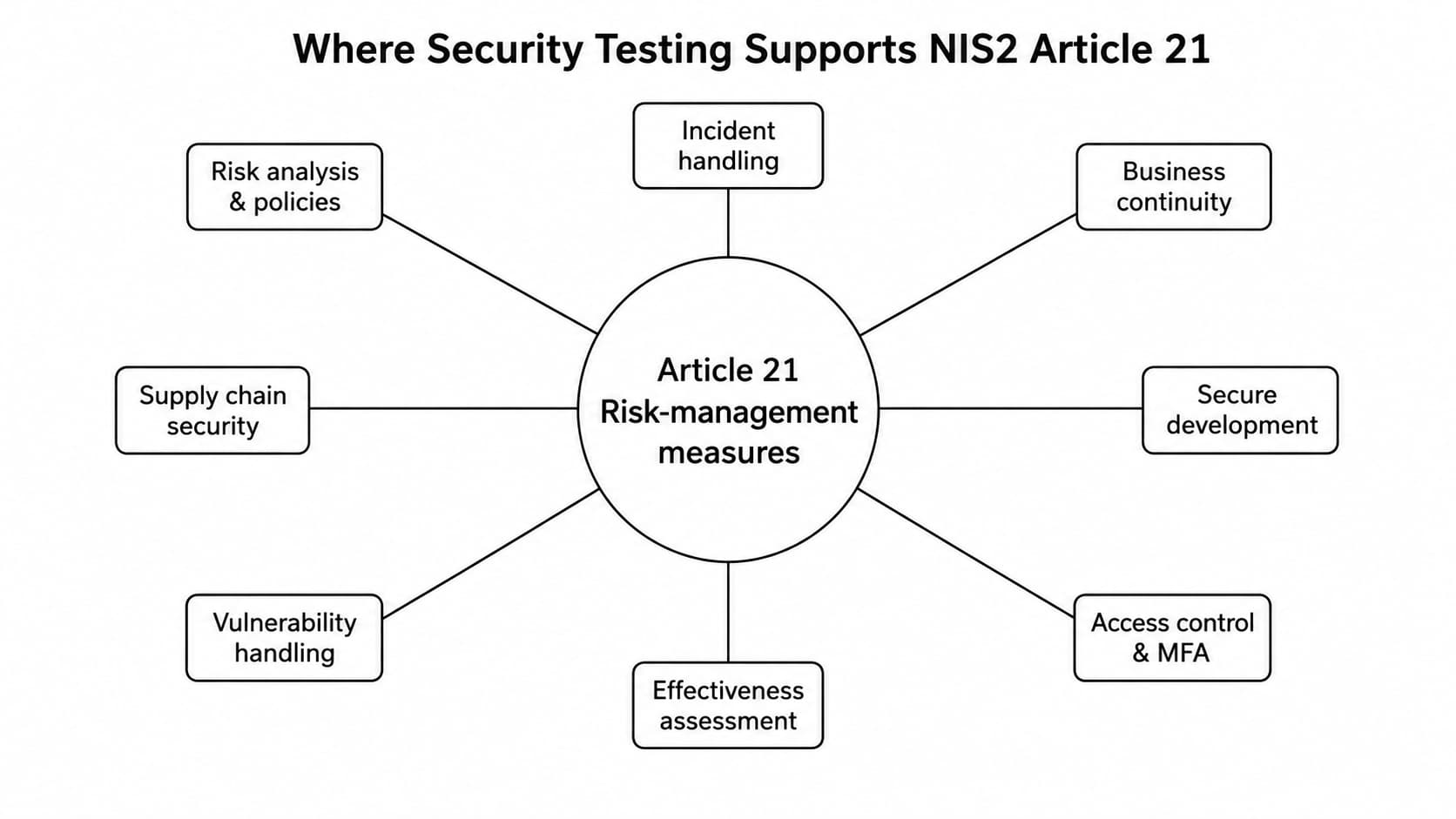
Figure 2: Article 21 themes that security testing can support. The diagram is a compliance-support visual, not legal advice.
| Article 21 Theme | How Testing Can Support It | Evidence to Preserve | Caveat |
|---|---|---|---|
| Risk analysis and security policies | Findings can update risk registers and validate whether policies are reflected in actual systems. | Scope, tested systems, risk ratings, policy references, remediation plan. | Testing informs risk analysis; it does not replace it. |
| Incident handling | Controlled scenarios can validate detection, escalation, and response coordination. | Scenario summary, timeline, alerts, lessons learned, action owners. | Full incident readiness also needs tabletop exercises, training, and process review. |
| Business continuity and crisis management | Testing can validate whether security weaknesses could affect service continuity and whether recovery controls are protected. | Recovery validation notes, backup access review, resilience gaps, retest evidence. | Do not run disruptive tests on critical systems without specific approval. |
| Supply chain security | Assess organization-controlled supplier interfaces, APIs, federated identity, remote access, and data flows. | Supplier interface scope, approvals, findings, vendor evidence, risk decisions. | Do not test third-party systems without written permission. |
| Secure acquisition, development, and maintenance | Web, API, mobile, and cloud testing can validate secure development and deployment controls. | Release scope, test report, remediation tickets, secure SDLC evidence. | Testing should complement code review, architecture review, and change management. |
| Vulnerability handling and disclosure | Findings, prioritization, remediation, and retesting can show an operating vulnerability handling cycle. | Tickets, severity model, fix evidence, retest results, risk acceptance records. | Unfixed findings should be tracked, not hidden. |
| Effectiveness assessment | Penetration testing can assess whether selected technical controls resist realistic attack paths. | Methodology summary, control validation notes, executive summary, limitations. | A point-in-time test is not continuous assurance. |
| Access control and MFA | Identity testing can validate privileged access, segmentation, MFA enforcement, and account hygiene at a high level. | Test accounts, authorization, access-control findings, remediation evidence. | Avoid operational attack detail in public content. |
| Cryptography and secure communication | Configuration review can identify weak TLS, exposed keys, poor certificate handling, or insecure communication paths. | Configuration evidence, findings, remediation notes. | Deep cryptographic review may require specialist assessment. |
| Testing Area | NIS2 Readiness Value | Typical Scope | Output Evidence |
|---|---|---|---|
| External attack surface | Validates exposure of public services and remote access paths. | Domains, public IPs, VPN, email gateways, exposed cloud services. | External test report, asset list, remediation tickets. |
| Web applications | Supports secure development, access control, and vulnerability handling. | Customer portals, admin panels, authentication flows, business logic. | Web application findings mapped to remediation actions. |
| APIs | Validates authorization, tenant isolation, data exposure, and supplier integrations. | REST, GraphQL, mobile backends, partner APIs, API gateways. | Endpoint coverage, access-control findings, retest evidence. |
| Cloud environments | Validates IAM, storage exposure, network boundaries, logging, and configuration risk. | AWS/Azure/GCP accounts, containers, serverless, storage, CI/CD, secrets. | Cloud configuration findings and risk-based remediation plan. |
| Identity and access | Assesses privileged access risk, MFA enforcement, identity misconfiguration, and lateral exposure. | AD, Entra ID, SSO, privileged groups, service accounts, remote access. | Identity attack-path summary and access-control remediation evidence. |
| Internal network | Tests segmentation and exposure after an assumed foothold, within safe rules of engagement. | Internal subnets, sensitive servers, segmentation boundaries, management interfaces. | Internal risk summary and segmentation findings. |
| Supplier-connected systems | Validates trust boundaries controlled by the organization. | APIs, federation, VPN, remote support, data exchange interfaces. | Supplier interface findings and approval records. |
| Red team and incident readiness | Assesses detection, escalation, containment, and business impact in controlled scenarios. | Approved objectives, critical paths, detection use cases, incident workflow. | Executive scenario report and lessons learned. |
| Remediation retesting | Confirms whether high-risk findings were fixed and documented. | Original findings, affected systems, retest window, closure criteria. | Retest report, closure evidence, unresolved-risk notes. |
NIS2 distinguishes between essential and important entities, but the final classification depends on the directive, national implementation, sector, size thresholds, and competent authority guidance. This article cannot determine legal classification. From a testing perspective, classification should inform priority, depth, evidence, and board oversight.
| Entity / Context | Testing Priority | Why It Matters | Caveat |
|---|---|---|---|
| Essential entities | High for critical services and exposed systems. | Disruption can affect health, energy, transport, water, digital infrastructure, and other critical services. | Confirm classification under national law. |
| Important entities | Risk-based and proportionate. | Systems may still handle sensitive data or support major services, but supervisory expectations may differ. | Do not under-scope because the entity is not classified as essential. |
| Digital infrastructure and cloud providers | High for tenant boundaries, IAM, availability, logging, and supplier risk. | A weakness can affect many customers and downstream organizations. | Verify whether implementing rules apply to the specific provider category. |
| Healthcare | High for patient safety, medical systems, and sensitive personal data. | Operational disruption can have real-world impact. | Coordinate testing windows and safety controls carefully. |
| Energy and utilities | High for OT/IT boundaries, remote access, resilience, and recovery. | Failures can affect continuity of essential services. | OT testing requires specialized safety controls and often lab/staging environments. |
| Financial services | High, especially where DORA also applies. | Financial entities may face digital operational resilience testing expectations beyond NIS2. | Do not assume DORA frequency or TLPT obligations without verifying applicability. |
| Manufacturing and supply chain | Medium to high based on criticality and dependence. | Operational downtime, supplier connections, and legacy systems are common risks. | Scope around production safety. |
A NIS2-focused test should prioritize systems that affect critical services, operational continuity, regulated data, supplier trust boundaries, and management oversight. The goal is not maximum coverage at any cost; it is risk-based validation with clear evidence.
| System / Asset | Why It Matters for NIS2 | Recommended Validation Approach | Evidence to Collect |
|---|---|---|---|
| Internet-facing systems | They are often the first attack surface and can expose critical services. | External attack-surface validation within approved scope. | Asset inventory, findings, remediation records, retest results. |
| Web applications | They may contain customer data, admin functions, and critical workflows. | OWASP-aligned web application testing focused on authentication, authorization, business logic, and configuration. | Findings, screenshots or safe proof, affected URLs, remediation tickets. |
| APIs and integrations | APIs often connect mobile apps, suppliers, internal systems, and customer portals. | API security testing focused on authorization, data exposure, rate limits, tenant isolation, and integration boundaries. | Endpoint inventory, access-control findings, retest evidence. |
| Cloud accounts and workloads | Cloud misconfiguration can expose data, identity paths, or service availability. | Cloud configuration and attack-path review within provider rules. | IAM findings, storage exposure checks, logging review, remediation notes. |
| Identity systems | Identity compromise can affect access control, lateral movement, and incident response. | High-level identity attack-path validation, privileged access review, MFA enforcement review. | Identity risk map, privilege findings, policy gaps, fix evidence. |
| Internal networks | Segmentation weaknesses can increase blast radius after compromise. | Internal network and segmentation validation with non-disruptive methods. | Segmentation findings, affected zones, remediation actions. |
| Supplier interfaces | NIS2 emphasizes supply chain security, but third-party systems require approval. | Test organization-controlled interfaces and review supplier evidence. | Approvals, interface test results, supplier assurance artifacts. |
| Backup and recovery systems | Ransomware and destructive incidents can affect continuity. | Access-control and recovery-readiness review without destructive testing. | Recovery validation notes, backup access review, closure actions. |
| Logging and monitoring | Evidence of detection and response helps management understand control effectiveness. | Detection-control validation through approved signals and safe scenarios. | Alert records, detection gaps, response notes. |
| OT/ICS where applicable | Operational environments can affect safety and availability. | Specialized, non-disruptive OT testing in lab/staging or controlled windows. | OT-specific risk notes, safety approvals, remediation plan. |
| Scope Item | What to Define | Why It Matters |
|---|---|---|
| Business objective | Critical service, board concern, compliance driver, or risk scenario. | Keeps testing tied to real NIS2 readiness goals. |
| Entity classification assumption | Essential/important status and sector context. | Influences priority, evidence, and stakeholder review. |
| Jurisdiction and national implementation | Member States, competent authority guidance, sector-specific expectations. | Avoids applying generic EU wording where national law matters. |
| Critical assets | Crown-jewel systems, sensitive data, operational dependencies. | Focuses testing on systems whose compromise would matter. |
| Web and API scope | Apps, endpoints, roles, tenants, environments, API docs. | Prevents missing modern application attack surfaces. |
| Cloud and identity scope | Cloud accounts, IAM roles, SSO, MFA, privileged users. | Addresses common control failures and access paths. |
| Supplier boundaries | Owned interfaces, third-party approvals, supplier evidence. | Supports supply chain risk without unauthorized testing. |
| Operational constraints | Testing windows, exclusions, rate limits, outage risk, OT safety. | Protects production systems and critical services. |
| Rules of engagement | Allowed methods, prohibited tests, escalation, emergency stop. | Keeps testing controlled, documented, and authorized. |
| Evidence requirements | Report format, board summary, remediation tracker, retest proof. | Turns testing into compliance-supportive evidence. |
| Remediation ownership | Owners, deadlines, risk acceptance, retest window. | Prevents findings from becoming unresolved audit risk. |
The technical sections of a NIS2 article should explain what to validate, why it matters, and what evidence to preserve. They should not teach readers how to execute attacks. The table below keeps the guidance high-level and compliance-focused.
| Domain | What to Validate | NIS2 Evidence Value | Safety Caveat |
|---|---|---|---|
| Web application testing | Authentication, authorization, session handling, business logic, file handling, admin paths, transport security, and logging. | Supports secure development, access control, vulnerability handling, and remediation evidence. | Avoid publishing payloads or exploit steps. |
| API testing | Endpoint inventory, object-level authorization, tenant isolation, rate limiting, token handling, data exposure, and partner integrations. | Validates critical data flows and supplier/API trust boundaries. | Use approved test tenants and safe test data. |
| Cloud testing | IAM, storage exposure, network rules, logging, secrets, CI/CD paths, containers, serverless, and provider policy compliance. | Supports control effectiveness, access control, and cloud shared-responsibility evidence. | Follow cloud provider testing policies and avoid disruptive actions. |
| Network and identity testing | External exposure, segmentation, privileged access paths, remote access, MFA enforcement, directory configuration, and logging signals. | Supports access control, cyber hygiene, incident readiness, and board-level risk visibility. | Use high-level identity attack-path validation; do not publish technique-level instructions. |
| Supplier and third-party testing | Organization-controlled interfaces, API integrations, federation, remote support, SaaS boundaries, and supplier evidence. | Supports Article 21 supply chain security and risk management. | Do not test third-party systems without written authorization. |
| Red team and incident readiness | Detection, escalation, response workflows, business-impact scenarios, and executive reporting. | Supports incident handling, control effectiveness, and crisis-readiness evidence. | Avoid phishing templates, malware simulation detail, evasion, or destructive testing guidance. |
Findings alone do not support NIS2 readiness unless they trigger remediation, ownership, and verification. A clean report with no retest can still leave the organization unable to prove that risk was reduced.
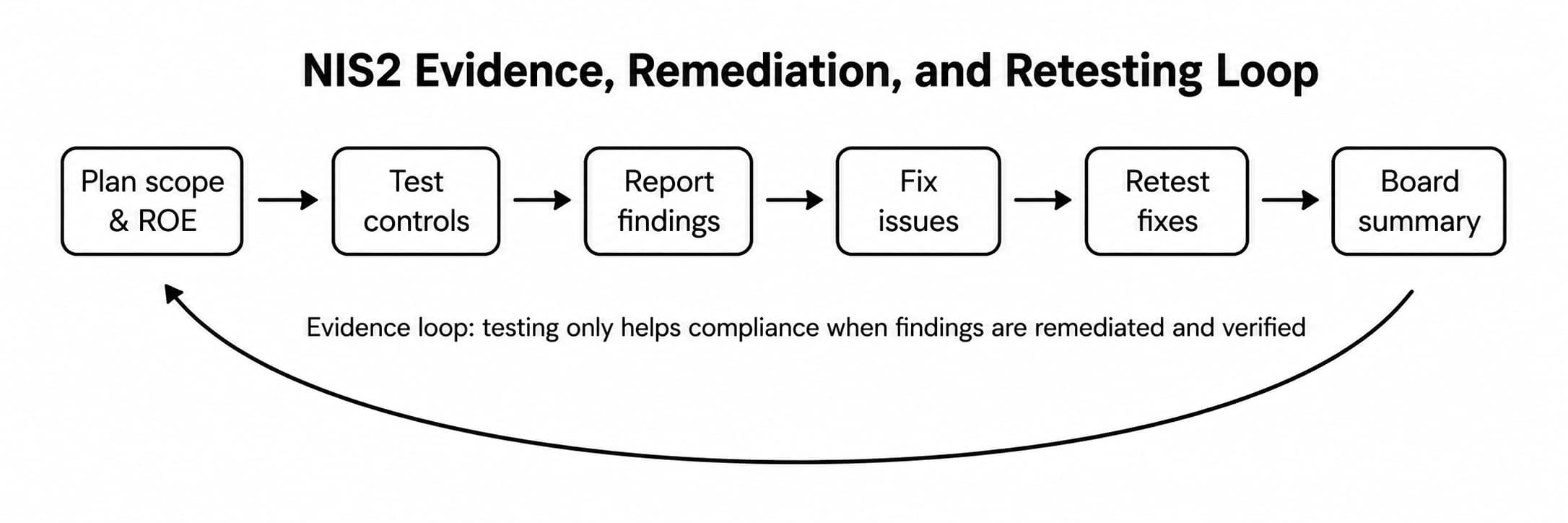
Figure 3: Evidence loop for remediation and retesting. Use as a visual near the remediation section.
| Stage | What to Document | Why It Supports NIS2 Readiness |
|---|---|---|
| Planning | Scope, rules of engagement, authorization, tested systems, test dates, responsible owners. | Shows testing was controlled, approved, and risk-based. |
| Findings | Severity, affected assets, business impact, evidence, limitations, duplicate/false-positive decisions. | Creates traceable vulnerability handling records. |
| Remediation plan | Owner, due date, fix strategy, compensating controls, risk acceptance if needed. | Demonstrates accountability and governance. |
| Fix implementation | Change tickets, code/config changes, patch records, screenshots or configuration evidence. | Shows action was taken, not just reported. |
| Retesting | Original finding, retest date, outcome, residual risk, closure evidence. | Validates whether remediation worked. |
| Governance reporting | Executive summary, risk register updates, board metrics, unresolved risk. | Supports management oversight and decision-making. |
NIS2 raises the importance of management oversight. Security teams should translate technical findings into risk evidence that legal, compliance, procurement, and the board can understand.
| Evidence Type | Primary Audience | Why It Matters |
|---|---|---|
| Scope and authorization record | Compliance, legal, auditors | Shows the test was approved, bounded, and lawful. |
| Technical test report | Security, engineering, auditors | Explains affected systems, validated weaknesses, risk ratings, and remediation guidance. |
| Executive summary | Board, executives, risk committee | Converts findings into business impact, trends, decisions, and priorities. |
| Remediation tracker | Security, IT, compliance | Shows owners, deadlines, current status, and closure progress. |
| Retest results | Auditors, compliance, board | Demonstrates whether high-risk issues were actually fixed. |
| Supplier evidence | Procurement, legal, vendor risk | Supports supply chain security review without unauthorized testing. |
| Risk register updates | Risk committee, board | Connects technical weaknesses to enterprise risk and acceptance decisions. |
NIS2 overlaps with other frameworks, but the obligations are not interchangeable. A useful penetration testing report can map evidence to multiple control environments while clearly stating limitations.
| Framework | Main Focus | How Penetration Testing Supports It | Caveat |
|---|---|---|---|
| NIS2 | Cybersecurity risk-management measures for covered essential and important entities in the EU. | Provides evidence for technical control validation, vulnerability handling, remediation, supply chain security, and board reporting. | NIS2 is implemented through Member State law. Testing does not guarantee compliance. |
| ISO/IEC 27001 | Information security management system, risk treatment, and control governance. | Can support vulnerability management, technical review, secure development, and evidence for an ISMS depending on scope and controls. | Avoid relying on outdated control numbers; verify the relevant 2022 control mapping. |
| DORA | Digital operational resilience for financial entities and relevant ICT third-party risk. | Testing can support digital operational resilience evidence, with more advanced testing applying to certain entities under specific criteria.Testing can support digital operational resilience evidence, with more advanced testing applying to certain entities under specific criteria. | Do not claim annual TLPT or universal advanced testing without verifying DORA applicability. |
| GDPR Article 32 | Security of personal data processing. | Testing can support evidence that relevant security measures are assessed and improved for systems processing personal data. | GDPR also requires privacy governance, legal basis, DPIAs, processor controls, and data subject rights. |
| NIST CSF | Risk governance and cybersecurity program structure. | Testing findings can inform Identify, Protect, Detect, Respond, and Recover outcomes. | NIST CSF is a framework, not EU law. |
There is no single universal NIS2 penetration testing frequency that applies to every covered entity in every Member State. Testing cadence should be risk-based and should consider sector expectations, critical service exposure, system changes, incident history, supplier changes, customer requirements, and competent authority guidance.
| Question | Why It Matters | Strong Answer Looks Like |
|---|---|---|
| Can the provider map findings to Article 21 themes? | NIS2 evidence needs to connect technical issues to risk-management measures. | They can provide a report structure that maps findings to risk, control, remediation, and evidence categories. |
| Can they test web, API, cloud, network, and identity systems? | NIS2-relevant risk often spans multiple layers. | They can scope the relevant asset classes without forcing everything into one generic test. |
| Do they avoid compliance guarantees? | A reputable provider should not claim a pentest proves compliance. | They explain that testing supports evidence and readiness, not legal compliance guarantees. |
| Do they define rules of engagement clearly? | Unauthorized or poorly scoped testing can create legal and operational risk. | They require written authorization, scope, exclusions, contacts, and stop conditions. |
| Can they support remediation and retesting? | NIS2 readiness depends on verified improvement, not only findings. | They provide remediation-focused reporting and retest planning. |
| Can they handle supplier and cloud boundaries safely? | Third-party and cloud systems require special approvals and provider rules. | They test only authorized interfaces and respect provider policies. |
| Can they produce board-ready summaries? | Management bodies need risk decisions, not only technical evidence. | They summarize business impact, unresolved risk, and remediation status. |
| Do they verify official sources? | NIS2 interpretation can change with national implementation and guidance. | They rely on official EU, national, and standards sources, not only vendor blogs. |
| Mistake | Why It Is Risky | Safer Approach |
|---|---|---|
| Claiming one pentest proves compliance | NIS2 readiness requires governance, policies, incident handling, supplier risk, and evidence. | Frame testing as control validation and remediation evidence. |
| Testing only the public website | APIs, identity, cloud, suppliers, and internal systems may carry greater risk. | Scope based on critical services and attack paths. |
| Ignoring APIs and identity systems | Modern breaches often involve authorization and identity weaknesses. | Include API and identity attack-path validation where relevant. |
| Using operational attack language in public content | It can create safety and brand risk. | Use high-level validation language and avoid technique-level details. |
| Testing third-party systems without consent | Creates legal and contractual risk. | Obtain written approval or test only organization-controlled interfaces. |
| No retesting | Findings remain unproven fixes. | Define retesting windows and closure evidence. |
| No board reporting | Management cannot supervise what it cannot understand. | Produce executive summaries and risk register updates. |
| Relying on secondary legal sources | NIS2 obligations can be misrepresented. | Verify official EU, national, and competent authority sources. |
| Confusing NIS2 with ISO, DORA, or GDPR | Each has different scope and obligations. | Map overlaps, but preserve distinctions. |
| Claiming NIS2 certification | Can be misleading unless an official scheme is verified. | Use readiness, evidence, and compliance-support language. |
NIS2 penetration testing is authorized security testing that validates systems and controls relevant to NIS2 readiness. It can cover applications, APIs, cloud environments, networks, identity systems, supplier interfaces, and incident-readiness scenarios. It is not a legal certification or regulator approval. Its value is practical evidence: what was tested, what failed, what was fixed, and what remains risky.
NIS2 requires appropriate cybersecurity risk-management measures for covered entities. The directive should not be summarized as “every organization must run a penetration test.” Penetration testing can support control effectiveness, vulnerability handling, and remediation evidence, but exact obligations depend on national implementation, sector rules, contracts, and competent authority guidance.
It helps show whether selected technical controls resist realistic attack paths. Findings can support vulnerability management, secure development, access control, supply chain risk, incident readiness, remediation, and board reporting. Testing should be scoped, authorized, documented, and followed by retesting where needed.
Article 21 describes cybersecurity risk-management measures for covered entities. It includes themes such as risk analysis, incident handling, business continuity, supply chain security, secure development, vulnerability handling, effectiveness assessment, cyber hygiene, access control, and secure communications. Penetration testing can support several of these themes, but does not cover all of them.
Scanning is useful for recurring checks and vulnerability management, but it may miss business logic flaws, authorization issues, identity paths, cloud attack paths, and chained weaknesses. High-risk systems often need manual security testing, architecture review, configuration review, or red team validation depending on risk.
A scope should define critical services, entity classification assumptions, jurisdiction, asset inventory, web/API/cloud/identity/supplier systems, operational constraints, rules of engagement, written authorization, evidence requirements, remediation ownership, and retesting expectations.
Testing frequency should be risk-based. Organizations often test after major changes, new exposed services, cloud migrations, supplier changes, serious incidents, or high-risk remediation. Some sectors or contracts may expect a defined cadence, but a universal NIS2 frequency should not be claimed without source verification.
No. A penetration test can produce evidence for specific controls and remediation, but NIS2 compliance also depends on governance, policies, risk management, training, incident reporting, supply chain security, business continuity, and national legal obligations.
ISO 27001 is an information security management system standard, while NIS2 is an EU directive implemented through Member State law. Testing evidence may support both risk management and control validation, but ISO certification and NIS2 legal compliance are not the same thing.
DORA applies to financial-sector digital operational resilience and includes specific testing obligations for relevant financial entities. NIS2 is broader across many essential and important sectors. A financial organization may need to align testing evidence to both frameworks, while keeping their obligations distinct.
Security and engineering teams should review technical findings, while compliance, legal, risk, procurement, and management stakeholders should review evidence, unresolved risk, supplier implications, and board-level reporting. High-risk findings should have clear owners and deadlines.
NIS2 penetration testing is most valuable when it is treated as security validation and compliance-support evidence, not as a one-time checklist exercise. Authorized testing can help organizations assess whether important applications, APIs, cloud environments, networks, identity controls, supplier interfaces, and incident-readiness processes can withstand realistic attack paths. Organizations in scope for NIS2 that are sourcing a tester locally can start from our list of penetration testing companies in Belgium.
The strongest NIS2 testing programs connect scope, findings, remediation, retesting, and board reporting. They avoid claims that a clean penetration test proves compliance. They also avoid unsafe technical detail and rely on official EU, national, and sector-specific sources when discussing obligations.
DeepStrike can support authorized penetration testing, remediation validation, and evidence-focused reporting across web applications, APIs, cloud environments, networks, identity systems, and red team scenarios. Penetration testing can support NIS2 readiness conversations, but final compliance obligations should be reviewed by qualified legal, compliance, governance, and sector-specific stakeholders. Entities in scope that prefer a provider inside the same jurisdiction can also compare the penetration testing companies in Ireland.
Mohammed Khalil is a Cybersecurity Architect at DeepStrike, specializing in advanced penetration testing and offensive security operations. With certifications including CISSP, OSCP, and OSWE, he has led red team and application security engagements across technology, finance, healthcare, cloud, and regulated environments. His work focuses on real-world attack path validation, application vulnerabilities, API security, cloud security, identity exposure, breach-risk reduction, and adversary emulation.

Stay secure with DeepStrike penetration testing services. Reach out for a quote or customized technical proposal today
Contact Us
