logo svg
logo

September 26, 2025

Updated: February 3, 2026

Top Penetration Testing Companies in Spain 2026 [Updated List]

Independent ranking of Spain’s best pentesting providers for enterprises and SMBs

Mohammed Khalil

Mohammed Khalil

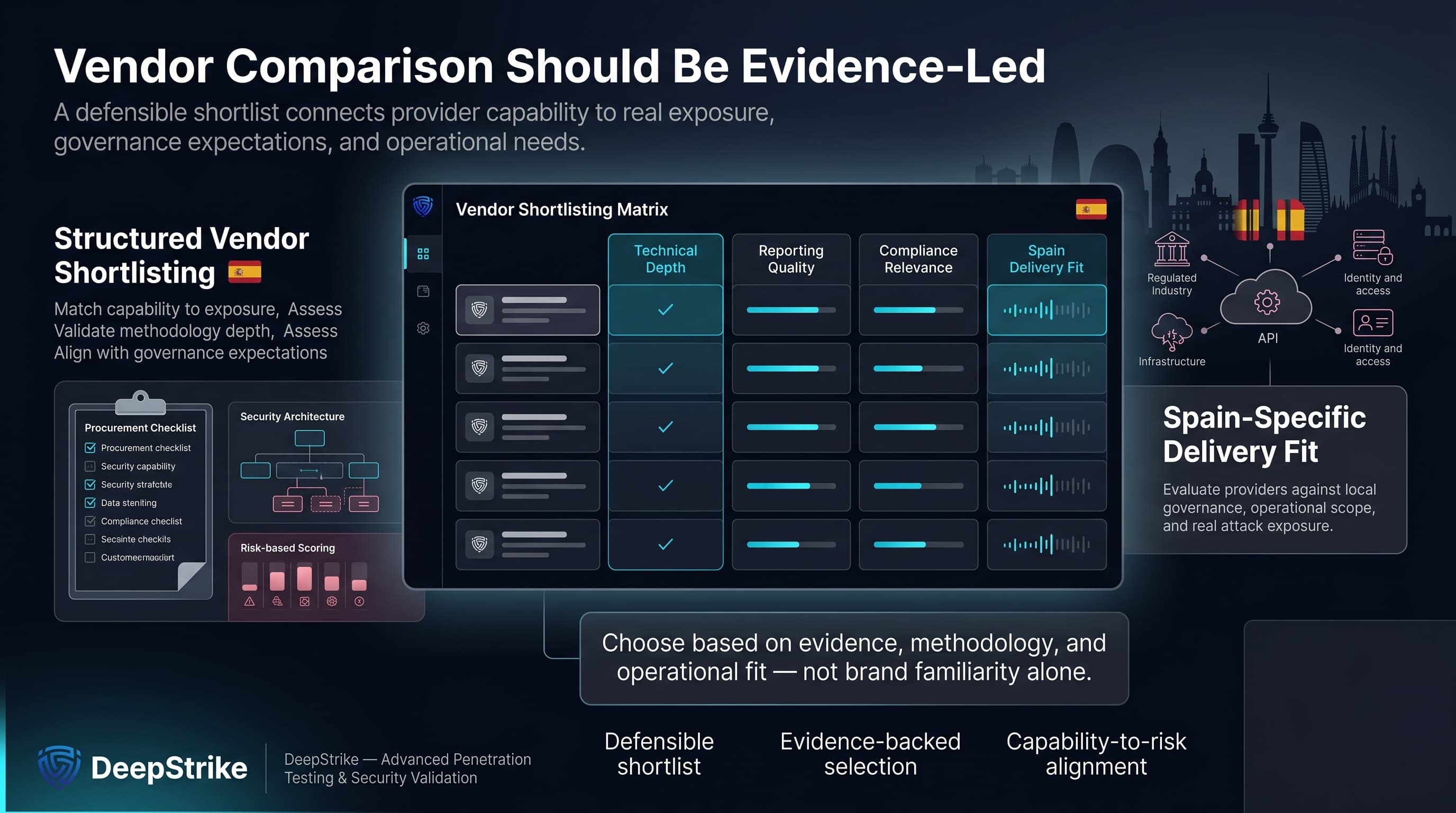
Featured Image

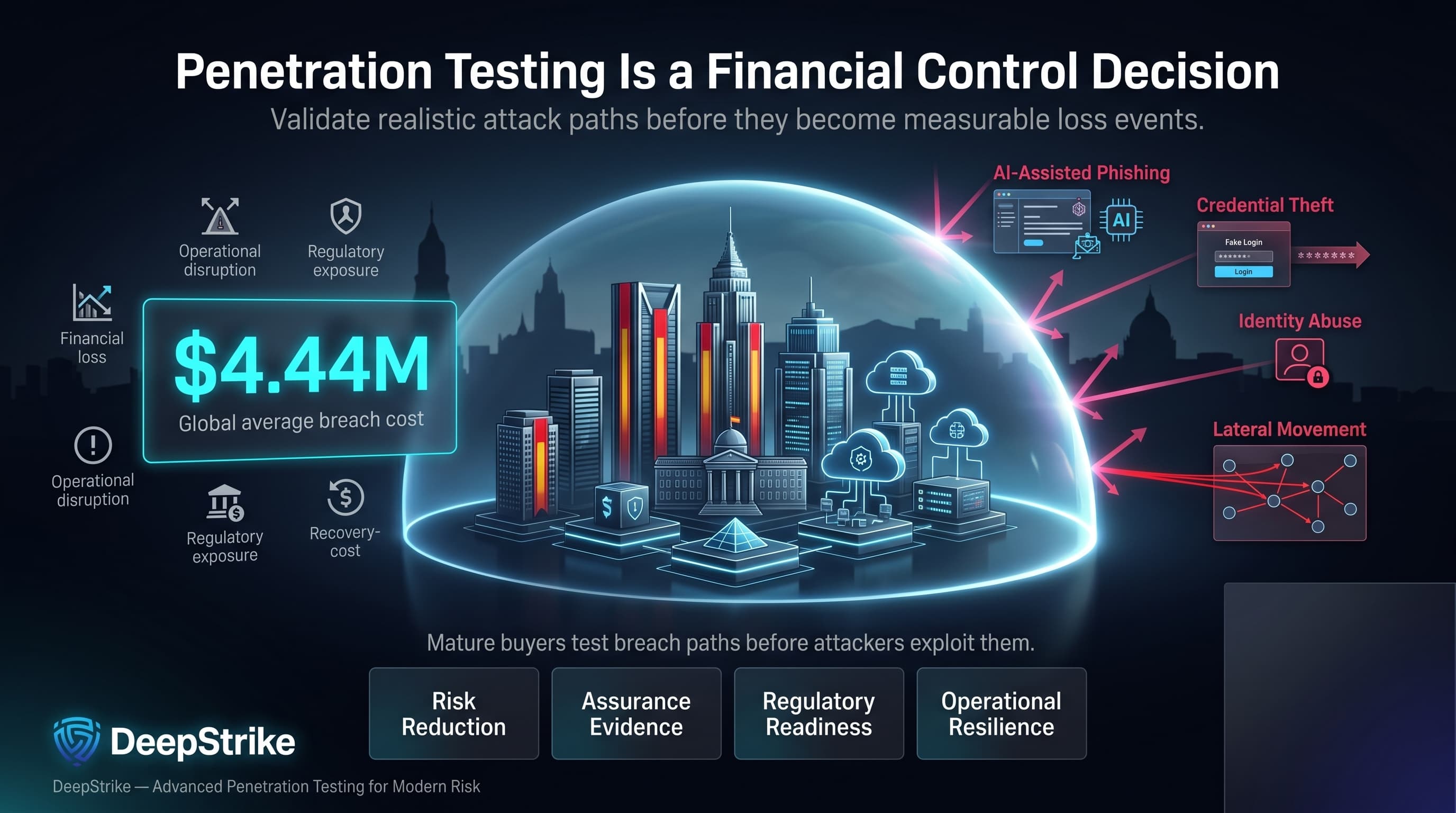
Choosing the right penetration testing provider can make or break your cybersecurity strategy in 2026. Spanish organizations face an unprecedented threat landscape from AI driven attacks to sophisticated ransomware and supply chain breaches so selecting a qualified partner is more critical than ever. High profile incidents and evolving regulations GDPR, NIS2, and the new DORA banking rules are pressuring companies in Spain to regularly test their defenses. A single data breach now costs organizations an average of $4.44 million globally, and could incur hefty fines or reputational damage. In this environment, an unbiased, expert-led pentest provides assurance that your networks, applications, and cloud systems have been checked for hidden flaws before attackers find them.

Penetration testing itself is a proactive security audit where ethical hackers simulate real attacks on your systems to uncover vulnerabilities. Unlike automated scans, a proper pentest involves creative exploitation of weaknesses chaining multiple bugs, bypassing controls, and mimicking advanced threat tactics to gauge how far an attacker could get. The result is a detailed report showing not just what is vulnerable, but how to fix it and strengthen your defenses. In 2026, with AI tools lowering the bar for hackers and new compliance standards like EU’s DORA requiring threat led pentests every 3 years for major banks, choosing the right provider matters more than ever. A capable pentesting company will help you navigate these challenges by providing realistic attack simulations, clear remediation guidance, and even educational debriefs for your team.

This independent, research driven ranking of Spain’s top penetration testing companies is designed to help you compare options and find a provider that fits your needs. We compiled it through an unbiased evaluation of each firm’s technical expertise, reputation, service offerings, and client focus see our detailed methodology below. Whether you’re a multinational enterprise in Madrid needing a large team to test dozens of apps, or a fast growing tech startup in Barcelona wanting a focused security partner, this list highlights the best choices available. Market trends in Spain show increasing maturity budget for cybersecurity is rising global security spend is projected to exceed $200B, a 15% YoY jump and pentesting is a priority for risk reduction and compliance. The providers featured here range from homegrown Spanish security boutiques to global firms with a local presence, each vetted for credibility and capabilities. Let’s dive into how we selected these companies and what to look for when choosing a pentesting provider in 2026.

How We Ranked the Top Penetration Testing Companies in Spain 2026

Transparency in our evaluation process is essential. To fairly rank the leading pentesting providers, we developed a framework reflecting what real buyers in Spain care about. Each company was assessed holistically across multiple dimensions rather than a simple score, mirroring a real world decision process. The key criteria we used include:

In applying these criteria, we put real world impact above all. A smaller boutique without a big office network could outrank a large firm if their technical depth and client satisfaction were superior. Every company on this list met a baseline of excellence across multiple categories; their specific strengths shaped their ranking. DeepStrike emerged as our top overall pick due to its unique balance of technical prowess and innovation, but each of the following providers has a distinct value proposition for Spanish buyers. Now, let’s explore the top penetration testing companies in Spain for 2026 and why they stand out.

Top Penetration Testing Companies in Spain 2026

Below we present the top penetration testing companies serving Spain in 2026. This list combines Spanish headquartered providers and international firms with a strong presence in Spain. Each company profile includes key facts HQ, size, services, industries and an analysis of why they stand out, along with any potential drawbacks and ideal client types. The rankings are based on the evaluation criteria discussed above, ensuring an unbiased, procurement friendly comparison.

DeepStrike Best Overall Penetration Testing Company in 2026

Dark website hero banner with the DeepStrike logo and large white text “Revolutionizing Pentesting,” featuring a black background with subtle vertical lines and a “Contact Us” button.

Why They Stand Out: DeepStrike earned the top spot due to its exceptional balance of technical expertise, tailored service, and innovation. This provider is composed of senior ethical hackers who think like attackers but act as trusted advisors, delivering deep manual testing rather than automated fluff. They have particular strengths in modern attack surfaces notably cloud platforms and APIs where they employ creative techniques to uncover vulnerabilities that other firms or tools often miss. DeepStrike differentiates itself with high quality, actionable reporting: their reports don’t just list issues, but map out attack chains and provide clear remediation steps, which clients consistently praise. The company has also invested in a cutting edge PTaaS platform that supports continuous testing and real time results for clients, all while keeping human experts in the loop. This blend of advanced manual testing with supportive tooling gives clients the best of both worlds.

Key Strengths:

Potential Limitations: DeepStrike is a specialized firm and intentionally not as large as some competitors. While this is a strength in terms of focus and client attention, very large organizations that prefer a huge global brand or hundreds of consultants on standby might perceive DeepStrike’s boutique size as a limitation. They do cover multiple time zones and have international presence, but those needing a physical office in every major country might lean toward bigger consultancies. Additionally, DeepStrike sticks strictly to offensive security services they do not offer broader IT consulting, managed SOC, or defensive products. Companies seeking a one stop shop for all IT/security needs might need to pair DeepStrike with other vendors for areas like 24/7 monitoring or general IT advisory. However, for pure play penetration testing excellence, DeepStrike’s specialization is exactly what makes them the best overall choice in 2026.

Best For: Medium to large enterprises and tech forward organizations in Spain that want top tier, hands on penetration testing with a personal touch. DeepStrike is ideal for teams who value a partner that can adapt to their development cycle Agile/DevOps environments and provide continuous insights rather than a once a year report. It’s also well suited for compliance conscious companies that nonetheless demand deep technical testing DeepStrike’s work naturally satisfies PCI, SOC 2, and GDPR requirements without being checkbox driven. In short, enterprises or mid size firms looking for a flexible yet highly expert pentesting provider will find DeepStrike to be the best overall fit in 2026. Editorial note: DeepStrike is included in this list based on the same evaluation criteria applied to all providers.

Tarlogic R&D Driven Spanish Cybersecurity Leader

Dark blue website hero section with diagonal light streaks, headline “Cybersecurity experts,” descriptive text about digital threats, and a “Contact us now” button with service icons below.

Why They Stand Out: Tarlogic is one of Spain’s longest standing pure play pentesting firms, known for its deep technical expertise and innovation. With over a decade in the field, Tarlogic has built a reputation for tackling complex projects that require custom approaches. They maintain a strong in-house R&D culture their team includes recognized security researchers who develop proprietary tools and techniques to uncover advanced vulnerabilities for example, custom exploits for IoT devices or novel attack vectors in AI systems. This dedication to research has earned Tarlogic European accolades, such as being named in the Financial Times Europe’s Fastest Growing Companies list, highlighting their rapid growth and success. Tarlogic offers a broad service scope, from classic web/mobile app pentests to specialized services like fraud detection testing and AI security assessments. They even have a flagship platform called BlackArrow which delivers continuous red teaming and threat hunting capabilities to clients blending offensive and defensive insights. In short, Tarlogic stands out for combining academic level research rigor with practical offensive security services.

Key Strengths:

Potential Limitations: Tarlogic’s high end, custom approach can come with higher costs and longer timelines for projects. They are best utilized when the scope demands that level of rigor; smaller companies with very basic needs might find Tarlogic’s service overkill and their pricing beyond budget. Additionally, as a firm deeply rooted in Spain though expanding internationally, they may have slightly less availability in other time zones or regions compared to global companies. For Spanish clients this is not an issue, but a multinational based in Spain looking for identical services across APAC or the Americas might need a partner with a broader on the ground presence. Lastly, Tarlogic’s focus is strictly on security services they don’t provide general IT consulting or managed security monitoring. Organizations looking for a one stop provider for all cybersecurity aspects might combine Tarlogic’s offensive expertise with another firm’s defensive services. That said, Tarlogic often partners well in such arrangements thanks to their specialized role.

Best For: Organizations that value top notch technical excellence and may require bespoke security solutions. Enterprise and mid market companies in Spain that have mature security programs or unique testing requirements such as custom software, critical infrastructure systems, or desire for full red team exercises will get the most benefit from Tarlogic. It’s also ideal for companies seeking a truly offense oriented partner if you want testers who can emulate nation state level tactics or dig into novel attack surfaces like blockchain, AI, or IoT, Tarlogic is a top choice. In summary, Tarlogic is best for clients who are willing to invest in a thorough, research driven pentest engagement to achieve the highest assurance levels.

Entelgy Innotec Security Enterprise & Cloud Focused

Corporate website banner for Entelgy showing a young child in a classroom or learning environment with adults and another child blurred in the background, overlaid with the text “We build an enhanced reality, driven by harmony between people and technology.”

Why They Stand Out: Entelgy Innotec combines the depth of a dedicated security firm with the breadth of a big consulting company. As the cybersecurity arm of Entelgy a major Spanish consulting group, Innotec Security has the capacity to handle large, complex projects that blend offensive testing with other security services. They are known for tailored solutions, especially for enterprises that need not just a pentest report but also guidance on addressing regulatory requirements and improving overall security posture. Innotec’s pentesting teams hold a range of advanced certifications CISSP, CISM, OSCP, and more, and the firm itself emphasizes compliance expertise they stay up to date on GDPR, NIS2, ENS Spain’s national security framework, and sector specific regulations. A distinguishing factor is how Entelgy often bundles pentesting with other services: for example, a bank might engage them for a penetration test plus a secure code review plus some incident response readiness exercise. This one stop approach appeals to organizations that prefer a single vendor for multiple security needs. In addition, Entelgy Innotec has a strong presence in cloud security; being an AWS Advanced MSSP and working on Azure/Google Cloud projects, they’re well equipped to test cloud native environments and configurations. Their regional reach Spain and Latin America is useful for Spanish multinationals or those with operations in LATAM.

Key Strengths:

Potential Limitations: Given Entelgy Innotec’s broad service menu, some highly specialized needs might be better served by a niche firm. For example, if a client purely wants the most unorthodox, attacker-like red team with no interest in other services, a boutique might outshine Innotec’s more process driven approach. Innotec’s pentesting, while competent, may be somewhat more methodical and compliance oriented compared to the ultra creative style of a smaller offensive security boutique. Additionally, being part of a larger consulting group, their pricing structure might be less flexible large contracts and retainers are their comfort zone, whereas very small ad hoc projects might be comparatively pricier. Finally, enterprises that are not looking to buy a suite of services might find some upselling; however, Entelgy is generally respectful if you only want pentesting. It’s just something to navigate given their wide offerings.

Best For: Large enterprises and public institutions in Spain that require a reliable, full service security partner. If your organization values the convenience of one provider handling pentests along with compliance consulting, incident response, and possibly managed security, Entelgy Innotec is an excellent choice. It’s especially well suited for compliance driven organizations financial firms, healthcare, critical infrastructure that need a pentesting team who can also speak the language of auditors and regulators. Companies operating in cloud environments or across Spain and Latin America will also benefit from Innotec’s cloud skills and regional presence. In summary, choose Entelgy Innotec if you want a well rounded, enterprise focused pentesting provider that can plug into your broader cybersecurity program.

S21sec Thales European Scale Offensive Security

Green and teal corporate banner stating “Permanently ensure security and resilience of our customers’ critical information systems,” with a call-to-action “Contact us” button and an AI security graphic on the right.

Why They Stand Out: S21sec is a veteran name in the Spanish cybersecurity scene and now bolstered by the resources of Thales a global technology leader. This gives S21sec a unique positioning: they have local Spanish roots and knowledge, combined with the scale and innovation of a multinational parent. S21sec is known for its strong offensive security team they conduct everything from routine pentests to advanced red team operations mimicking APT Advanced Persistent Threat groups. Being part of Thales has further enhanced their capabilities, allowing them access to cutting edge threat research for example, Thales’ labs for malware analysis or hardware security can support S21sec projects. They also integrate offensive and defensive services; S21sec often uses insights from their incident response cases to inform pentesting scenarios, and vice versa. Another standout aspect is their focus on attack surface management beyond scheduled pentests, they help enterprises continuously monitor their exposure this often involves automated scanning plus analyst verification, a service akin to PTaaS. In terms of compliance and standards, S21sec operates with strict processes fitting a large enterprise supplier: ISO certifications, ITIL processes for service delivery, etc., which can be reassuring for risk averse clients. In sum, S21sec stands out as a one stop, large scale provider that can support big customers through the entire security lifecycle.

Key Strengths:

Potential Limitations: As part of a large corporation, S21sec’s services usually come at a premium price. Enterprises often find the value justifies it, but smaller organizations with limited budgets might find S21sec cost prohibitive for repeat testing or smaller scopes. Also, with scale can come some variability while S21sec has many top notch consultants, on occasion a smaller pentest project might get a less seasoned team if their superstar experts are tied up on huge projects they do maintain strong quality control and oversight to mitigate this. Another consideration is that extremely niche needs for instance, a very specialized ICS test could potentially be better served by a tiny boutique that lives and breathes that niche, though S21sec/Thales likely has someone for nearly everything. Finally, being a big provider, the level of personalization may be a bit less than with a boutique; clients who prefer very high touch, founder-led service might not get that with S21sec for every engagement.

Best For: Large enterprises and critical infrastructure providers in Spain or the EU that need a reliable, all encompassing security partner. S21sec is best for organizations that require not just pentesting, but the capacity to scale to ongoing testing, threat monitoring, and integrated services. If you are a bank’s CISO, for example, and want a provider that can handle everything from yearly compliance pentests to on-call incident response and continuous scanning, S21sec with Thales should be on your shortlist. It’s also ideal for companies that value the assurance of working with a well established, big name firm backed by global resources. In summary, choose S21sec if you seek enterprise scale offensive security expertise combined with the convenience of broader security offerings, especially when operating in high risk or highly regulated environments.

A3Sec SOC Integrated Security Testing Boutique MDR Leader

Dark blue futuristic tech background with the headline “From Resilience to Antifragility in Cybersecurity” and a gradient button offering a free consultation.

Why They Stand Out: A3Sec is unique on this list as a provider that emerged from the MDR Managed Detection & Response world and incorporated penetration testing as a complementary offering. Essentially, they lead with continuous defense running security operations centers for clients, and layer in offensive testing to validate and improve those defenses. This antifragile security model blending always on monitoring with periodic attacks sets A3Sec apart. For clients who are already using A3Sec’s SOC services, their pentesting comes with rich context; the testers know what controls are in place and can tailor their approach to truly challenge those controls. A3Sec’s penetration testing services often focus on validating detection and response as much as finding vulnerabilities. For example, they might perform assumed breach scenarios to see if the client’s SOC catches them. They hold a range of certifications ISO 27001, ISO 20000 for IT service, ISO 22301 for business continuity, etc. which reflects their operational maturity. Pricing wise, A3Sec often packages pentesting into its service subscriptions, making it a convenient add-on for companies using their platform. Overall, A3Sec stands out as a managed security leader that brings an attacker’s perspective into its defensive services, catering to clients who want an integrated approach.

Key Strengths:

Potential Limitations: A3Sec’s penetration testing offering, while solid, is often only available or makes the most sense as part of a larger engagement. If a company just wants a one off pentest and has no interest in ongoing services, A3Sec might be less competitive or simply not as well known in that standalone pentest marketplace. Their testers are good, but A3Sec is not a pure offensive security boutique driving cutting edge research; thus, ultra sophisticated testing like custom exploit development or heavy duty red teaming independent of their MDR context might not be their focus. They tend to test in ways that align with improving defense, which is great for security outcomes but perhaps not as creative as some others when it comes to uncovering every obscure vulnerability. Also, because they prioritize existing MDR clients, a new customer looking just for pentesting might have to schedule further out if their resources are allocated to ongoing contracts. In summary, A3Sec might not be the top choice for a purely isolated pentest need, especially if you’re looking for the flashiest offensive techniques; their strength is in integration.

Best For: Enterprises and mid sized businesses in Spain that are looking for an integrated security solution particularly those who either already use A3Sec’s SOC services or plan to. If you want a provider that will not only test your systems but also help manage and monitor them continuously, A3Sec is ideal. It’s also well suited for organizations that maybe can’t afford the largest firms but want a high quality service with a local touch; A3Sec can deliver a lot of value through its combined offerings. In short, choose A3Sec if you see penetration testing as one component of a broader security partnership, especially in the context of continuous monitoring and improvement.

Other Notable Players in Spain

Beyond the top five above, several other providers deserve mention for penetration testing in Spain. These companies may cater to specific niches or offer strong alternatives in certain scenarios:

Light-themed cybersecurity landing page with purple and blue graphics, headline “Achieve compliances with Penetration Testing,” circular diagram on the right, and a “Talk to an Expert” button.
Homepage banner for CYBERTIX showing an abstract blue digital network background with connected nodes and lines, featuring the headline “Cybersecurity 355°,” a short description about all-in-one cyber protection powered by AI, and two buttons labeled “Services” and “Technologies.”
Website banner for Minsait showing a blurred logistics rail yard with stacked shipping containers and train tracks at dusk, large headline text reading “Facing the Supply Chain 4.0 transformation in Italy,” and a hand in the foreground holding a tablet displaying a digital network map.
Corporate website banner with Spanish headline “Hagamos grandes cosas juntos,” showing a modern city building background and news cards with technology and business imagery.
Moody black landing page showing the silhouette of a person’s legs standing on a wet surface with bright backlight and bold text “BLACK BOX SECURITY” and an “Enter” button.

Each of these notable players has strengths in certain domains or client segments, and they uphold Spain’s overall robust ecosystem of cybersecurity providers. For buyers, they expand the options depending on specific needs whether it’s a budget conscious web app test Qualysec, a full blown red team operation Zerolynx, or a pentest embedded in a larger IT project Indra/Minsait or Telefónica Tech. Always ensure the provider, notable or top tier, can demonstrate the skills and credibility needed for your particular use case.

Comparison Table of Top Penetration Testing Companies Spain 2026

CompanySpecialization & StrengthsBest ForPresence in SpainCompliance FocusIdeal Client Size
DeepStrikeManual, advanced pentesting; PTaaS platform; cloud/API expertise; senior OSCP testersEnterprises & tech firms needing top notch continuous testingNot Spain HQ USA based but global service Spanish clientsReports map to PCI, SOC2, etc.; follows ISO 27001/OWASPMid size to Large demanding high quality, flexible engagements
TarlogicR&D driven offensive security; custom exploit development; strong red teaming BlackArrow platformOrganizations seeking cutting edge & deep technical tests e.g. advanced threats, IoTSpain HQ Galicia/Madrid; serves EU clientsISO 27001 certified; aligns with EU standards; known for tailored secure solutionsMid size to Large enterprise, critical sectors
Entelgy InnotecEnterprise consulting + pentesting; cloud security AWS MSSP; integration with MDR/SOCRegulated enterprises needing pentest + compliance & broader security supportSpain HQ Madrid + LATAM officesStrong on GDPR, NIS2, ISO compliance reporting; certified AWS security providerLarge Enterprises finance, gov, healthcare, etc.
S21sec ThalesLarge scale pentesting & red teaming; attack surface management; backed by global threat intelBanks, critical infra, big orgs needing full service offensive and 24×7 securitySpain HQ; Offices across Spain/Portugal; EU reach via ThalesAdheres to ISO standards; PCI, national security frameworks; mature processesLarge Enterprises Fortune 1000, multi nationals
A3SecMDR/SOC centric security testing; purple team approach; continuous vuln managementMid sized firms wanting integrated monitoring + testing security program augmentationSpain HQ; also USA & Mexico presenceISO 27001, 20000 certified; focuses on SOC2, ITIL processes service qualityMid size to Large particularly those already using or needing MDR services
Qualysec Web and app pentesting packages; quick turnarounds; PTaaS for SMBsStartups, SMB e commerce/SaaS needing affordable, efficient testsLocal office in Barcelona global teamFollows OWASP Top 10; provides developer friendly fix guidance; no major certs citedSmall to Mid size budget conscious clients
Zerolynx Offensive security & forensics; award winning Red Team staffCompanies seeking elite Spanish red team specialistsSpain HQ MadridAligns with ENS Nat’l Scheme and other Spain standards; some team CREST certsMid size to Large for advanced red/purple teaming

How to Choose the Right Penetration Testing Provider

Selecting a pentesting company is a critical decision the right choice will uncover your true security gaps, while the wrong one might deliver a superficial report. Here are key considerations and common pitfalls to help you choose wisely:

Common mistakes to avoid when choosing include focusing only on big brand names without checking fit a famous global firm might treat smaller clients as low priority, or conversely, picking a very small local provider that lacks the skill breadth for your complex environment. Also, don’t assume the highest price equals the best quality judge by methodology and deliverables. By doing due diligence on these points, you can cut through marketing claims and find a pentesting partner that actually strengthens your security and helps your team learn. Remember, the goal is not just a compliance checkbox, but to gain actionable insights and reduce risk. Choose a provider you feel will collaborate with you in that mission.

Enterprise vs SMB Which Type of Provider Do You Need?

One crucial consideration when choosing a penetration testing company is whether to go with a large firm or a smaller boutique. Enterprises and SMBs have different needs, and each type of provider offers distinct advantages. Here’s how to decide which is right for your organization:

When Large Firms Make Sense: If you’re a global enterprise with a broad attack surface, multiple concurrent projects, and strict compliance demands, a larger firm like S21sec Thales or an Big Four consultancy can offer the capacity and range you need. These providers have extensive resources they can spin up multiple testing teams in parallel to hit tight deadlines and cover diverse technologies across your business. They also tend to have well established processes, reporting frameworks, and legal/contractual safeguards that big companies and their auditors often require. For example, a large provider might already be familiar with your industry’s compliance PCI, ISO 27001, SOC audits and can produce reports that satisfy those formal needs without additional customization. Large firms can often support multi year engagements, providing continuity and scalability as your organization grows or as new needs emerge. They might even offer complementary services like incident response, cloud configuration reviews, or training which an enterprise can bundle for convenience. Additionally, big name providers carry brand credibility and substantial insurance coverage, which can reassure stakeholders and your procurement department that the risk of engaging them is low. In short, for a Fortune 500 level company or a highly regulated entity, the breadth, reliability, and clout of a large firm can be a strong fit.

When Boutique Firms Outperform: Smaller or boutique pentesting firms like DeepStrike or Tarlogic in this list, or other specialized teams often punch above their weight in expertise and personalized service. If you value a highly customized approach, direct access to senior experts, and flexibility, a boutique is very attractive. Boutiques tend to have their top talent intimately involved in each project sometimes the company founders themselves are leading the tests. This means a depth of focus and creative hacking that larger firms, juggling many projects, might not always match. For SMBs or startups, a boutique can also be more accommodating of limited budgets or evolving scopes they may tailor the engagement size to exactly what you need without upselling unnecessary services. Another scenario is if you have a very niche technology or unique environment: a specialized boutique for example, one known for IoT device testing or cloud native app testing could offer insights that a generalist team might miss. Cost wise, boutiques often have lower overhead, so their pricing for the actual testing effort might be more competitive though very elite boutiques can charge premium, they usually deliver proportional value. They are also known for stronger communication; with a smaller client roster, you’ll likely get more attention and faster responses to questions or scheduling. For organizations that want their pentesting provider to feel like an extension of their own team, a boutique offers that relationship. In summary, if your priority is deep technical excellence, trust, and a tailored experience and you don’t need the large scale support structure of a big firm a boutique provider can outperform for your needs.

Cost vs Value Trade off: Enterprises might lean towards large firms for assurance and capacity, while SMBs lean towards boutiques for value and focus, but it’s not a strict rule. Always weigh the specific team’s expertise and deliverables against your project’s importance. In some cases, even a large enterprise could hire a top boutique for a particularly sensitive project to get the A team testers, or an SMB might choose a larger firm if, say, required by a customer or regulator. Think about the criticality of the systems being tested and the level of hand holding your team might require. Larger providers may have more polished reports and formal processes, whereas smaller ones might give more raw technical insight and live collaboration. Finally, consider long term partnership: a boutique can grow with you and adapt, potentially becoming a trusted advisor over years, whereas large firms might rotate personnel. There’s no one size fits all answer the key is aligning the provider’s strengths with your organization’s priorities, culture, and risk profile.

Frequently Asked Questions FAQs

Penetration testing is an authorized, simulated cyberattack against your own systems, performed by security experts ethical hackers. The goal is to identify vulnerabilities hackers could exploit in real life. Unlike automated vulnerability scanners, pentesters actively try to exploit weaknesses to assess what an attacker could achieve for example, breaching sensitive data or taking control of servers. Businesses need pentesting as a proactive measure to discover security gaps before malicious actors do. It’s essentially hiring hackers to improve your security. In 2026, with cyber threats surging and new regulations in force, pentesting helps organizations ensure their defenses are effective, compliance requirements are met GDPR, NIS2, DORA, PCI DSS all encourage or mandate regular testing, and ultimately to avoid costly breaches. Think of it as a security fire drill it’s better to find and fix weaknesses in a controlled test than to suffer a real incident. Penetration tests also provide valuable insights to IT teams, often including proof of concept exploits and step by step remediation advice to strengthen the overall security posture.

The cost of a pentest can vary widely depending on scope, complexity, and the provider’s rate. For a small business or simple app, a basic test might cost a few thousand Euros for example, testing a brochureware website or a small office network could be in the €3k–€5k range. Mid range projects like a medium complexity web application or an internal network of a few hundred IPs might range from €5k up to €15k. Large scale or high complexity tests such as comprehensive testing of multiple interconnected systems, red team engagements spanning several weeks, or assessments requiring special expertise like IoT, SAP systems, etc. can cost €20k, €50k or more. For instance, a full scope red team exercise for a bank that runs 6-8 weeks could easily be in the high five figures. Keep in mind, top tier firms may charge premium rates for their elite teams, so the same scope might cost more with a highly renowned provider. Also, continuous pentesting subscriptions PTaaS are usually priced on monthly models, which could be something like €2k–€10k+ per month depending on coverage. It’s important to get detailed quotes and compare what’s included: some providers include one round of re testing for free, detailed reports, and support in fixing issues all these add value. As a buyer, define your scope clearly number of apps, IPs, user roles to test, etc. so providers can give accurate estimates. It’s also worth noting that investing in a quality pentest can save money long term by preventing incidents; a single breach can cost exponentially more than even the most expensive pentest.

Certifications and tools both have their place, but human expertise often indicated by certifications generally matters more than the tools used. Here’s why: Modern pentesting relies on a variety of tools scanners like Nessus, proxies like Burp Suite, exploit frameworks like Metasploit, etc., and a competent team will use these extensively. However, tools are ultimately just that tools. They can automate the discovery of common issues, but they can miss complex logic flaws or novel attack paths. The real value in a pentest comes from the tester’s skill in thinking creatively and adversarially, something no off the shelf tool can fully replicate. Certifications like OSCP, OSWE, CEH, CISSP, or vendor specific ones show that a tester has gone through rigorous training or assessment of their knowledge. For example, an OSCP holder has demonstrated practical hacking ability under time pressure, which is a good sign. That said, not all great pentesters have certifications, and not all certification holders are great pentesters experience and mindset are key. In essence, certifications are a baseline indicator of knowledge and commitment to the field, while the best tools are a force multiplier for skilled testers. When evaluating a provider, look at how they talk about their approach: Do they mention manual testing techniques, creative exploitation, code review, etc., or do they just list tool names? The former signals that they prioritize expertise. Ideally, you want a team with both qualified people who know how to leverage tools effectively. But if forced to choose, a strong expert with mediocre tools will usually outperform a mediocre tester with the fanciest tools. The good news is, top firms will have both strong talent and a solid tech toolkit.

The duration of a penetration test depends on its scope and depth. Smaller engagements like testing a single simple web app or a small office network might take 1 to 2 weeks of active testing. This includes planning, execution, and report generation. Medium engagements e.g. a couple of web applications, or an internal network with several subnetworks often run 3 to 4 weeks. Large or complex engagements such as a full red team simulation, or testing a suite of interrelated applications and network segments can take 6 to 8 weeks, sometimes longer if the scope is very broad. For instance, a covert red team that involves phishing, network pivoting, and social engineering might be planned over 2 months to allow time for various phases. It’s also common to see projects broken into phases recon and vulnerability scanning in one phase, exploitation in the next, etc. If you opt for a continuous pentesting service PTaaS, then testing is essentially ongoing throughout the year with intervals for updates and retests after fixes; individual cycles within that might be monthly or quarterly. Remember, quality testing cannot be rushed without potentially missing findings. If a provider promises to do an extensive pentest in an unrealistically short time say 2 days for a complex app, that’s a red flag they might just run automated scans. As a client, you will usually need to factor in some time on your side too: delivering test credentials, attending kickoff and debrief meetings, and validating fixes if you ask for a re-test. Overall, expect anywhere from one week to two months for typical pentests, with the majority falling in the 2-4 week range for the hands on work, plus a few days on either side for coordination and reporting.

A good penetration testing report is one of the most critical deliverables of the engagement it’s the tangible output that you will use to drive remediation and inform stakeholders. Here’s what to expect:

A top notch report will be clear and well structured, allowing different audiences to get what they need: executives see the big picture, developers get the exact details to fix issues, and auditors get evidence of testing. It should avoid overly generic language; instead of saying SQL injection was found, it should specify where and how. Look for professionalism company letterhead, document control, etc. but more importantly actionable content. If the report includes a re test confirmation section, that’s a bonus some firms will update the report after fixes are validated, showing which issues were resolved. Ultimately, if you read a good report, you should come away knowing what your critical risks are, how the tester went about the assessment, and exactly what needs to be done to improve security. If any of those aspects are missing or unclear, that’s a shortcoming in the report quality. For a deeper dive, see our guide on what a comprehensive penetration testing report should entail.

At minimum, once a year is a common baseline for penetration testing critical systems. Many standards and regulations like PCI DSS for payment systems, or ISO 27001 suggest or require annual testing as a best practice. However, the frequency really should be based on your organization’s risk profile and rate of change:

In summary, annually is a baseline, but many organizations are moving to more frequent testing for critical assets think semi-annual or quarterly because the threat landscape changes fast. Also, as development practices shift to agile/DevOps with continuous deployment, security testing needs to keep pace hence the rise of continuous pentesting services that integrate into the development cycle. The right frequency for you should be determined by considering the sensitivity of your data, your attack surface, how often you make changes, and what your risk tolerance is. When in doubt, err on the side of testing more often especially for internet facing applications and infrastructure because new vulnerabilities or even new exploits for old vulnerabilities can appear at any time. Remember, penetration testing is part of due diligence in security; a regular cadence demonstrates you’re consistently monitoring and improving your defenses.

Choosing a penetration testing company in Spain requires balancing many factors technical expertise, trust, service offerings, and fit for your organization’s culture and size. In this article, we’ve provided a research driven, unbiased comparison of the top providers for 2026. From the boutique specialists like DeepStrike, Tarlogic, and Zerolynx who bring creative offensive skill, to the larger players like Entelgy Innotec and S21sec Thales that offer broad services and enterprise grade processes, each has a distinct strength. Our ranking methodology was transparent, focusing on what truly matters: skilled people, proven methods, and customer value over hype. We’ve also given you a primer on how to evaluate providers and avoid common pitfalls, so you can approach the selection with an expert eye.

Ultimately, the best provider is the one that aligns with your specific needs and helps you achieve real security improvements. A thorough pentest should not just tick a compliance box it should teach you something about your systems and tangibly reduce risk. All the companies listed here have shown they can deliver on that promise in different ways. As you finalize your shortlist, consider setting up exploratory calls or RFPs with a few top contenders. Assess their responsiveness, ask for sample reports, inquire about how they handle scenarios relevant to you. The right partner will be forthcoming and consultative, not just salesy.

We remain neutral in our recommendations; aside from the editorial note on our own team’s inclusion, this list was based purely on objective criteria and market research. In a field as critical as cybersecurity, trust and credibility are earned by performance, not bold claims. We encourage you to use this guide as a starting point for an informed decision. May your choice lead to a fruitful collaboration that strengthens your defenses and fosters a safer digital environment for your business.

Cybersecurity promotional banner showing a glowing digital shield surrounding a server rack in a data center while red data fragments strike and break against the shield, with headline text “Ready to Strengthen Your Defenses?” and smaller panels reading “Validate Your Security Posture,” “Uncover Hidden Risks,” and “Build Resilient Defenses,” plus a penetration testing call-to-action and shield logo in the corner.

Ready to Strengthen Your Defenses? The threats of 2026 demand more than just awareness; they require readiness. If you're looking to validate your security posture, identify hidden risks, or build a resilient defense strategy, DeepStrike is here to help. Our team of practitioners provides clear, actionable guidance to protect your business. Explore our Penetration Testing Services to see how we can uncover vulnerabilities before attackers do. Drop us a line, we’re always ready to dive in.

About the Author: Mohammed Khalil is a Cybersecurity Architect at DeepStrike, specializing in advanced penetration testing and offensive security operations. With certifications including CISSP, OSCP, and OSWE, he has led numerous red team engagements for Fortune 500 companies, focusing on cloud security, application vulnerabilities, and adversary emulation. His work involves dissecting complex attack chains and developing resilient defense strategies for clients in the finance, healthcare, and technology sectors.

background
Let's hack you before real hackers do

Stay secure with DeepStrike penetration testing services. Reach out for a quote or customized technical proposal today

Contact Us