August 19, 2026
Updated: August 19, 2026
A buyer-focused comparison of 21 penetration testing companies serving Chile in 2026, with local-vs-remote guidance and transparent selection criteria.

Mohammed Khalil
Chile has a growing mix of local cybersecurity consultancies, regional specialists, and international penetration-testing providers. This guide compares 21 companies that current research supports as relevant to Chilean buyers, separating Chile-headquartered firms from international or regional teams that can serve Chile without implying a local office. We evaluated evidence of real penetration-testing services, Chile relevance, technical scope, reporting and retesting signals, and buyer fit. DeepStrike is ranked first under this guide's editorial methodology and is disclosed as the publisher of this comparison.
| Rank | Company | Chile relevance | Core pentest signal | Best fit |
|---|---|---|---|---|
| 1 | DeepStrike | Class C — remote Chile-serving | Broad penetration-testing portfolio and ongoing testing model | SaaS, cloud, API, application and enterprise buyers seeking specialist remote delivery |
| 2 | KMJ Ciberseguridad | Class A — Chile | Chile-facing pentesting and application-security services | Organizations prioritizing local communication and Chile-market familiarity |
| 3 | Infinity | Class A — Chile | Ethical hacking and penetration-testing services | Buyers looking for a Chile-based security consultancy |
| 4 | Hackanary | Class A — Chile | Chile-facing pentesting / ethical-hacking services | Local organizations seeking an offensive-security specialist |
| 5 | ITSec | Class A — Chile origin | Red-team and pentesting-related capability | Enterprises wanting a broader Chilean security provider |
| 6 | Software Testing Bureau | Class C — Chile-serving; office not asserted | Application-security testing and pentest relevance | Software and QA-heavy organizations comparing regional delivery |
| 7 | Grupo Vectus | Class C — Chile-serving; office not asserted | Pentesting within a broader cybersecurity portfolio | Organizations wanting regional cybersecurity support |
| 8 | Pentest.SEC | Class C — Chile-serving | Explicit penetration-testing service language | Buyers looking for a focused technical pentest provider |
| 9 | Cyberix | Class C — Chile-serving | Explicit penetration-testing service language | Organizations comparing local-market security specialists |
| 10 | Cyberhub | Class C — Chile-serving | Explicit pentesting language in current service material | Buyers needing a cybersecurity provider with offensive-testing capability |
| 11 | SecureLab | Class C — Chile-serving | Explicit penetration-testing language | Teams shortlisting specialist security-testing options |
| 12 | Grep | Class C — Chile-serving | Explicit penetration-testing language | Technical teams comparing boutique offensive-security providers |
| 13 | CyDef | Class C — Chile-serving | Explicit penetration-testing language | Organizations seeking focused security assessment support |
| 14 | Techfort | Class C — Chile-serving | Explicit penetration-testing language | Buyers seeking broader cyber services with pentest capability |
| 15 | Asentic | Class C — Chile-serving | Explicit penetration-testing language | Companies evaluating regional security consultancies |
| 16 | Vantis | Class C — Chile-serving | Explicit penetration-testing language | Organizations seeking a security provider with testing capability |
| 17 | Ethiko | Class C — Chile-serving | Explicit penetration-testing language | Buyers comparing specialized Chile-market providers |
| 18 | Corvus | Class C — Chile-serving | Explicit penetration-testing language | Technical teams looking for another validated pentest option |
| 19 | TTPSEC | Class C — Chile-serving | Explicit penetration-testing language | Organizations seeking offensive-security assessment services |
| 20 | Secmentis | Class C — explicit Chile availability | Penetration testing advertised as available in Chile | Enterprises comfortable with remote cross-border delivery |
| 21 | Cytlas | Class C — Chile-facing service | Dedicated penetration-testing-in-Chile positioning | Buyers wanting a provider explicitly framing services for Chile |
Editorial disclosure: DeepStrike publishes this guide and is included in the ranking. The list is an editorial comparison based on the methodology described here. Placement should not be interpreted as an independent industry award or a universal market ranking.
We started with a research pool of roughly 40 organizations surfaced through Chile-focused provider research, local-language searches, existing DeepStrike country research, and first-party service discovery. We then favored providers with direct penetration-testing language and a defensible relationship to the Chilean market.
The geographic labels matter. Class A means the available research supports a Chile-headquartered or Chile-origin provider. Class B is reserved for a provider whose Chile office, subsidiary, branch, or dedicated local operation is verified with sufficiently strong evidence; no Class B entry is retained in this verification pass. Class C means the company can serve Chilean organizations, but we do not claim a Chile office. This prevents a common comparison-page error: treating market availability or secondary-directory locality as proof of first-party local presence.
We also avoided ratings, star scores, invented customer counts, and unsupported price ranges. The objective is to help buyers form a shortlist not to pretend there is a single universally correct vendor for every scope.
For a deeper view of what a mature engagement should contain, see DeepStrike's guide to penetration testing methodology.
A buyer evaluating application-focused scopes can also review web application penetration testing services.
Chile relevance: Class C — international provider available to Chilean organizations through remote delivery. No Chile office is claimed.
DeepStrike is ranked first in this editorial comparison because its public penetration-testing portfolio is designed around multiple modern attack surfaces rather than a single assessment type. Its service model is relevant to organizations that need application, API, network, mobile, cloud, continuous-testing, or broader offensive-security coverage under one technical partner.
A strong reason to shortlist DeepStrike is the emphasis on security testing as an expert-led validation exercise rather than a vulnerability scan with a different label. That distinction matters for SaaS companies, cloud-native teams, and enterprises where authorization flaws, business logic, identity paths, and multi-step attack chains can be more important than simply enumerating CVEs.
For procurement teams, the practical value is in scope clarity: determine which environments are included, what level of manual validation is expected, how evidence is handled, what the report will contain, and whether remediation support and retesting are part of the engagement. DeepStrike's main penetration testing services page should be treated as the commercial owner for service enquiries rather than this comparison article.
Best fit: SaaS, cloud, API-heavy, application-heavy and enterprise environments that value specialized remote delivery and broad testing scope.
Buyer check: Confirm Chile-specific contracting, preferred working language, time-zone expectations, data-handling terms, and whether any on-site activities are required.
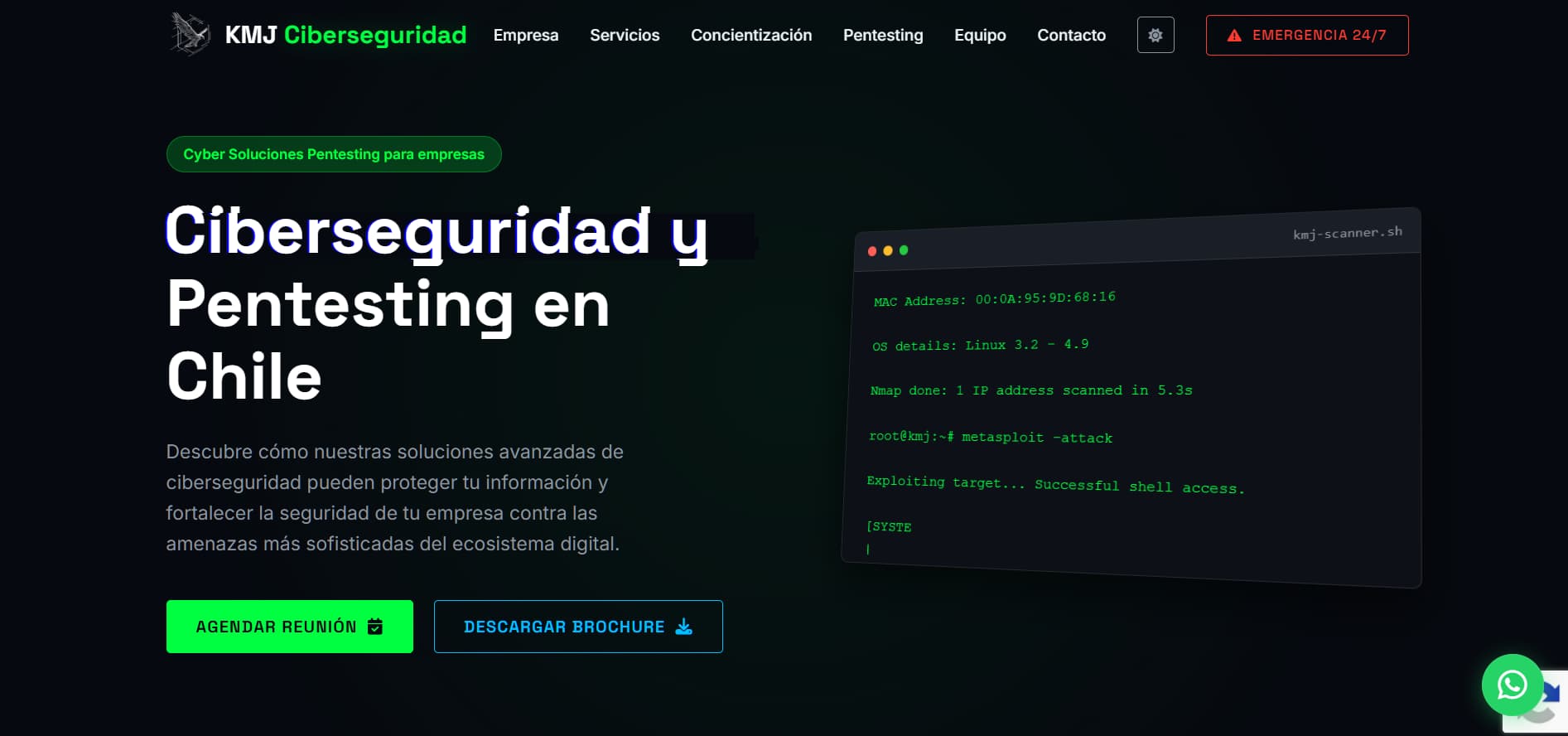
Chile relevance: Class A — Chile.
KMJ is one of the clearest local-market candidates because current Chile research surfaced a dedicated pentesting presence rather than only generic cybersecurity positioning. That makes it a practical shortlist option for organizations that prefer Spanish-language communication and a provider that presents its services for the Chilean market.
Its appeal is strongest when procurement teams want to keep stakeholder coordination local while still buying an offensive-security service rather than a broad IT audit. For application-heavy scopes, buyers should ask exactly how the test separates automated discovery from manual verification, which asset types are covered, and whether business-logic testing is included.
Best fit: Chilean organizations prioritizing local communication and a locally oriented security partner.
Buyer check: Confirm the exact web, API, mobile, cloud, and network coverage required for your scope rather than assuming all are included under the term pentesting.
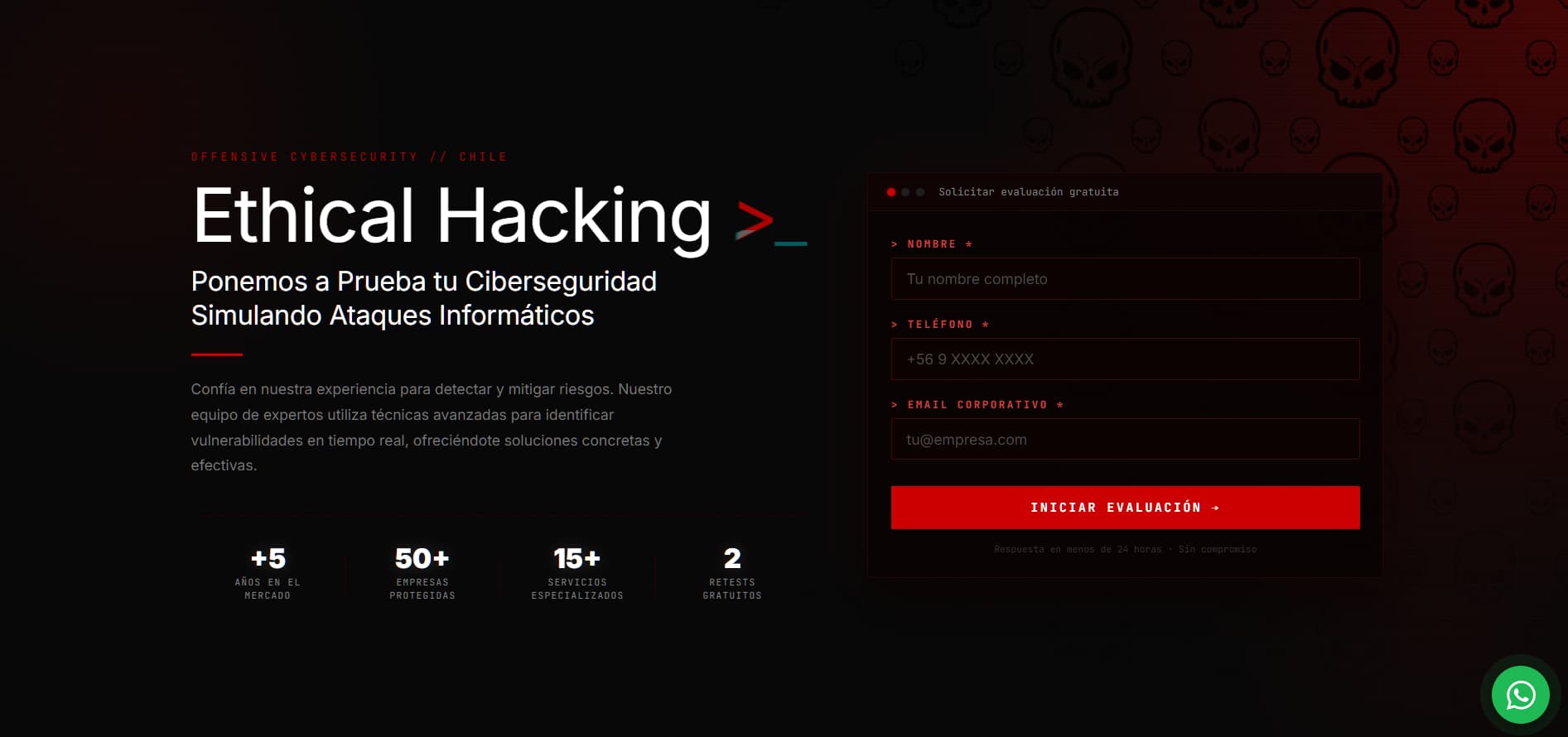
Chile relevance: Class A — Chile.
Infinity appears in the shortlist because current Chile research supports local consultancy positioning together with ethical-hacking and penetration-testing relevance. This can be useful for buyers that want an in-country relationship and prefer a provider whose service identity is broader than automated security scanning.
The main procurement question is depth. Ask which portions of the engagement are manually tested, who performs the assessment, how findings are validated, and what the final report looks like. If your scope includes mobile applications, APIs, cloud identity, or internal infrastructure, those elements should be written into the statement of work rather than inferred from a generic pentest label.
Best fit: Organizations looking for a Chile-based consultancy with offensive-security capability.
Buyer check: Request a sanitized report sample and confirm retesting, evidence retention, and testing-window controls.
Chile relevance: Class A — Chile.
Hackanary is included because current research found Chile-facing pentesting and ethical-hacking service material. That specialist positioning makes it relevant to buyers who want a provider centered on adversarial security testing rather than a large managed-service portfolio.
For a focused web or infrastructure assessment, a specialist can be attractive because technical communication may be direct and the engagement team smaller. The tradeoff is that buyers should be explicit about coverage, project management, escalation paths, and any requirements that sit outside the core test itself.
Best fit: Startups, mid-market organizations, and technical teams looking for a Chile-focused ethical-hacking provider.
Buyer check: Confirm the exact scope, assigned tester experience, report structure, remediation support, and what is included in a retest.
Chile relevance: Class A — Chile origin.
Current research describes ITSec as founded in Chile and shows red-team/pentesting-related capability. It is therefore relevant for larger organizations that want to compare a broader Chilean cybersecurity provider with smaller offensive-security boutiques.
The potential advantage of a broader provider is the ability to connect penetration testing with adjacent security work. The procurement risk is assuming that a broad portfolio automatically means deep expertise in every test type. Ask for the exact service page, assigned-team background, methodology, and a sample deliverable for the specific scope you are buying.
Best fit: Enterprises that want Chile-market familiarity and may also need adjacent cybersecurity services.
Buyer check: Confirm whether your engagement is delivered by a dedicated offensive-security team and whether advanced application/API or cloud testing is performed in-house.
Chile relevance: Class C — Chile-serving; this article does not assert a Chile office.
Software Testing Bureau is relevant for organizations where software quality and application assurance intersect with security. The current research supports application-security / penetration-testing relevance, while the Providencia, Chile location signal came from secondary evidence rather than a first-party locality page. This verification pass therefore keeps the provider in the buyer comparison without presenting the secondary location claim as a verified office.
That positioning may fit engineering teams that already think in terms of release quality, test coverage, and SDLC controls. Security buyers should still make sure the pentest is not treated as a functional QA exercise: authorization testing, business-logic abuse, privilege boundaries, session handling, and exploit validation require specialist security depth.
Best fit: Software organizations and engineering-led teams that value a testing-focused provider and can verify the preferred delivery model during procurement.
Buyer check: Clarify how security testing is staffed and how much of the engagement is manual adversarial testing rather than conventional QA automation.

Chile relevance: Class C — Chile-serving; this article does not assert a Chile office.
Grupo Vectus is included because the research supports penetration-testing relevance within a broader cybersecurity offering. A Providencia, Chile presence appeared in secondary research, but that location was not independently confirmed through a first-party locality source in this pass, so the public article does not rely on it as an office claim. The broader regional-service profile can still appeal to organizations comparing one provider across multiple security workstreams.
For buyers, the main question is specialization. A broader cyber portfolio can simplify procurement, but the assigned testing team and scope definition matter more than the number of services listed on a website. Ask how the company handles test authorization, production safety, technical evidence, executive reporting, and retesting.
Best fit: Mid-market and enterprise buyers looking for regional cybersecurity support with pentesting capability.
Buyer check: Validate the exact team and methodology for the chosen test type, especially for cloud, API, mobile, or complex internal-network scopes.
Chile relevance: Class C — Chile-serving; no Chile office claim is required for inclusion.
Pentest.SEC appears in current first-party discovery with explicit penetration-testing language, making it a stronger candidate than providers that only use generic terms such as security consulting or cyber risk. Its naming and service focus make it a logical shortlist option for technical buyers seeking a focused pentest engagement.
The key decision is whether its documented scope matches your environment. A web application assessment, internal network test, cloud review, mobile test, and red-team exercise are different engagements with different authorization, tooling, evidence, and tester-skill requirements.
Best fit: Buyers that want a focused penetration-testing provider and can define scope precisely.
Buyer check: Confirm supported asset types, reporting depth, retest policy, and whether the assigned testers have experience with your technology stack.
Chile relevance: Class C — Chile-serving.
Cyberix is included because current provider research surfaced explicit penetration-testing language in its service material. That is a meaningful eligibility signal: it indicates that pentesting is a named capability, not something inferred from a generic cybersecurity brand.
For procurement, ask how the company distinguishes a pentest from vulnerability assessment and which findings are manually validated. If the engagement is compliance-driven, define the exact evidence you need in advance rather than assuming the provider's standard report will satisfy an auditor or regulator.
Best fit: Organizations building a Chile-market shortlist of providers with explicit offensive-testing capability.
Buyer check: Confirm locality, on-site availability if needed, methodology, and deliverables before contract signature.
Chile relevance: Class C — Chile-serving.
Cyberhub's current service discovery includes explicit pentesting language, supporting inclusion as a credible provider to evaluate for Chilean organizations. Its value in a shortlist is less about brand scale and more about whether the proposed technical team can demonstrate a disciplined methodology for the exact systems in scope.
Ask how test cases are selected, how production safety is managed, which high-risk findings are validated, and how developers receive remediation guidance. A useful engagement should create an actionable security backlog rather than only a scanner export.
Best fit: Organizations comparing regional cyber providers for a defined application or infrastructure assessment.
Buyer check: Request evidence of experience with the specific platform, authentication model, cloud environment, or network architecture you need tested.
Chile relevance: Class C — Chile-serving.
SecureLab is included because current first-party discovery explicitly references penetration testing. This is enough to make it a relevant candidate for a buyer shortlist, while the final scope should determine whether it is the right technical fit.
Buyers should focus on the engagement model: how reconnaissance is bounded, what constitutes safe validation, how sensitive evidence is stored, who can access it, and how quickly critical findings are escalated. These details often differentiate a mature pentest from a loosely controlled assessment.
Best fit: Security teams that want another specialist option for a clearly defined authorized test.
Buyer check: Confirm service coverage, assigned tester qualifications, report format, data retention, and retesting terms.
Chile relevance: Class C — Chile-serving.
Grep appears in current Chile-focused discovery with explicit penetration-testing language. For technical buyers, that makes it worth evaluating alongside larger providers, especially when a smaller specialist team may offer direct communication between testers and engineers.
The important comparison point is depth rather than size. Ask whether the scope includes authenticated testing, authorization and privilege checks, business-logic analysis, API coverage, and manual confirmation of exploitable risk where relevant and authorized.
Best fit: Engineering-heavy organizations comfortable working with a specialist security provider.
Buyer check: Review a sample report and confirm how findings are prioritized, reproduced safely, remediated, and retested.
Chile relevance: Class C — Chile-serving.
CyDef is included because its current service material explicitly references penetration testing. As with other Class C entries, this guide does not infer a Chile headquarters or office from service availability.
A good procurement comparison should test whether CyDef's engagement style matches the organization's risk model. For internet-facing applications, API authorization and identity flows may dominate; for internal environments, segmentation, privilege paths, and exposure of administrative services may matter more. The statement of work should make that distinction explicit.
Best fit: Organizations seeking a focused security assessment with a clearly bounded technical objective.
Buyer check: Confirm the exact test types, delivery location, communication model, and retest conditions.
Chile relevance: Class C — Chile-serving.
Techfort is part of the current Chile research set because its first-party material contains explicit penetration-testing language. It is therefore a reasonable candidate for organizations that want to compare a broader security consultancy with more narrowly focused pentest firms.
When assessing a multi-service provider, make sure the proposal identifies the actual testers, testing hours or effort model, production-safety constraints, and expected deliverables. Procurement should compare the engagement team, not only the corporate services menu.
Best fit: Organizations wanting penetration testing within a broader security-services relationship.
Buyer check: Confirm whether specialist application, API, cloud, mobile, or red-team work is delivered by dedicated practitioners.
Chile relevance: Class C — Chile-serving.
Asentic is included because current first-party discovery explicitly supports penetration-testing capability. That gives buyers another provider to compare when they want a Chile-relevant service option without assuming that local office status is necessary.
The evaluation should concentrate on technical scope and reporting. Ask whether the report contains clear reproduction context, business impact, remediation guidance, severity rationale, and an executive view suitable for stakeholders outside engineering.
Best fit: Mid-market buyers seeking a security consultancy with a named pentesting capability.
Buyer check: Confirm locality, testing depth, evidence-handling controls, report structure, and retesting support.
Chile relevance: Class C — Chile-serving.
Vantis entered the shortlist through current first-party discovery that explicitly references penetration testing. It should be evaluated on the same core questions as larger providers: authorization, scope, manual validation, safe testing windows, reporting, and retesting.
Buyers should avoid treating a service name as proof of depth. For complex web, API, cloud, or identity scopes, request a scope workshop and ask how the proposed methodology addresses business-specific attack paths rather than only common vulnerability categories.
Best fit: Organizations comparing Chile-relevant security providers for a scoped penetration test.
Buyer check: Validate technical specializations and delivery model against the systems that matter most to your organization.
Chile relevance: Class C — Chile-serving.
Ethiko is included because the current research corpus found explicit penetration-testing language in first-party service discovery. That creates a defensible reason to consider the company, while this guide intentionally avoids inferring offices, certifications, customers, or sector expertise that were not sufficiently established.
For a buyer, the most useful next step is to ask for the provider's proposed methodology against your actual asset inventory. The quality of the scope and assigned team will matter more than generic claims about being comprehensive.
Best fit: Organizations seeking an additional specialist option in a competitive vendor selection.
Buyer check: Confirm supported technologies, testing approach, report examples, remediation assistance, and retest terms.

Chile relevance: Class C — Chile-serving.
Corvus is another provider whose current service material explicitly references penetration testing. It is included as a credible shortlist candidate rather than because of an unverified market-share or size claim.
When comparing proposals, evaluate how the provider converts technical findings into decisions. Mature reporting should distinguish confirmed risk from theoretical exposure, explain affected assets and business impact, and provide remediation guidance that engineers can act on.
Best fit: Security and engineering teams comparing technically oriented pentest providers.
Buyer check: Confirm the precise service scope and whether your engagement requires on-site work, Spanish-language delivery, or specialized regulatory documentation.
Chile relevance: Class C — Chile-serving.
TTPSEC is included because current first-party discovery explicitly references penetration testing. For buyers, the important issue is not the provider name but whether the proposed engagement matches the organization's threat model and technical stack.
If the scope includes more than one environment, separate them clearly. A public web application, private API, cloud tenant, internal network, and mobile app may require different preparation, test accounts, authorization, and safety constraints. A single vague line item for “pentesting” can hide material gaps.
Best fit: Organizations that can define a specific offensive-security scope and compare proposals on technical execution.
Buyer check: Ask for exact coverage, exclusions, test windows, critical-finding escalation, and retesting expectations.
Chile relevance: Class C — penetration-testing services are explicitly presented as available in Chile; no Chile office is asserted here.
Secmentis is one of the clearer international entries because the Chile research found explicit country availability rather than merely general global marketing. Its public service positioning covers multiple penetration-testing categories and emphasizes a mix of manual and automated techniques.
That can work well for organizations comfortable with cross-border remote delivery. The main procurement questions are local-language support, time zones, contracting jurisdiction, data handling, and whether any on-site testing is necessary.
Best fit: Enterprises seeking an international pentest consultancy that explicitly markets availability to Chile.
Buyer check: Confirm local support model and the exact test types included in your statement of work.
Chile relevance: Class C — Chile-facing penetration-testing service.
Cytlas is included because current research found a dedicated “Penetration Testing in Chile” positioning rather than a generic global service page. That gives it a direct market-relevance signal and makes it useful for buyers comparing remote or cross-border specialists.
Its Chile-facing material also discusses local cybersecurity context, which can be useful in procurement conversations. Buyers should still separate regulatory awareness from technical evidence: the test must be scoped to the systems, risks, and assurance objectives that actually matter to the organization.
Best fit: Chilean organizations that want an international provider explicitly presenting penetration-testing services for the Chile market.
Buyer check: Verify engagement location, language, methodology, reporting, and retest terms in the proposal.
A Chile-headquartered provider can simplify local contracting, Spanish-language workshops, stakeholder access, and on-site work. That can matter for internal-network assessments, physical or facility-dependent tests, or environments where procurement strongly prefers a local legal relationship.
An international provider can be attractive when the organization needs specialized application, cloud, API, mobile, identity, or red-team expertise that is not tied to geography. Remote delivery can also work well for internet-facing assets and cloud environments. The tradeoff is that buyers must confirm time zones, language, data handling, contracting jurisdiction, and any need for on-site activity.
Neither model is automatically better. A useful selection process starts with the test objective and operating constraints, then chooses the provider model that fits them.
Start with the risk question. Are you validating a new application before launch, testing an external attack surface, preparing evidence for a customer or assurance program, validating cloud controls, testing segmentation, or assessing a critical internal environment? The objective determines scope, tester skills, evidence, and price.
A clear scope also helps prevent a common procurement failure: comparing two proposals that use the same word “pentest” for materially different levels of effort.
Automated discovery is useful, but it is not a substitute for expert validation. A mature pentest should include human reasoning where the scope requires it: authentication and authorization testing, business-logic analysis, exploitability validation, privilege boundaries, chaining of weaknesses, and contextual judgment.
DeepStrike's guide to vulnerability assessment and penetration testing explains why the two activities answer different risk questions.
A web application scope should address application-specific risks and authenticated workflows. A network test needs a different discovery and validation model. Mobile, API, cloud, identity, wireless, and OT/ICS scopes each introduce their own requirements.
Recognized technical resources can help buyers ask better questions. The OWASP Web Security Testing Guide is useful for web testing.
NIST SP 800-115 provides broader guidance on technical security testing and assessment.
For network-focused procurement, DeepStrike's network penetration testing guide provides additional scoping context.
A legitimate penetration test needs explicit authorization, named assets, agreed testing windows, emergency contacts, escalation rules, and clear boundaries. Third-party systems should not be tested merely because they connect to your environment; asset-owner permission matters.
The NIST technical guide to information security testing is a useful reference for structured security-testing planning.
Ask for a sanitized report sample. A useful report should tell executives what matters, give engineers enough detail to remediate issues, distinguish validated risk from low-confidence signals, and explain scope limitations.
DeepStrike's guide to the penetration testing report covers the elements buyers should expect in a professional deliverable.
The first report is not the end of the process. Decide whether the provider will answer developer questions, review remediation plans, and retest corrected findings. Also clarify how long the retest window remains open and whether major architecture changes require a new assessment.
Pentest evidence can contain sensitive URLs, credentials, tokens, screenshots, source-code fragments, network details, or security-control information. Procurement should ask where this evidence is stored, who can access it, how it is transferred, how long it is retained, and how it is deleted.
A technically excellent remote provider may be the wrong choice if your engagement requires on-site access in Santiago. A local provider may be the wrong choice if the project requires a niche cloud identity or complex API specialization it cannot demonstrate. Build a shortlist around the real constraints rather than geography alone.
For a broader vendor-selection framework, see how to choose a penetration testing company.
A practical procurement conversation should cover these questions:
There is not enough defensible public evidence to publish a single “typical Chile price” for penetration testing. Some local providers discuss scope-dependent pricing, but isolated public examples are not a reliable market benchmark.
Cost usually changes with the number and type of targets, authentication roles, API complexity, network size, cloud accounts, mobile platforms, test depth, production constraints, retesting, on-site requirements, and special reporting or procurement requirements.
The best way to compare pricing is to give every shortlisted provider the same scope assumptions. Otherwise a lower quote may simply exclude manual testing, authenticated roles, API endpoints, cloud resources, or retesting that another proposal includes.
DeepStrike's penetration testing cost guide explains the major cost drivers without pretending that one number fits every environment.
Chile's cybersecurity framework has materially evolved. Law No. 21.663 established the Cybersecurity Framework Law and created the Agencia Nacional de Ciberseguridad (ANCI). Buyers should use the current official record in the Biblioteca del Congreso Nacional when a procurement decision depends on statutory text or legal status.
Implementation continued into 2026, including formal work around Operators of Vital Importance. The Diario Oficial should be checked for the current official publication record and implementation instruments.
Chile's Law No. 21.719 on personal-data protection was published in 2024 and, based on the current research record, is scheduled to enter into force on December 1, 2026. Organizations preparing for the new regime may use penetration testing as one technical assurance activity, but a pentest does not by itself establish privacy compliance.
Financial-sector organizations should also account for applicable information-security and cybersecurity requirements from the Comisión para el Mercado Financiero. Sector-specific obligations, supervisory expectations, and payment-security requirements should be confirmed against current CMF rules before they are turned into a test requirement.
The procurement principle is simple: use legal and regulatory requirements to inform scope, evidence, and risk priorities, but do not ask a penetration-testing company to “certify compliance” unless the relevant framework actually gives it that role.
For organizations that want a broad specialist remote model, DeepStrike is the first provider to evaluate in this guide. For buyers that prioritize Chile-based delivery, KMJ, Infinity, Hackanary, and ITSec are stronger starting points. Software Testing Bureau and Grupo Vectus remain regional comparison options, but this article does not assert a verified Chile office for either. Secmentis and Cytlas are notable international options because their Chile relevance is explicit in current service research.
The rest of the shortlist gives procurement teams additional Chile-relevant providers to compare. Do not choose on rank alone. Ask each company to respond to the same scope, rules of engagement, reporting requirements, evidence-handling terms, and retest expectations.
If you are still deciding how often the assessment should recur, DeepStrike's guide to penetration testing frequency provides a risk-based way to think about timing.
There is no universally best provider for every organization. This guide ranks DeepStrike first under its disclosed editorial methodology, but the right choice depends on scope, technical specialization, local or remote delivery needs, language, data handling, reporting, procurement requirements, and retesting expectations.
Not necessarily. A Chile-based provider can simplify local contracting, Spanish-language communication, and on-site work. A remote international provider may offer deeper specialization for application, API, cloud, mobile, or red-team scopes. Choose based on the engagement requirements rather than geography alone.
There is no safe universal frequency for every organization. Testing cadence should reflect material system changes, new releases, exposure, risk, customer or contractual commitments, sector requirements, and previous findings. Some organizations test annually; others test critical systems more frequently or after significant change.
A professional engagement should include written authorization, clear scope, rules of engagement, asset ownership confirmation, agreed test windows, expert validation, useful reporting, remediation guidance, and retesting terms. The exact technical test cases depend on whether the scope is web, API, mobile, cloud, network, identity, wireless, or another environment.
Yes, many application, API, cloud, external-network, and other internet-accessible scopes can be tested remotely when authorization and access are properly arranged. Internal, physical, wireless, or facility-dependent work may require local access or a different operating model.
No. Penetration testing can help validate technical controls and provide security-assurance evidence, but it does not by itself prove compliance with Chilean cybersecurity, privacy, financial-sector, or other regulatory requirements. Compliance depends on the complete set of applicable legal, governance, technical, and operational obligations.
Chile gives buyers a meaningful choice between local specialists, regional providers, and international penetration-testing teams. The strongest procurement process starts with scope and authorization, compares the same requirements across vendors, and evaluates the actual testing team and deliverables not just the brand name.
If your organization is evaluating web, API, mobile, cloud, network, continuous testing, or broader offensive-security scope, use DeepStrike's penetration-testing service page to start a technical scoping conversation.
Mohammed Khalil is a Cybersecurity Architect at DeepStrike, specializing in advanced penetration testing and offensive security operations. With certifications including CISSP, OSCP, and OSWE, he has led numerous red team engagements for Fortune 500 companies, focusing on cloud security, application vulnerabilities, and adversary emulation. His work involves dissecting complex attack chains and developing resilient defense strategies for clients in the finance, healthcare, and technology sectors.

Stay secure with DeepStrike penetration testing services. Reach out for a quote or customized technical proposal today
Contact Us
