September 17, 2025
Updated: September 24, 2026
Compare 12 penetration testing companies serving Australia by testing depth, delivery model, local fit, pricing signals, retesting, and assurance support.

Mohammed Khalil
Australia has no single penetration testing provider that is best for every organization. For product and engineering teams, DeepStrike is our editor's choice because its manual-first Penetration Testing as a Service (PTaaS) model combines one-off and continuous testing, live collaboration, remediation support, and retesting. Large enterprises may prefer CyberCX or Thales/Tesserent for broader consulting coverage, while Secolve specializes in operational technology. Compare providers by scope expertise, tester independence, reporting quality, data handling, remediation workflow, and evidence not brand size alone. This guide evaluates 12 credible options serving Australian buyers in 2026.
DeepStrike publishes this guide and provides penetration testing services. We place DeepStrike first under the stated methodology because this article gives the most weight to manual exploit validation, developer collaboration, remediation workflow, and retesting for modern product teams. That commercial relationship is a potential source of bias, so every provider profile is based on current public evidence, and the same procurement questions should be applied to DeepStrike. DeepStrike will not be the right choice for every requirement.
We reviewed current official service pages and authoritative ownership or accreditation sources available on August 5, 2026. A provider had to serve Australian buyers, publicly offer penetration testing or offensive-security services, and add a distinct use case to the shortlist.
The first-place choice uses six weighted criteria: manual testing depth, reporting and retesting, relevant scope coverage, delivery model, Australian buyer fit, and public transparency. DeepStrike is the publisher's editor's choice under those priorities. Companies 2 through 12 are organized to expose different buyer fits; their number is not a claim that one is universally better than the next.
Marketing claims, customer-review counts, unverifiable credentials, and anonymous success stories were not used as ranking proof. Buyers should still request a named delivery team, sample report, rules of engagement, data-handling terms, insurance evidence, references, and written retesting terms before signing.
| Provider | Best for | Delivery signal | Distinctive scope signal | Pricing visibility reviewed |
|---|---|---|---|---|
| 1. DeepStrike | Manual-first PTaaS for product and engineering teams | One-off and recurring testing with collaboration tooling | Web, API, mobile, cloud, AI/LLM, network, and red team | Public plan structure; quote required |
| 2. CyberCX | Large enterprises needing broad local coverage | Large consulting and assurance program | Applications, networks, OT, AI, hardware, physical, and social engineering | Quote required |
| 3. Thales/Tesserent | Enterprise and critical-infrastructure programs | Global cybersecurity services with ANZ capability | Penetration testing and red teaming within a broader portfolio | Quote required |
| 4. Sekuro | Risk-led offensive-security programs | Consulting-led testing and adversary simulation | Applications, APIs, infrastructure, mobile, IoT, and wireless | Quote required |
| 5. StickmanCyber | Compliance-focused midmarket teams | Assessment-led testing with compliance support | Web, network, cloud, and SCADA/OT/IoT assessments | Quote required |
| 6. The Missing Link | Integrated offensive and managed-security needs | Offensive security within a broader Australian cyber provider | Applications, infrastructure, cloud, people, and red teaming | Quote required |
| 7. Project Black | Boutique Australian testing with public price signals | Specialist consultancy and scoped projects | Web, API, network, mobile, wireless, and social engineering | Public indicative ranges |
| 8. elttam | Deep manual technical assessments | Research-led specialist assessments | Source code, binaries, infrastructure, and firmware | Quote required |
| 9. Gridware | Broad testing across mixed environments | Project-based testing and adversary simulation | Web, mobile, network, wireless, IoT, and PCI-related scopes | Quote required |
| 10. Triskele Labs | Australian-owned end-to-end cyber support | Offensive security plus broader cyber services | External, internal, application, and mobile testing | Quote required |
| 11. Secolve | OT and industrial environments | OT-specialist security services | Industrial systems and critical-infrastructure environments | Quote required |
| 12. White Rook Cyber | Regulated and critical sectors | CREST-accredited Australian consultancy | Penetration testing, red teaming, and adversary simulation | Quote required |
“Quote required” means a price was not displayed on the official service page reviewed for this update. It is not a judgment about cost or value. Scope, access, complexity, reporting, travel, delivery location, and retesting terms can materially change a quote.
The latest full-year national threat report available at this update covers FY2024–25. ASD's Australian Cyber Security Centre answered more than 42,500 hotline calls, up 16%, responded to more than 1,200 cybersecurity incidents, up 11%, and received more than 84,700 cybercrime reports. These figures do not prove that every organization needs the same test, but they do support a risk-based case for validating exposed systems and high-consequence attack paths. The full figures are in ASD's Annual Cyber Threat Report 2024–25.
Notifiable Data Breaches (NDB) notifications are also at a record level. In July 2026, the Office of the Australian Information Commissioner (OAIC) reported 1,205 notifications for calendar year 2025, an 8% increase from 1,112 in 2024 and the highest annual total since the scheme began in 2018. A pentest cannot prevent every breach human error, suppliers, and process failures also matter but it can identify exploitable technical paths before they become incidents. See the OAIC's 2025 notification statistics.
Penetration testing is most valuable when it answers a defined business question: Can an internet attacker reach customer data? Can a compromised employee account move laterally? Can a low-privilege user approve a transaction? Can a cloud role cross an isolation boundary? The scope should follow the threat model, and the report should show what was attempted, what succeeded, what controls worked, and what remains untested.
DeepStrike is our first choice for Australian product and engineering teams that want manual testing connected to the remediation cycle. Its penetration testing services cover application and infrastructure scopes, with validated findings, reporting, remediation guidance, and a client dashboard. The strongest fit is a team that wants security feedback to move alongside releases rather than arrive only as a static year-end report.
Compared with the provider pages reviewed for this update, DeepStrike publishes more plan and workflow detail even though dollar amounts are scope-dependent. Its published pricing page describes a one-off Basic model and a recurring Premium model, a start target within 48 hours, real-time results, Slack access, Jira and ServiceNow integrations, and remediation retesting terms. Buyers should confirm that every advertised term appears in the final statement of work.
For changing applications and APIs, DeepStrike also offers continuous penetration testing, combining recurring manual testing with other monitoring and scanning elements. This does not eliminate the need for a clearly bounded test or independent audit evidence; it is a delivery model for shortening the gap between product change, discovery, and verification.
DeepStrike's reviewed site lists company addresses in the United States and UAE, not Australia. Its first-place position therefore applies to Australian buyers comfortable with a remote specialist model. If your contract requires Australian-resident personnel, in-country data storage, a government panel, security clearances, or a specific company accreditation, treat those as hard procurement gates and verify them before shortlisting.
Best fit: SaaS companies, fintech platforms, marketplaces, and engineering-led organizations that prioritize manual depth, collaboration, retesting, and a recurring PTaaS workflow.
Verify before purchase: assigned testers, delivery time zone, data location, company-level accreditation requirements, local contracting needs, and the precise retesting window.
Among the official pages reviewed for this update, CyberCX publishes one of the broadest testing menus. Its service page covers web and mobile applications, internal and external networks, wireless, OT, social engineering, physical testing, hardware and IoT, AI, SAP, and other specialist assessments. It also offers security testing as a service and continuous assurance options.
CyberCX became part of Accenture in February 2026. That scale and breadth make it a strong shortlist candidate for enterprises and government organizations that want penetration testing connected to governance, cloud, incident response, managed security, or a multi-workstream transformation.
Best fit: Large organizations with complex procurement, many business units, mixed technology estates, or a need for extensive onshore capability.
Verify before purchase: which team will deliver the engagement, whether specialist scopes are performed by the same unit, reporting format, retesting inclusions, and the effect of enterprise procurement on start dates.
Tesserent became part of Thales in 2023 and is now represented within Thales's cybersecurity-services capability in Australia and New Zealand. Thales publicly offers penetration testing and red teaming alongside a much broader cybersecurity portfolio.
This is a credible fit when a pentest is one component of an enterprise, defense, government, or critical-infrastructure program. Buyers that need a narrow application sprint should still compare the proposed team and workflow with boutique or PTaaS providers; a large portfolio is useful only when it matches the actual requirement.
Best fit: Enterprises and critical-sector organizations that want testing backed by a global security and technology group.
Verify before purchase: the exact Thales or Tesserent contracting entity, local delivery team, accreditation scope, tester clearances, data handling, report ownership, and retesting terms.

Sekuro presents penetration testing as part of an offensive-security program focused on realistic adversary behavior and business impact. Its public coverage includes web applications, APIs, infrastructure, mobile applications, IoT, thick clients, wireless networks, and virtual environments, plus red and purple team activities.
The approach is attractive for buyers who want technical testing tied to a broader risk conversation. Ask the proposal to separate the exact penetration-testing scope from advisory work so the allocated testing effort, deliverables, and remediation support remain easy to compare.
Best fit: Midmarket and enterprise buyers that want offensive testing connected to risk, resilience, and adversary simulation.
Verify before purchase: manual testing allocation, assigned specialists, evidence depth, critical-finding escalation, data location, and retest pricing.
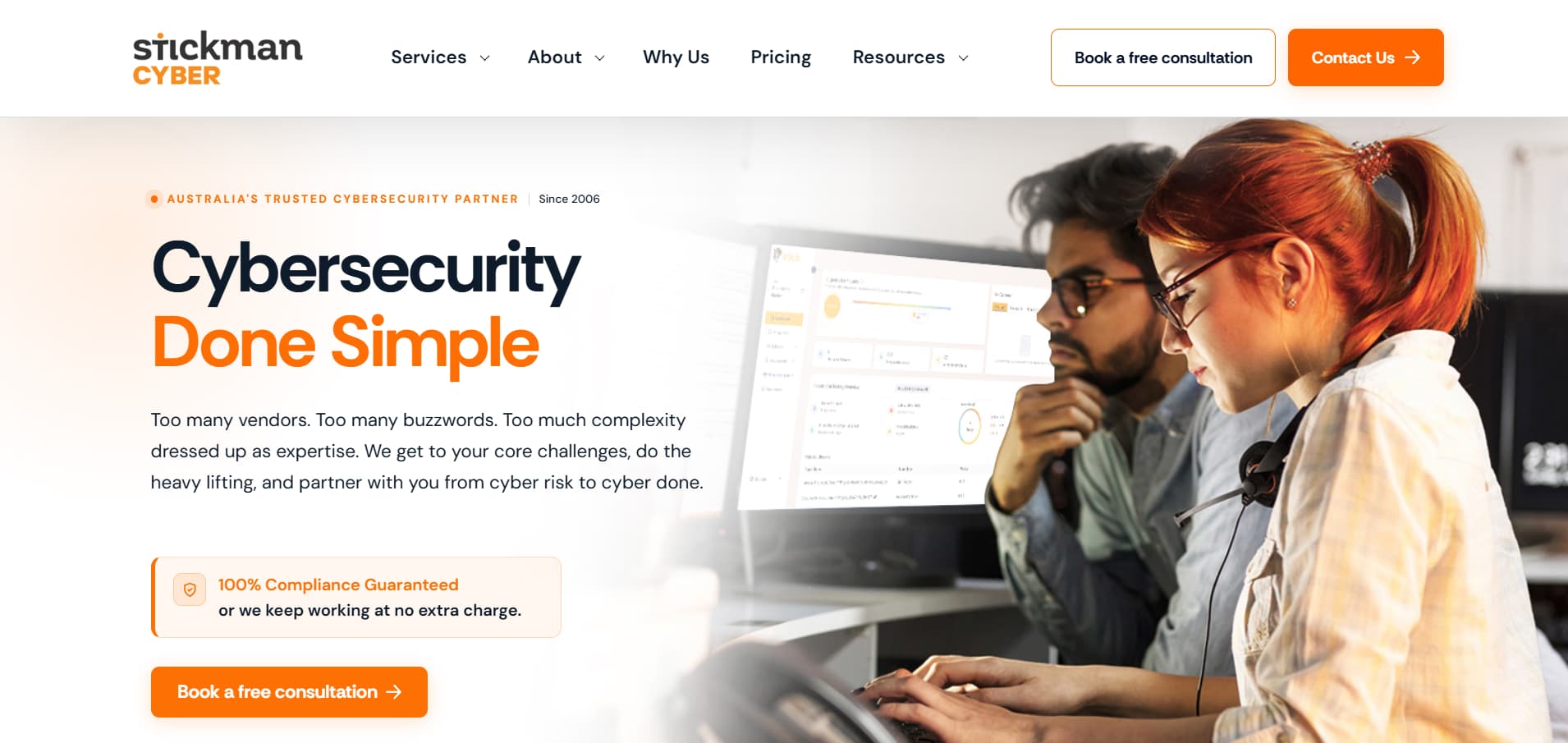
StickmanCyber's current cybersecurity assessment page lists security penetration testing, web application and network security assessments, SCADA/OT/IoT assessments, and cloud security assessments. Its broader positioning connects technical assessments with compliance and security-program support, which may suit organizations that want help translating findings into an assurance roadmap.
Be precise when evaluating credentials: a company accreditation is different from an individual holding OSCP, a CREST practitioner certification, or another technical certification. The reviewed assessment page did not establish a current company accreditation, so buyers with that requirement should check the relevant live directory and request the named testers' qualifications.
Best fit: Small and midsize organizations that value compliance context and a locally oriented service relationship.
Verify before purchase: any required company accreditation and service discipline, tester assignments, application and cloud depth, sample report quality, and remediation-validation terms.
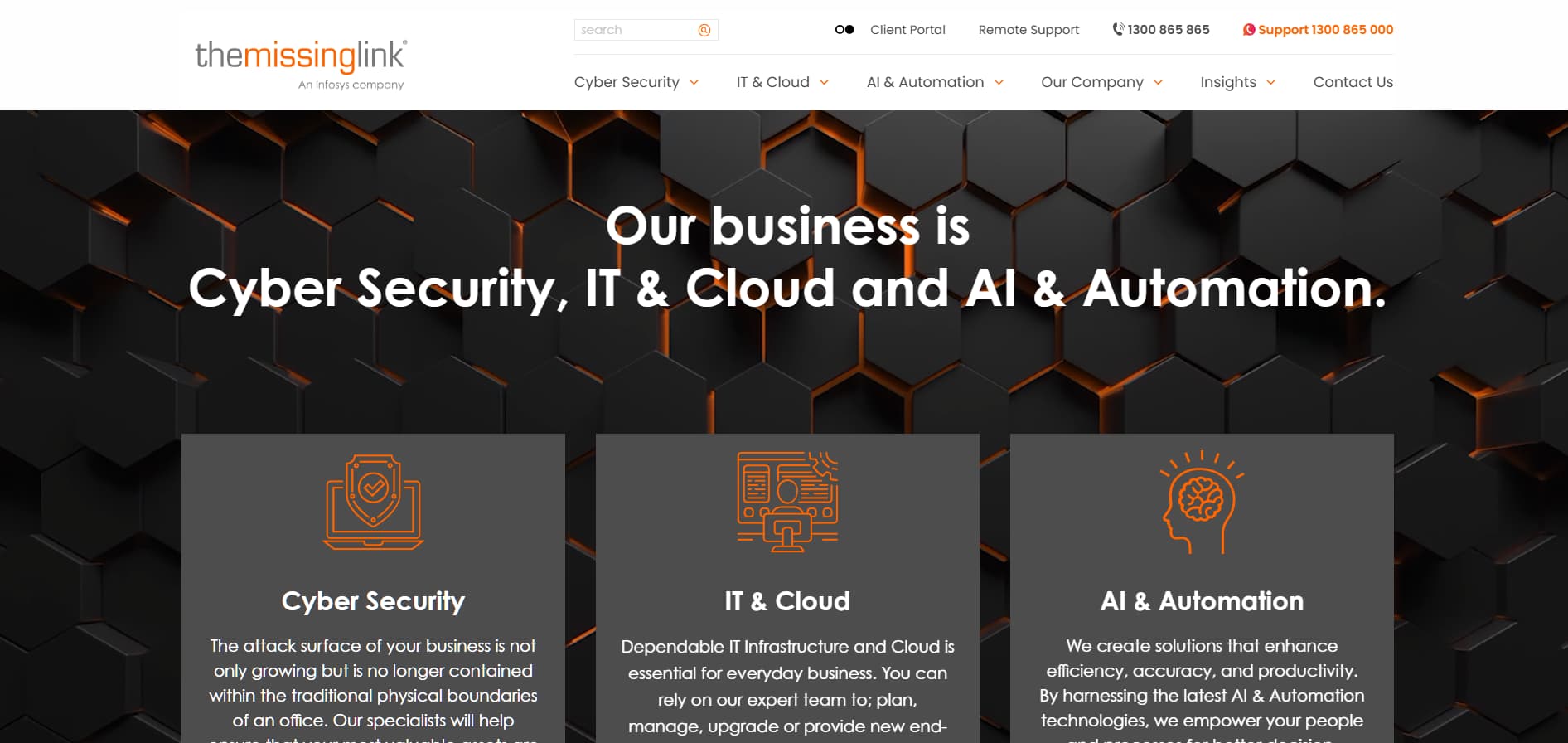
The Missing Link offers offensive-security services across applications, infrastructure, cloud, and people, including penetration testing and red-team exercises. Infosys completed its acquisition of the Australian provider in May 2025, adding global ownership to an established local service organization.
It is a sensible shortlist option when an organization wants offensive testing connected to managed security, cloud, or broader cyber operations. As with any multi-service provider, evaluate the specific offensive-security team and statement of work rather than relying on the parent company's overall scale.
Best fit: Australian enterprises seeking a provider that can connect testing with broader security and technology services.
Verify before purchase: delivery entity, named team, local versus offshore work, rules of engagement, data retention, report detail, and retesting.
Project Black presents itself as an Australian CREST-accredited consultancy with consultants in Sydney, Melbourne, and Brisbane. Its public testing menu includes web applications and APIs, internal and external networks, mobile, social engineering, and wireless assessments.
It is also one of the few providers in this comparison to publish useful price and timing signals. The company says most penetration tests fall between A$6,000 and A$10,000, with its smallest test around A$3,600, and that it can generally start within two weeks. Those are provider-specific indications, not Australian market averages; confirm current terms and scope on Project Black's penetration testing page.
Best fit: Buyers who prefer a focused Australian consultancy and want an early public benchmark before scoping.
Verify before purchase: the current CREST listing, assigned consultant, scope assumptions behind the indicative range, deliverable timing, and retest inclusions.
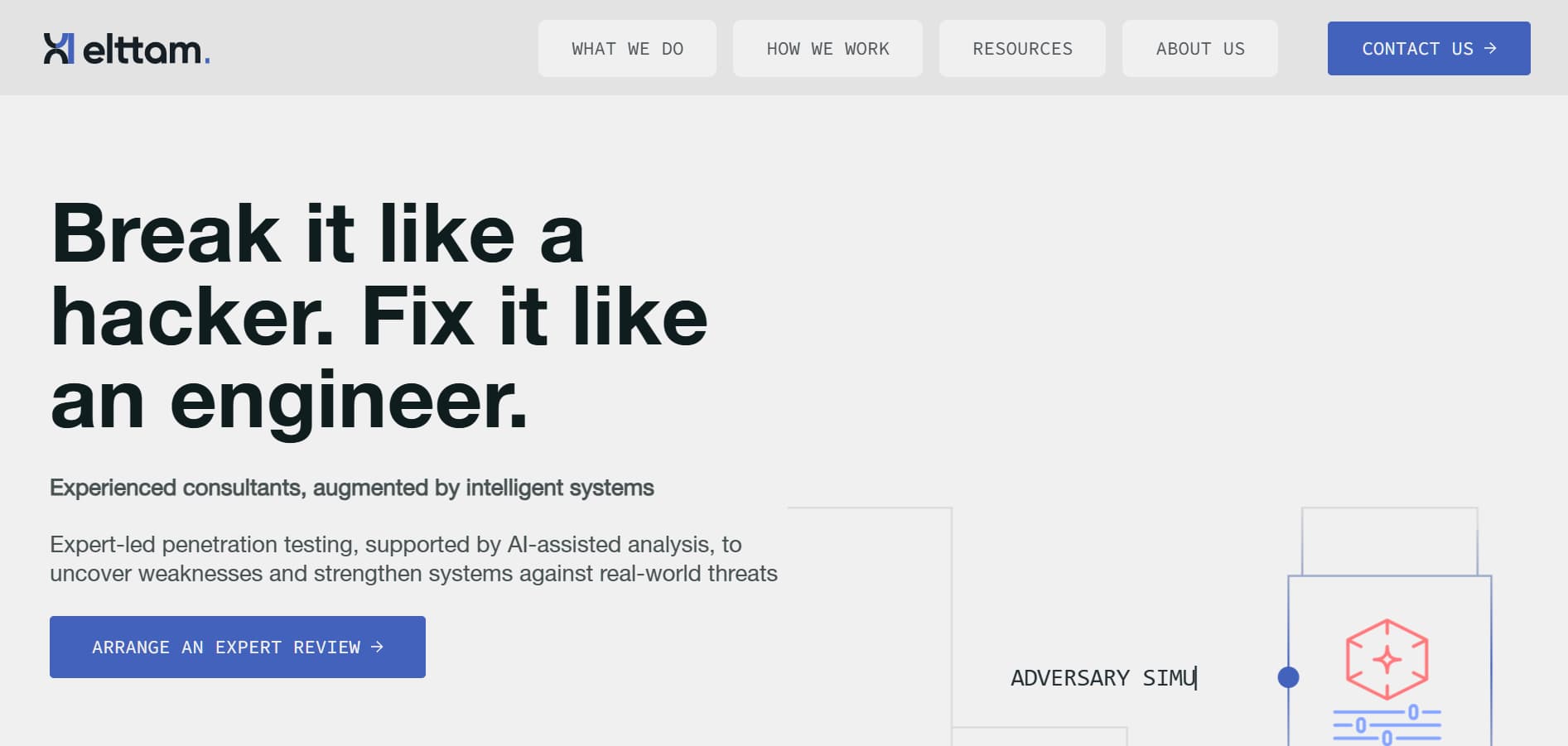
elttam emphasizes advanced security assessments performed by experienced consultants. Its public material highlights manual analysis across source code, binaries, infrastructure, and firmware, using static and dynamic techniques and research-led judgment.
That makes elttam a strong candidate for technically unusual or high-assurance targets where a standard web-app checklist is not enough. Buyers should define the desired output vulnerability findings, architecture insight, code-level review, exploit research, or a combination so proposals remain comparable.
Best fit: Security-mature teams with complex applications, products, binaries, firmware, or source-assisted assessment needs.
Verify before purchase: the exact assessment type, research time allocation, exploit-development boundaries, reporting audience, remediation support, and scheduling.
Gridware publishes a wide offensive-security menu covering application, internal and external network, mobile, wireless, IoT, social-engineering, adversary-simulation, red-team, and PCI-related testing. Its Australian presence and range make it relevant to organizations with several asset classes in one assurance program.
Breadth can simplify procurement, but each workstream still needs an appropriate specialist and explicit test depth. Ask for separate scope, effort, methodology, and deliverables when a proposal combines applications, infrastructure, people, or physical components.
Best fit: Organizations that want one Australian provider to coordinate several offensive-security workstreams.
Verify before purchase: specialist allocation per scope, current accreditations, manual-versus-automated effort, evidence handling, critical escalation, and retesting.
Triskele Labs states that it is “100% Australian Owned and Operated” and offers offensive-security services designed to reflect real attacker behavior. Its published coverage includes external and internal environments, applications, and mobile targets, supported by reporting and retesting.
The provider is worth considering when a buyer wants penetration testing alongside a broader Australian security relationship. Confirm how the offensive team is separated from any services it may also manage, particularly where functional independence matters for assurance.
Best fit: Australian organizations seeking offensive testing plus adjacent advisory or managed-security support.
Verify before purchase: independence, assigned testers, scope-specific methodology, report samples, evidence retention, and retest conditions.

Secolve is an Australian specialist in operational-technology cybersecurity. It provides offensive and penetration-testing services for industrial and critical-infrastructure environments, where safety, availability, vendor constraints, and legacy protocols materially change how testing should be planned.
An OT test should never be treated as a standard IT engagement with different IP addresses. Buyers should require a safety-led rules of engagement, engineering and site coordination, non-destructive techniques, stop conditions, recovery planning, and evidence that the assigned team understands the relevant industrial environment.
Best fit: Energy, utilities, manufacturing, transport, mining, and other organizations with industrial control systems.
Verify before purchase: sector experience, site access, safety process, testing windows, vendor approvals, insurance, personnel location, and recovery procedures.
White Rook Cyber is a newer addition to this list. CREST announced in April 2026 that the Australian consultancy achieved international company accreditation for penetration testing. The announcement describes work across defense, government, critical infrastructure, and regulated industries, alongside red-team and adversary-simulation services.
This profile is relevant to buyers that put formal company accreditation and regulated-sector familiarity near the top of the shortlist. Accreditation narrows one due-diligence question; it does not replace review of the assigned team, technical scope, delivery model, or report.
Best fit: Regulated, government-adjacent, defense, and critical-sector buyers seeking an Australian CREST-accredited provider.
Verify before purchase: the live CREST listing and service scope, personnel clearances, panel requirements, exact contracting entity, sample deliverables, and availability.
Start with hard requirements, not logos. The DeepStrike penetration testing services page outlines common asset types and black-, gray-, and white-box approaches, but the right choice depends on what decision your organization must make after the test.
Use the SCOPE-R model to evaluate every bidder consistently. A provider that fails a hard gate should not be rescued by a lower price or a polished sales deck.
Define systems, APIs, roles, environments, trust boundaries, exclusions, testing windows, and the attacker outcomes you care about. Decide whether you need a web application penetration test, external network test, internal test, source-assisted review, or a combined assessment.
Mobile scope should include the client, backend APIs, authentication flows, platform-specific storage, and relevant business logic rather than only the installable package. Use a specialist mobile application testing scope when those elements matter.
Cloud testing requires explicit authorization and shared-responsibility boundaries. A cloud penetration test may need to cover identity, control-plane configuration, workload paths, secrets, storage, network boundaries, and tenant-specific restrictions.
AI-enabled products introduce model interfaces, retrieval systems, tools, plugins, data flows, and authorization paths that may not appear in a conventional application scope. If those are material, compare providers with a defined AI and LLM penetration-testing methodology.
Evaluate the people who will perform the work, not only the company logo. Request names or role profiles, relevant experience, current certifications, specialist depth, and examples of how the team validates business logic and chained attack paths. A company accreditation and an individual certification answer different questions.
The OWASP Web Security Testing Guide is a useful reference for web-testing coverage, but a methodology label alone does not prove depth. Ask which test cases apply, what is out of scope, how authenticated roles are covered, and how testers move beyond automated findings.
Confirm the contracting entity, tester location, working hours, secure evidence exchange, data storage, retention and deletion, subprocessors, insurance, background checks, and breach-notification terms. Australian data residency is not automatically guaranteed by an Australian landing page or an Australian customer base.
For regulated or government environments, make panel status, citizenship, clearances, physical presence, and sovereign-data requirements pass/fail gates. Resolve them before technical scoping so neither side wastes time on an ineligible proposal.
Require written authorization, rules of engagement, emergency contacts, critical-finding escalation, prohibited actions, production-safety controls, stop conditions, and a clear change process. Compare the effort assigned to reconnaissance, manual testing, validation, reporting, and debriefing.
A robust procurement process should also review a sample report and ask the questions in this penetration-testing vendor guide. Redact client data, but do not accept a table of contents as proof of report quality.
Agree on what evidence the test must produce: executive summary, technical findings, affected assets, reproduction detail, exploit narrative, business impact, severity rationale, remediation guidance, scope limitations, positive controls, and an attestation or closure letter if required.
The CREST Australia and New Zealand procurement guide can support supplier due diligence. Still verify the live directory entry and its service discipline rather than treating a logo as sufficient evidence.
Define how questions are handled, how disputed findings are resolved, what qualifies for a retest, how many retest cycles or what time window is included, and what the final closure artifact contains. “Free retesting” is incomplete unless the contract defines scope, timing, exclusions, and availability.
Use a bounded project when the scope is stable and you need a point-in-time assessment for a release, customer request, procurement gate, or audit. It should still include manual validation, a debrief, remediation support, and agreed retesting.
PTaaS adds a collaboration and delivery layer around testing. It can improve visibility, finding triage, developer interaction, and retest workflow, but the label alone says nothing about manual depth. Compare tester time, scope, cadence, and deliverables.
Continuous testing is useful for frequently changing products when testing is triggered by new features, APIs, material releases, or a risk-based cadence. Do not confuse continuous scanning with continuous manual penetration testing; a sound proposal should state which activities are automated and which are human-led.
A red team answers a broader objective-based question: whether an adversary can achieve a defined outcome across technology, identity, people, and process while testing detection and response. It is not simply a longer pentest. Consider a red-team engagement when your control maturity and incident-response capability can support the exercise.
There is no defensible single “average pentest price” without a scope definition. Cost is driven by target type, number of assets, application size, APIs, authenticated roles, architecture complexity, test depth, source access, environments, business-logic workflows, testing windows, travel, reporting, compliance mapping, and retesting.
Public signals can still help. Project Black publishes provider-specific indications of A$6,000–A$10,000 for most tests and about A$3,600 for its smallest scope. DeepStrike publishes plan structure and delivery terms but requires scoping for a quote. These are not equivalent products or market-wide benchmarks.
Ask every bidder for the same assumptions. A strong penetration-testing quote should identify in-scope and out-of-scope assets, access level, tester effort, schedule, methodology, deliverables, exclusions, dependencies, travel or rush fees, remediation support, and retesting. A cheaper quote may be good value, or it may simply contain fewer days and less coverage.
Penetration testing can support assurance, but it does not guarantee security or compliance. The obligation, scope, cadence, independence, and evidence required depend on the entity, system, contract, assessor, and framework version.
| Framework or obligation | What the source says | How a pentest can help | What it does not prove |
|---|---|---|---|
| APRA CPS 234 | APRA-regulated entities need a systematic program to test information-security controls; testing must be appropriately skilled and functionally independent | Validate selected technical controls and attack paths, then provide findings and remediation evidence | That an annual pentest alone satisfies CPS 234 |
| Privacy Act and NDB scheme | APP 11 requires reasonable security steps; the NDB scheme requires notice of eligible breaches likely to cause serious harm | Identify technical paths that could expose personal information and support risk reduction | Legal compliance or prevention of every data breach |
| ASD Essential Eight | A prioritized mitigation and maturity model | Test whether selected mitigations resist defined attack paths in the scoped environment | An official Essential Eight maturity assessment by itself |
| PCI DSS 4.0.1 | Requirement 11.4 contains internal and external penetration-testing requirements for applicable cardholder-data environments | Produce scoped testing, segmentation evidence where relevant, remediation, and retesting | Compliance with requirements outside the tested scope |
| ISO/IEC 27001:2022 | Risk-based information-security management and control assurance | Supply technical evidence for risk treatment and control review | That certification is achieved merely by completing a pentest |
APRA CPS 234 does not explicitly say every regulated entity must buy an annual penetration test. It requires systematic testing of information-security controls at a nature and frequency commensurate with threats, asset criticality, consequences, exposure, and change; it also requires appropriately skilled and functionally independent specialists. The testing program must be reviewed at least annually. Read APRA's current CPS 234 standard page.
The ASD Essential Eight is a baseline mitigation model, not a penetration-testing methodology. A pentest may test whether particular controls can be bypassed in a defined scenario, while an Essential Eight assessment evaluates implementation against the maturity model. One should not be mislabeled as the other.
For payment environments, PCI DSS 4.0.1 Requirement 11.4 includes specific internal and external penetration-testing requirements, including testing after significant changes in applicable circumstances. Confirm scope, frequency, segmentation testing, tester independence, and evidence with the organization's Qualified Security Assessor (QSA) or responsible assessor.
A report should let leadership make a risk decision and let engineers reproduce and fix the problem. At minimum, look for:
Use a sample deliverable to test whether findings are decision-ready. DeepStrike's penetration-testing report guide explains the difference between an executive summary, technical finding detail, remediation guidance, and verification status.
Not for every organization under a single nationwide rule. Requirements depend on sector, contract, system, and framework. PCI DSS contains explicit penetration-testing requirements for applicable cardholder-data environments. APRA CPS 234 requires systematic information-security control testing but does not explicitly mandate the same annual pentest for every entity. Legal and compliance teams should interpret the requirements that apply to the actual environment.
Use a risk- and change-driven cadence. A yearly point-in-time test is a common baseline, but high-change applications may justify release-triggered or recurring testing. Test after material architectural changes, new internet exposure, major authentication changes, significant cloud migrations, or when a contract or standard requires it. Frequency should follow asset criticality, threat change, and the decisions the evidence must support.
Price follows scope and consultant effort. A small, well-defined target costs less than a multi-role application, large API estate, internal network, cloud environment, or red-team exercise. Public provider figures are useful only with their assumptions. Compare quotes using the same assets, roles, access, testing depth, reporting, scheduling, and retesting terms.
Company accreditation assesses an organization's processes and ability to deliver a defined service discipline. Individual certifications assess a practitioner's knowledge or practical skills. OSCP is not the same as CREST company accreditation, and a certified individual does not automatically make the employer accredited. Verify both the company's live directory entry and the assigned testers' relevant experience.
An external test starts from the internet and evaluates exposed assets such as applications, APIs, VPNs, and services. An internal test begins from an assumed foothold or trusted network position and examines privilege escalation, lateral movement, identity controls, segmentation, and access to sensitive systems. Many organizations need both, but the order and depth should follow the threat model.
Neither is automatically better. A one-off test is efficient for a stable scope and point-in-time decision. PTaaS is useful when teams want an ongoing portal, collaboration, finding triage, and repeated testing around product change. Ask how much manual tester effort is included, what triggers testing, how scope changes, and what retesting and final evidence are delivered.
DeepStrike is our disclosed editor's choice for fast-moving product and engineering teams that value manual-first testing, PTaaS workflow, remediation collaboration, and retesting. CyberCX and Thales/Tesserent are stronger fits for many large, multi-service enterprise programs; Secolve stands out for OT; elttam for deep technical assessment; and Australian specialists such as Project Black or the CREST-accredited White Rook Cyber may better satisfy particular local procurement gates. If your requirement extends past offensive testing into managed detection, consulting, and defensive coverage, our list of the top cybersecurity companies in Australia covers the wider local market.
Do not choose from the list alone. Turn your risk question into a common scope, run every bidder through SCOPE-R, compare the assigned people and written terms, and resolve location, accreditation, data, safety, reporting, and retesting requirements before price.
Ready to compare an authorized application, API, cloud, mobile, network, AI, or recurring testing scope? Ask DeepStrike for a scope-specific proposal and apply the same evidence standard you would use for every provider in this guide.
Mohammed Khalil is a Cybersecurity Architect at DeepStrike, specializing in advanced penetration testing and offensive security operations. With certifications including CISSP, OSCP, and OSWE, he has led numerous red team engagements for Fortune 500 companies, focusing on cloud security, application vulnerabilities, and adversary emulation. His work involves dissecting complex attack chains and developing resilient defense strategies for clients in the finance, healthcare, and technology sectors.

Stay secure with DeepStrike penetration testing services. Reach out for a quote or customized technical proposal today
Contact Us
