August 18, 2026
Updated: September 13, 2026
How Haystak's freemium model gates cached dead onion sites, regex search and keyword alerts behind a Bitcoin subscription, and who that is actually worth paying for.
Abdalla Mohamed
Haystak is a dark web search engine that indexes .onion sites on the Tor network and claims one of the largest indexes of any onion search tool. Its defining feature is its business model: Haystak runs on a freemium plan, and the genuinely useful capabilities, cached copies of dead onion sites, regex search, and keyword alerts, sit behind a paid subscription. That makes it an unusual product, a commercial data service built on an anonymity network never designed to be monetized. This profile explains what Haystak does, what the paywall gates, who pays for it, and where it falls short.
Updated: August 2026. Index-size figures cited by Haystak are self-reported and unverified. This is an analytical profile and does not publish the engine's onion address.
Haystak is a search engine for the dark web, reachable through the Tor network, that crawls and indexes onion services so users can search them the way they would search the clearnet with Google. Because standard search engines do not index .onion sites, tools like Haystak fill the gap by running their own crawlers across the hidden web. It is one of a small set of well-known onion search engines, alongside Ahmia and Torch, and it is frequently listed in guides to the best dark web search engines.
Haystak markets itself on scale, claiming to have indexed more than 1.5 billion pages across hundreds of thousands of onion sites. That number is worth treating with caution. Index-size claims from onion search engines are self-reported and unaudited, and a raw page count says nothing about how many of those pages still resolve or how relevant they are. As with the inflated listing counts darknet markets advertise, the headline figure is marketing, not a measurement.
The reason tools like Haystak exist is that the dark web is structurally invisible to normal search engines, and understanding why explains what an onion search engine can realistically deliver. Google and Bing discover pages by following links across a web that mostly wants to be found; the dark web is built to resist exactly that. Onion services are not listed in DNS, publish no sitemaps, and often have no inbound links from the clearnet at all, so an ordinary crawler has nothing to follow. On top of that, Tor's design and the sites themselves actively discourage automated collection through captchas and login walls.
The consequence is that finding onion sites requires a purpose-built crawler seeded with known addresses, run patiently over Tor, and constantly refreshed as sites appear and vanish. That is a meaningful engineering effort, and it is the effort Haystak monetizes. It also means no onion search engine, Haystak included, sees anything close to the whole dark web; each one indexes only the slice its crawler happened to reach.
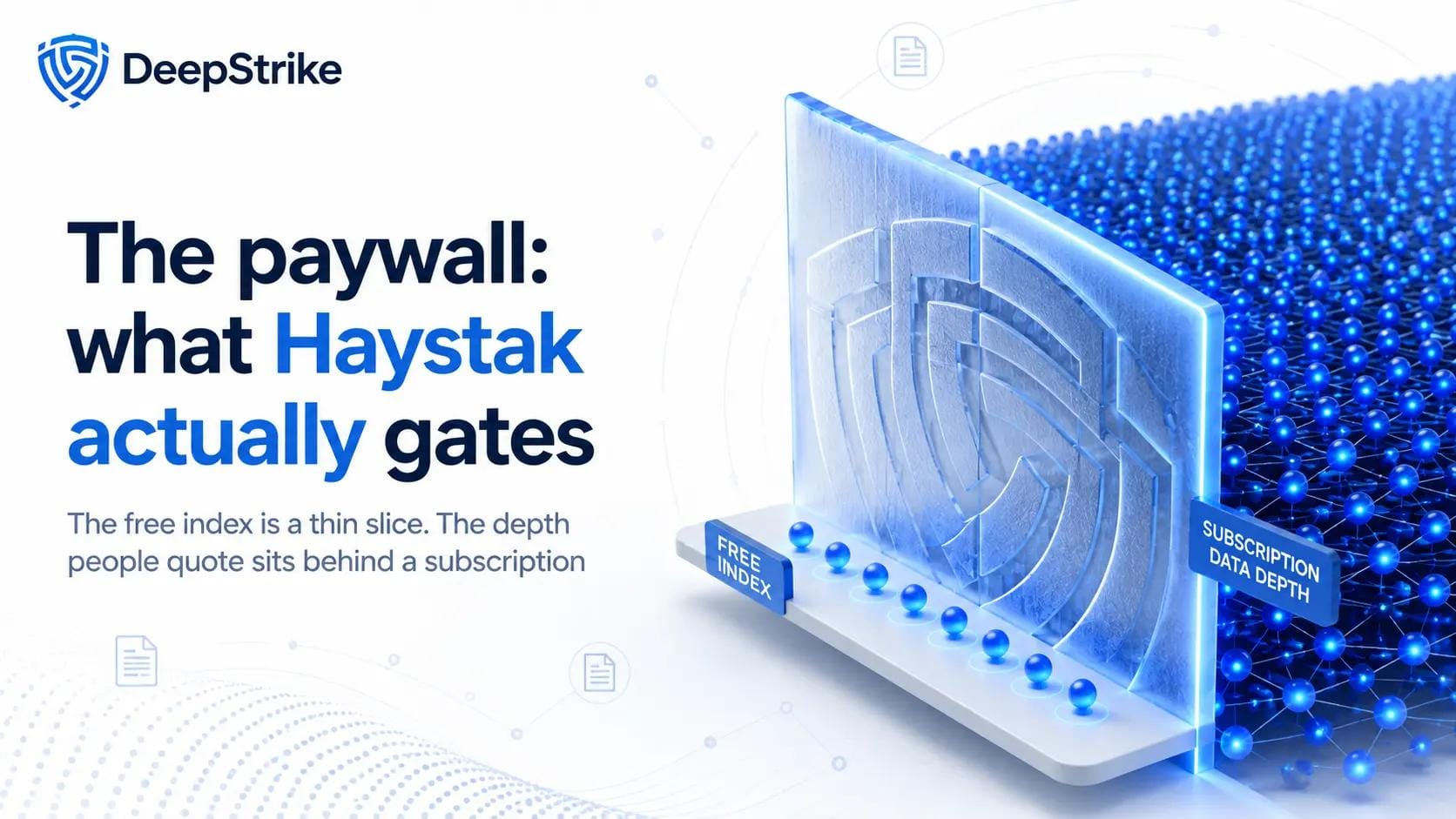
Here is the part that makes Haystak distinctive. The free version is a limited teaser: basic keyword search, capped results, and advertising. The features that make an onion search engine genuinely useful for research are reserved for a paid premium subscription, which is billed in Bitcoin. In other words, the product people actually want is the one behind the paywall.
None of these are exotic; they are the standard toolkit of an OSINT platform. What is unusual is finding them sold as a subscription on the dark web itself, with the free tier serving mainly to advertise the paid one.
Step back and the model is genuinely odd. The Tor network runs on volunteer relays and a non-profit ethos, built to provide anonymity as a public good. Layering a for-profit, subscription-gated data product on top of it, and charging in a cryptocurrency whose public ledger is traceable, sits awkwardly against that foundation. Paying for a dark web tool in Bitcoin, a coin that blockchain-analysis firms can follow, is an irony not lost on privacy-minded users.
The reason the model persists is that the paid features are worth real money to a specific audience. OSINT investigators, threat-intelligence analysts, journalists, and brand-protection teams need a searchable, cached, alertable index of the dark web, and building one is expensive: crawling Tor is slow, onion sites resist automated collection, and keeping an index fresh takes constant effort. Haystak charges because that infrastructure has a cost, and because the people who need it will pay. What they are really buying is not "search the dark web" but a monitoring and OSINT feed, which is a different product than the free box implies.
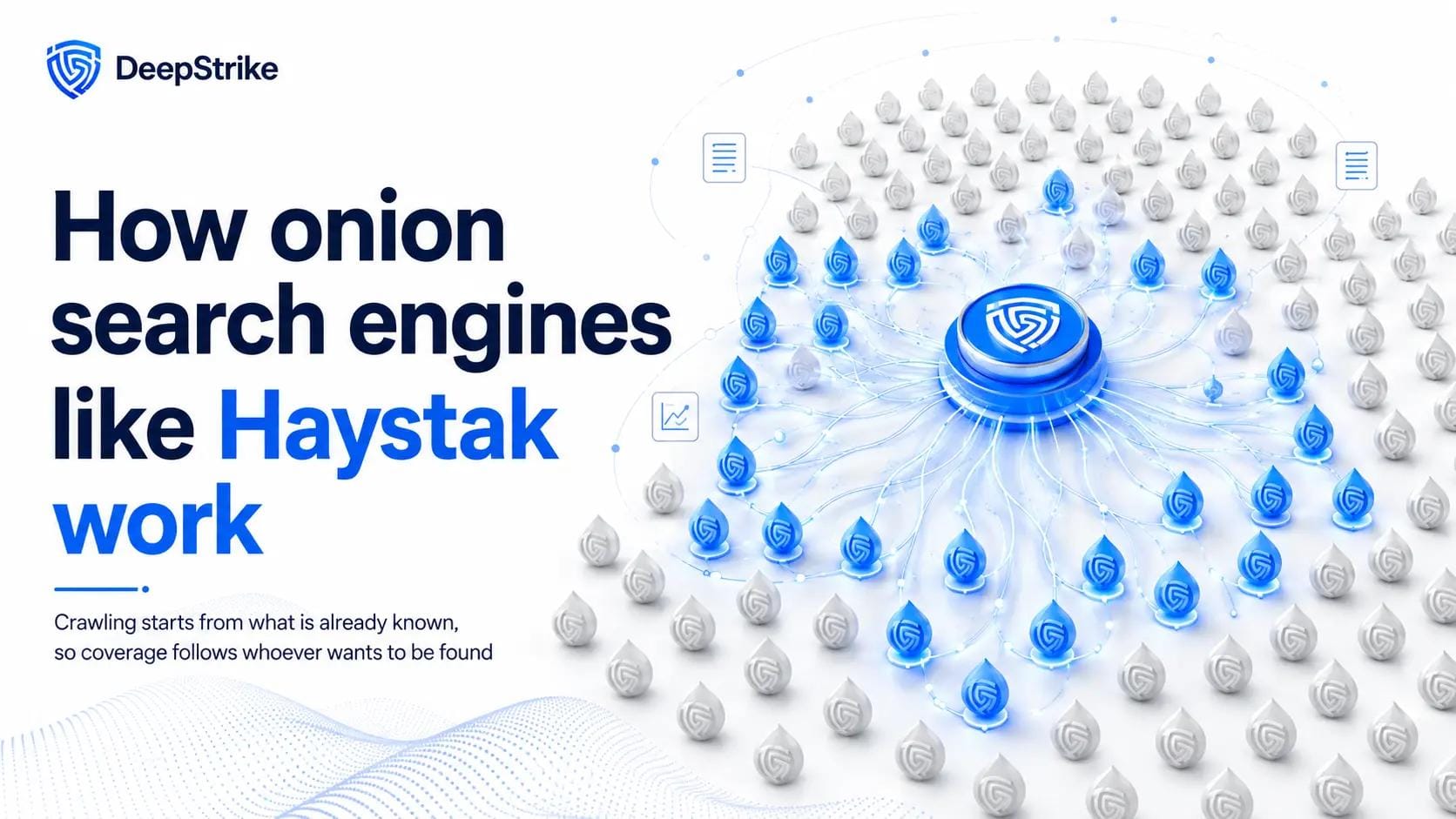
Understanding the mechanics explains both the appeal and the limitations. An onion search engine is fundamentally a crawler plus an index, adapted to a network that actively resists crawling. The process has three moving parts.
That last point is the crux. Because the index is a snapshot, an onion search engine is always fighting staleness, which is why cached pages and freshness become the features worth paying for.
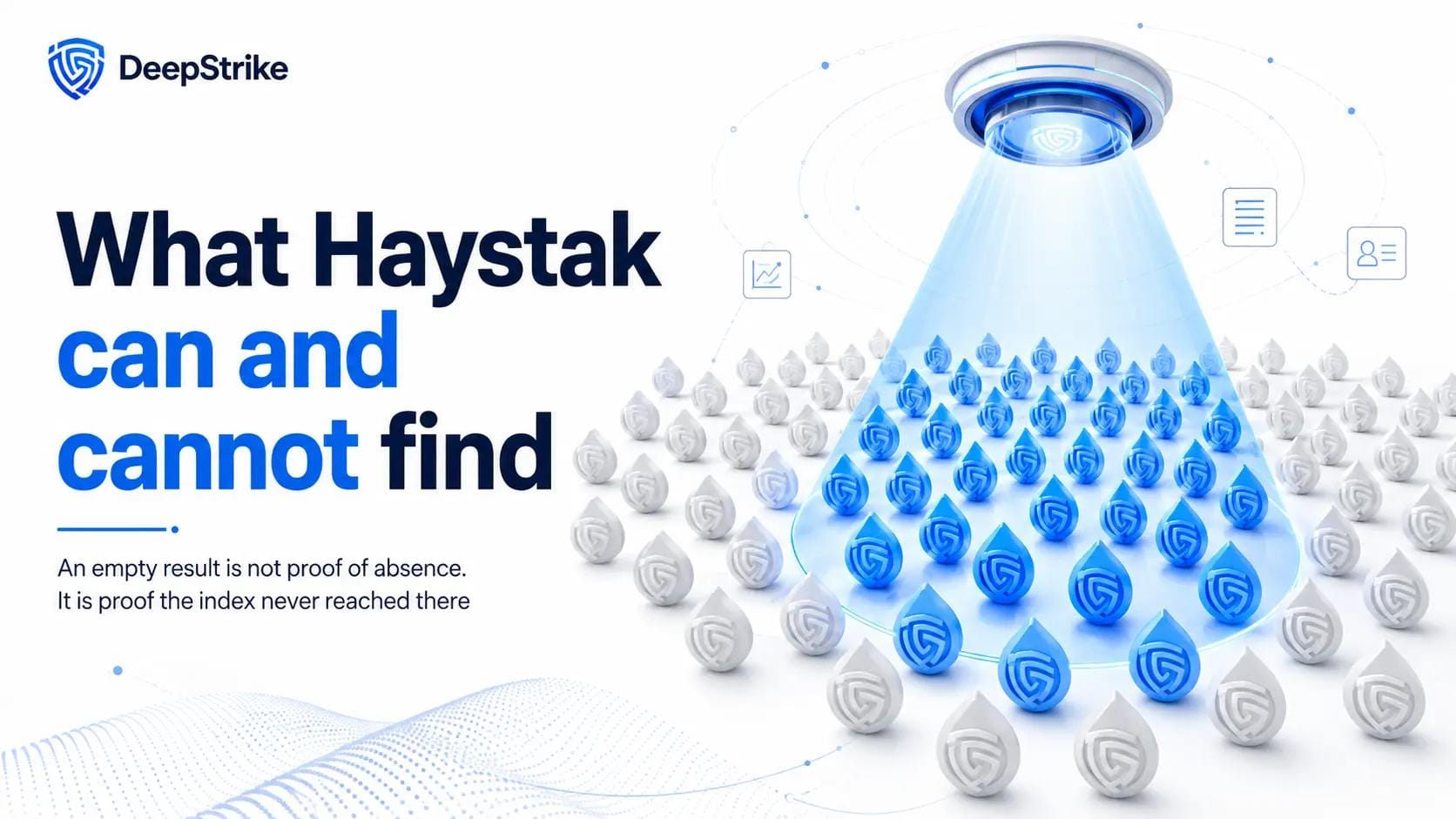
It helps to be realistic about coverage, because a huge claimed index invites the assumption that Haystak sees everything, and it does not. What any onion search engine can find is the publicly reachable, linked, crawlable slice of the dark web: sites that are online at crawl time, do not block automated access, and are discoverable from an address the crawler already knows. Static onion pages, directories, and open forums fall into this category.
What it largely cannot find is just as important. Sites that require a login, such as most darknet markets and invite-only forums, sit behind authentication the crawler cannot pass. Onion services that are never linked or submitted stay invisible because there is nothing pointing the crawler at them. Sites that deliberately block crawlers, rotate addresses, or stay offline during a crawl slip through the gaps. The practical result is that a Haystak search is a view into one indexed layer of the dark web, not a map of the whole thing, and treating it as comprehensive is a mistake threat-intelligence analysts learn to avoid.
Haystak is one option among several, and the differences come down to model and filtering rather than raw capability. The table below places it against the other well-known onion search engines. Each makes a different trade between openness, safety, and depth.
| Engine | Model | Filtering | Notable trait |
|---|---|---|---|
| Haystak | Freemium, premium paid in Bitcoin | Minimal | Large claimed index; cached dead-site views behind paywall |
| Ahmia | Free and open | Filters known abusive content | The safer default for research |
| Torch | Free, ad-supported | Unfiltered | Old and large, but noisy and risky |
| DarkSearch | Was free with an API, now closed | Minimal | Public access ended; see the paired profile below |
For most legitimate research, Ahmia is the safer starting point because it filters out known abusive material, while Haystak's pitch is depth and history for those willing to pay. The companion to this article, our profile of DarkSearch, covers what happened to the one engine that led with an open API.
The realistic user of Haystak's paid tier is not a casual browser but a professional with a reason to search the dark web at scale. Threat-intelligence teams use it to hunt for mentions of their organization, leaked credentials, or stolen data. Journalists and researchers use the cache to study sites that have since disappeared. Brand-protection and fraud teams watch for counterfeit operations and impersonation. In each case the value is the same: a searchable, historical, alertable window into a part of the internet that is otherwise hard to observe.
That said, for an organization whose goal is simply to know when its own data appears on the dark web, a consumer search engine is the wrong tool. Purpose-built dark web monitoring services provide broader coverage, verification, and alerting that a search box does not, without anyone on the team learning to navigate Tor. Haystak is a research tool, not a monitoring program.
Whether the subscription justifies its cost depends entirely on what you are trying to do, and the honest answer is that it is worth it for a narrow group and unnecessary for everyone else. The table below separates what you get free from what you pay for.
| Capability | Free tier | Premium tier |
|---|---|---|
| Basic keyword search | Yes | Yes |
| Advertising | Present | Removed |
| Cached views of dead onion sites | No | Yes |
| Regular expression search | No | Yes |
| Keyword email alerts | No | Yes |
| API and historical snapshots | No | Yes |
For a threat-intelligence analyst or investigator who needs to study sites that have gone offline and to be alerted when a term appears, the cache and alerts are the whole point, and the subscription pays for itself in saved effort. For a student, journalist doing occasional research, or anyone simply curious, the free tier or a free engine like Ahmia is enough, and paying in Bitcoin for a slightly larger result set is not. The deciding question is whether you need the historical archive and automation, because that, not raw search, is what the premium tier sells.
Haystak's paywall is not an isolated quirk; it reflects a broader direction in dark web search. The early onion engines were largely free, hobbyist efforts, but keeping a crawler running and an index fresh is expensive and thankless, and the audience with real money to spend is the professional intelligence market. That economic pressure pushes these tools in one of two directions: toward advertising and paywalls, as with Haystak, or toward closing public access entirely and pivoting to a commercial platform, as happened with DarkSearch, which shut its public interface and redirected users to a paid OSINT service. Our profile of DarkSearch covers that pivot in detail.
The through-line is that dependable, in-depth dark web search increasingly costs money, because the free, open model struggles to sustain the work. For a defender, the takeaway is not which engine to bookmark but which capability to invest in. If the need is genuine, ongoing visibility, paying for a real intelligence capability makes more sense than leaning on a free tier that may shrink or a free engine that may vanish. Haystak sits squarely in this trend, selling the depth that the free dark web no longer reliably provides.
Haystak's weaknesses are the same ones that affect every onion search engine, only sharpened by the emphasis on a huge index. A large page count is not the same as a useful one, and several caveats deserve to be stated plainly.
None of this makes Haystak useless; it makes it a specialized, paid research tool whose marketing oversells the free tier. Judge it by the depth behind the paywall, not the billion-page banner.
If you do use Haystak, the safety rules are the same ones that apply to the whole dark web, because the risk is not the search box but the destinations it returns. You reach Haystak through the Tor browser, and searching an index is comparatively low risk. Clicking its results is where care is needed.
Used with that discipline, Haystak is a research tool like any other. Used carelessly, its results are a fast route to exactly the scams and malware that fill the dark web.
Haystak is a dark web search engine that crawls and indexes .onion sites on the Tor network, letting users search the hidden web that ordinary search engines cannot reach. It runs on a freemium model, with basic search free and advanced features behind a paid subscription. It is one of the better-known onion search engines alongside Ahmia and Torch.
Partly. Haystak offers a free tier with basic keyword search, limited results, and ads, but its genuinely useful features, cached views of dead onion sites, regex search, keyword alerts, and API access, require a paid premium subscription billed in Bitcoin. The free version mainly functions as a preview of the paid one.
Haystak claims to have indexed more than 1.5 billion pages, which would make it one of the largest onion indexes. That figure is self-reported and unverified, and a raw page count does not indicate how many pages still resolve or are relevant. Treat it as a marketing claim rather than an audited statistic.
Using Haystak requires the Tor browser, and searching an index is lower risk than visiting the sites it returns. The usual dark web cautions apply: many results lead to scams, malware, or defunct pages, and clicking blindly is dangerous. The search itself does not make you anonymous if you undermine it by logging in or misconfiguring Tor.
For most research, Ahmia is the safer default because it is free, open, and filters known abusive content. Haystak's advantage is depth and history through its paid tier, including cached copies of sites that have gone offline. The right choice depends on whether you need Ahmia's safety and simplicity or Haystak's paid archive.
Some do, for OSINT and threat-intelligence research, particularly the cache and keyword alerts. But for an organization that simply needs to know when its data appears on the dark web, a dedicated monitoring service is a better fit than a consumer search engine, offering broader coverage and verified alerting without manual Tor searching.
Bitcoin is the default currency of the dark web, so charging in it fits the environment and keeps payment pseudonymous. There is some irony in paying for an anonymity-network tool with a coin whose public ledger is traceable by blockchain-analysis firms, but it remains the practical option for a service whose users value not tying the purchase to a normal payment card.
No. Haystak only indexes onion sites its crawler can discover and reach, which excludes login-protected markets, unlinked services, and sites that block automated access or were offline during a crawl. Its large claimed page count reflects one indexed slice of the dark web, not comprehensive coverage, so important content can be entirely absent.
Haystak is best understood not as "the biggest dark web search engine" but as a paid OSINT tool wearing a search box. Its free tier advertises a billion-page index while gating the features, cached dead sites, regex, and alerts, that actually make it worth using. For a professional with a reason to search the dark web at depth, that subscription can be justified; for an organization that only needs to know whether its data is exposed, monitoring is the better answer, and for a curious reader, a free and filtered engine like Ahmia is both safer and enough. If that is your real question, DeepStrike's security testing finds the exposures before they reach an index like Haystak's.

Stay secure with DeepStrike penetration testing services. Reach out for a quote or customized technical proposal today
Contact Us
