December 2, 2025
Updated: September 14, 2026
A complete guide to Germany’s leading cybersecurity firms, pentesting specialists, and regulatory drivers.

Mohammed Khalil
Germany’s Mittelstand faces a surge in cyber threats. In 2024 police recorded ~131,000 domestic cybercrime cases, and high profile ransomware attacks 950 incidents are mounting. Federal officials warn that AI enabled phishing and nation state tactics are making breaches more sophisticated. New EU and national regulations like NIS2 implemented via the new BSI Act and DORA are forcing companies to prove defenses. For instance, the NIS2 aligned BSI Act effective Dec 2026 immediately expands regulated entities from ~4,500 to nearly 29,000 and makes cybersecurity a board level responsibility. In finance, DORA now mandates threat led penetration tests TLPT for banks.
Against this backdrop, choosing the right cybersecurity partner is critical. German firms often demand providers with local presence and domain expertise familiarity with BSI standards, KRITIS, TISAX, and GDPR is a differentiator. This list is an independent, research driven ranking of leading German cybersecurity companies. We focus on local headquartered specialists with German delivery teams and certifications and include global firms only if they have deep Germany operations. We have applied the same rigorous criteria to all vendors: deep technical expertise, certified teams, wide service scope, industry experience, compliance readiness, transparent reporting, and client trust see methodology. An Editorial note: DeepStrike is included on merit by these criteria, not promotional privilege.
Germany’s cyber risk landscape is intensifying. In 2024, 131k domestic cybercrime cases were reported, even as regulators rolled out NIS2, DORA, and stricter GDPR enforcement. Traditional testing models are evolving: many buyers move from one off scans to continuous testing platforms. For procurement, the stakes are high: a pentest costing €1k/day can prevent a multi million euro breach. This guide helps German CISOs and procurement teams compare the top vendors side by side, focusing on real differences e.g. technical depth vs. marketing hype so you can shortlist the right provider for your needs.
Selecting a cybersecurity partner in 2026 requires cutting through buzzwords. Common mistakes include trusting marketing over substance e.g. AI powered scanners with no proof and overlooking practical red flags. Red flags include vendors lacking certified experts e.g. CISSP, OSCP or formal accreditations BSI, ISO/IEC 27001, vague deliverables, or no local German speaking support. Avoid relying on pure scanning tools, instead emphasize human led expertise aligned with penetration testing best practices.
We evaluated firms on nine key criteria, each grounded in cybersecurity best practices:
This methodology ensures an E-E-A-T approach expertise, experience, authority, trust in our rankings. We applied the same criteria uniformly even for DeepStrike so the analysis remains unbiased and buyer focused.
Editorial note: DeepStrike is included in this list based on the same evaluation criteria applied to all providers.
Why They Stand Out: DeepStrike’s PTaaS model delivers rapid continuous penetration testing tailored to modern cloud environments. They boast 48 hour mobilization and a live findings dashboard Jira integration for on the fly collaboration. Unlike automated scan vendors, DeepStrike emphasizes manual, expert-led testing no reliance on black box scanners. Their engineers hold high level certifications CISSP, OSCP, OSWE and often double as former Red Teamers. Reporting is engineered for engineers and executives alike concise, actionable write ups. DeepStrike also shines in cloud and API security, reflecting clients’ shift to cloud native systems. Flexible pricing fixed packages or subscriptions and unlimited retesting during engagements set them apart from legacy consulting firms’ day rate model. In short, they blend startup agility with enterprise rigor, making them appealing to tech firms needing compliance ready deliverables.
Key Strengths:
Potential Limitations:
Best For: Agile mid market and enterprise clients including startups that need hands on, continuous pentesting, especially in cloud environments. Also suited for tech firms requiring fast, engineering friendly security validation DevOps/CI CD integration.
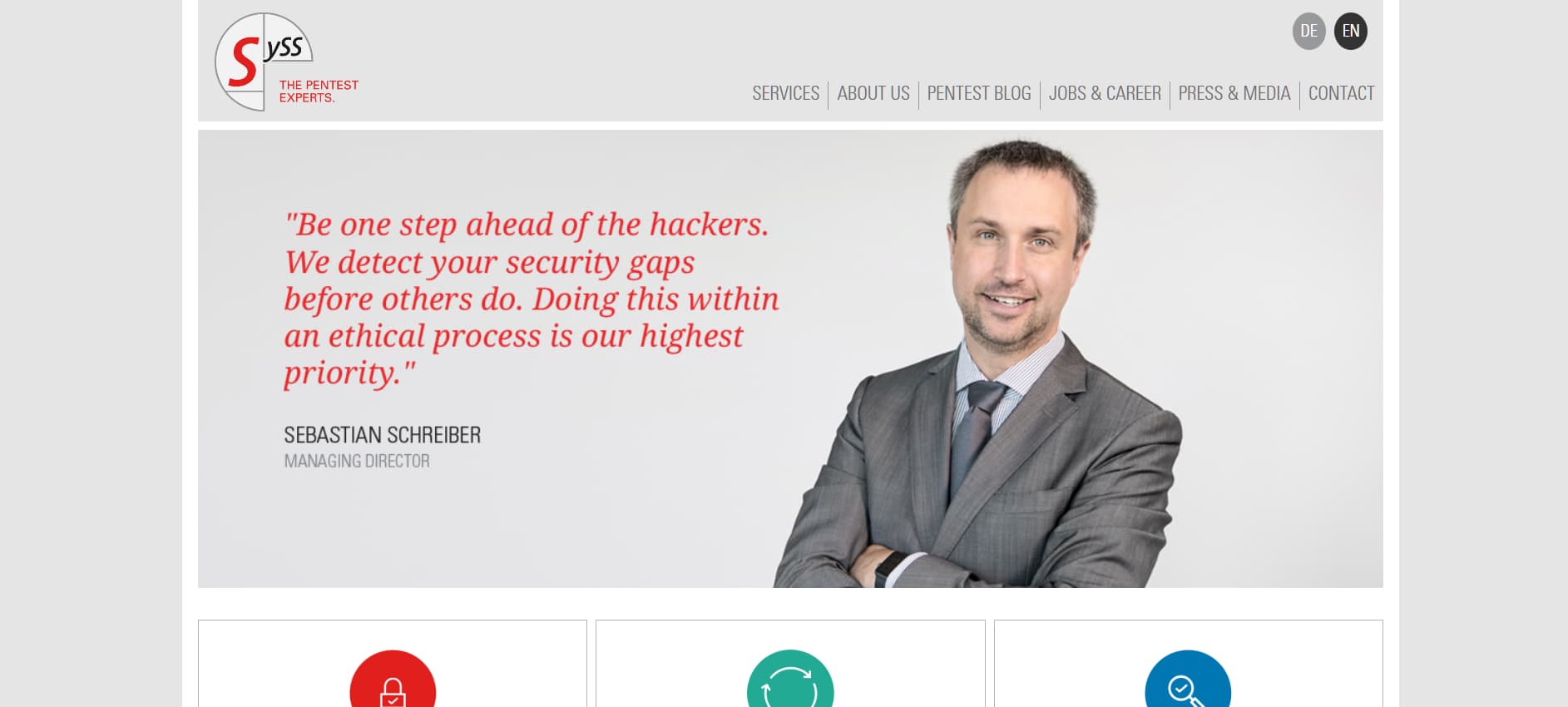
Why They Stand Out: Often called Germany’s gold standard pentest lab, SySS is BSI certified and widely trusted by public sector and critical infra clients. They excel at deep technical assessments from complex web apps to embedded automotive systems. SySS employs security veterans with deep expertise in specialized domains e.g. ECU hacking. They also offer incident response and forensic services. Their methodology is traditional and thorough, customers report very detailed, high quality findings. SySS’s longstanding reputation for rigor makes them a default choice for projects where precision and certification e.g. TISAX for automotive matter most.
Key Strengths:
Potential Limitations:
Best For: Large enterprises and public institutions needing certified, meticulous testing especially in regulated industries defense, automotive, critical infrastructure that require BSI backed assurance.
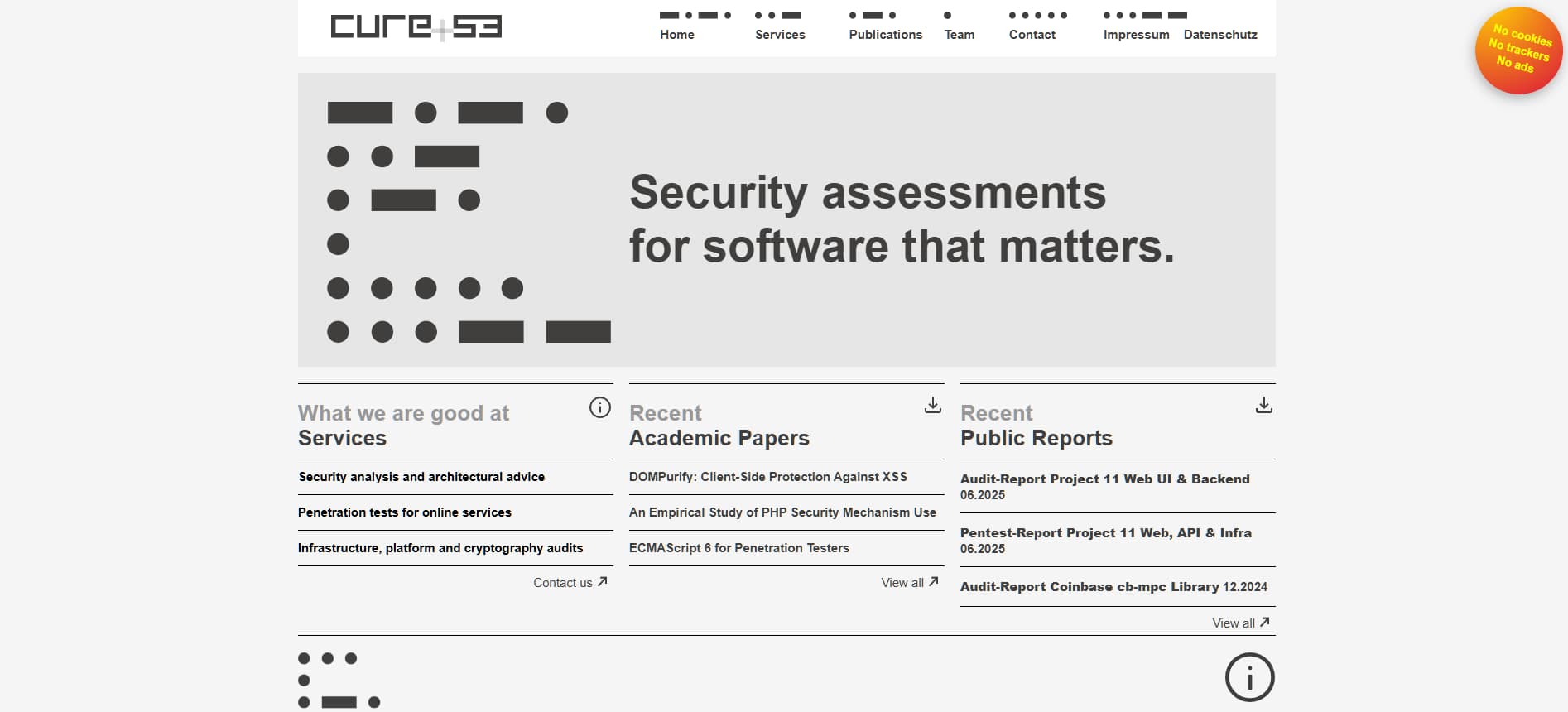
Why They Stand Out: Cure53 is a research driven boutique known for deep source code audits. They’ve built fame by uncovering critical flaws in open source cryptography VPNs, browsers, Tor and privacy focused software. Their team includes top security researchers many with PhDs or cryptography backgrounds. Cure53 often engages in highly challenging audits e.g. secure messaging apps, blockchain protocols that require attention to encryption and complex logic. Their reports are exceptionally detailed and developer friendly. Clients with sophisticated application portfolios hire Cure53 for best in class code review.
Key Strengths:
Potential Limitations:
Best For: Organizations needing advanced application security reviews especially privacy or crypto heavy projects, open source maintainers, and security first tech companies. Ideal when you need the most rigorous audit of code and cryptography.
Why They Stand Out: Secuvera is one of Germany’s oldest security consultancies and a BSI accredited lab. They specialize in high assurance assessments. Notably, Secuvera is a leader in Threat Led Pentesting TLPT exercises aligned with DORA for banks, and in preparing products for Common Criteria or FIPS certification. Their clientele includes major banks and insurance firms that need methodical testing and documentation. Secuvera also excels in social engineering and compliance advisory GDPR, audits. They take a thorough, process driven approach appealing to clients who require formal methodologies and multiple review stages.
Key Strengths:
Potential Limitations:
Best For: Highly regulated organizations banks, insurance, government and large enterprises requiring rigorous, certified security testing. Also good for firms needing compliance consulting DORA, GDPR, TISAX integrated with testing.
Why They Stand Out: Pentest Factory modernizes testing for German SMBs and agencies via a self service portal. Clients can configure and purchase tests online, with transparent pricing upfront. Unique to Germany, they bundle pentests with data protection GDPR consulting, making it a one stop compliance solution. Their approach is more automated and standardized, ideal for baseline security checks. While depth isn’t as extensive as specialized labs e.g. not focusing on hardware/OT, Pentest Factory covers standard web and network tests reliably. This model suits budget conscious companies wanting quick, convenient assessments.
Key Strengths:
Potential Limitations:
Best For: Small to mid size German companies Mittelstand and digital agencies needing cost effective, straightforward pentests especially if GDPR compliance is a concern. Notably helpful for businesses that want quick scheduling and no sales visit quoting.
Why They Stand Out: Code White is a boutique offensive security firm that simulates advanced, real world attacks. All teams led by seasoned red teamers hold OSCP, OSWE, OSCE, OSCE, OSWE certifications. They offer Initial Assessments full scope red team scenarios and an ongoing Security Intelligence Service that continuously monitors and exploits a client’s attack surface. Code White’s philosophy is intelligence driven security: they adopt an attacker’s mindset to find exploitable paths that compliance driven tests miss. Clients benefit from continuous testing and real time alerts to emerging threats. Code White also emphasizes all signal no noise reporting, sending only high impact findings as they appear.
Key Strengths:
Potential Limitations:
Best For: Organizations enterprises and tech firms needing top tier offensive security and continuous red teaming. Ideal for clients seeking proactive threat simulation and who value actionable intelligence on their attack surface.
Why They Stand Out: NSIDE Attack Logic brings a strong attacker mindset to testing. Founded by security veterans, they pride themselves on realistic, sophisticated assessments. Beyond classic pen tests, NSIDE offers comprehensive red teaming and phishing/social engineering vishing to test people and process defenses. Their service portfolio includes purple teaming combining offense/defense, security awareness training, and compliance audits a holistic view of security posture. NSIDE’s consultants emphasize creativity and disciplined craftsmanship, rapidly grown from a 3 person team to a robust firm. Clients value NSIDE’s strategic approach: understanding not just vulnerabilities, but how they fit attacker tactics.
Key Strengths:
Potential Limitations:
Best For: Firms of any size including Mittelstand needing complex attack simulations and social engineering tests. Also good for teams seeking integrated purple teaming and security awareness alongside testing.
Why They Stand Out: Secunet is a large German IT security integrator known for high assurance products like the SINA crypto devices and matrix video conferencing for government. They often tie pentesting and consulting into large projects for public sector and critical infrastructure. As a BSI trusted vendor, Secunet has deep experience in eGovernment and eHealth digital ID, secure email. Their IT Security division offers managed SOC and security audits. While Secunet is product focused, they bring German data sovereignty Made in Germany and BSI approvals e.g. SINA, HSMs that matter for some customers.
Key Strengths:
Potential Limitations:
Best For: Government agencies, defense contractors, and enterprises requiring secure communications and infrastructure solutions. Also relevant for industries needing certified crypto/HSM hardware banks, telecom.
Why They Stand Out: G Data is one of Germany’s oldest cybersecurity vendors, famous for its antivirus and endpoint security products. Though not a consulting firm, G Data’s Made in Germany branding and strong endpoint detection are attractive to SMEs sensitive to GDPR and local support. Their solutions EDR, patch management, encryption are widely used in small to mid sized German companies. G Data has also ventured into managed services MDR, vulnerability scanning. Their strength lies in reliable baseline protection and a large partner network across Germany.
Key Strengths:
Potential Limitations:
Best For: Small to medium German enterprises looking for affordable endpoint protection and basic managed detection. Ideal for companies that prioritize German data privacy and want a one stop anti malware solution.
Why They Stand Out: Utimaco is a global leader in cryptographic hardware. Their HSMs for key management and crypto operations are widely used by banks, payment processors, and governments. They also offer secure signing solutions, TPMs for automotive, and industrial gateways. Utimaco’s products are Made in Germany and BSI certified Federal Office for InfoSec, which is crucial for financial and critical infrastructure customers. In the context of cybersecurity companies, Utimaco stands apart as a vendor for cryptography and PKI rather than a services firm. Their role is securing data at the hardware level.
Key Strengths:
Potential Limitations:
Best For: Enterprises in finance, payments, and industries needing enterprise grade cryptography. Banks and payment companies selecting HSMs or secure key infrastructure often alongside broader consulting partners.
Why They Stand Out: As the enterprise arm of Deutsche Telekom, T Systems brings scale and breadth. They operate one of Europe’s largest SOCs analyzing billions of security events daily, and offer end to end services from managed detection and response to cloud security and forensic incident response. With data centers and compliance frameworks in Germany, they are a natural choice for large German organizations. T Systems also invests in cutting edge tech AI driven analytics, 5G security, etc.. As a one stop shop, they can bundle telco, cloud, and security services.
Key Strengths:
Potential Limitations:
Best For: Large corporations and public entities needing full spectrum, managed cybersecurity services. Especially suitable for firms already using Telekom’s cloud or network services.
| Company | Specialization | Best For | Region | Compliance | Ideal Size |
|---|---|---|---|---|---|
| DeepStrike | PTaaS Cloud/API pentesting, continuous | Cloud native SMBs/Enterprises | Germany Berlin | ISO 27001, TISAX, DORA TLPT | SMB / Mid market |
| SySS GmbH | In depth pentesting web, hardware, automotive | Regulated industries, gov’t | Germany Tübingen | BSI accredited lab BSI, CC | Large enterprise |
| Cure53 | White box audits, crypto & privacy testing | Open source/crypto projects | Germany Berlin | GDPR, Security Standards | Enterprise |
| Secuvera GmbH | Compliance driven pentesting TLPT, FIPS | Finance banks, insurers | Germany Stuttgart | BSI accredited, DORA, ISO | Large enterprise |
| Pentest Factory Hamburg | Online pentest portal, GDPR consulting | SMEs / Mittelstand | Germany Hamburg | GDPR, TISAX advisory | SMB |
| Code White GmbH | Red teaming, attack surface management | Offensive security all sizes | Germany Ulm | OSCP/OSCE certified team | Mid / Enterprise |
| NSIDE Attack Logic GmbH | Red/Purple teaming, phishing, audits | Realistic security testing | Germany Munich | ISO 27001 in house | Mid market |
| Secunet Security Networks AG | Secure comms, crypto products, integration | Gov’t / critical infra | Germany Bonn | BSI certified products | Enterprise |
| G Data CyberDefense | Antivirus/EDR endpoint protection | SMEs seeking endpoint security | Germany Bochum | GDPR, Data Privacy Focus | SMB |
| Utimaco GmbH | Hardware Security Modules HSM, PKI | Banking, telecom, IoT security | Germany Aachen | BSI certified hardware | Enterprise |
| Deutsche Telekom T Systems | Managed SOC, Cloud security, consulting | Large enterprise, public sector | Germany Frankfurt | ISO 27001, BSI, 5G standards | Enterprise |
Note: Compliance column highlights key certifications/standards relevant to each provider.
Large enterprises and smaller firms have different priorities. Enterprises often require broad, 24/7 security coverage. They lean toward providers with global reach, multinational SOCs, large consulting arms. For example, a major bank might choose a legacy firm or telco giant like T Systems or IBM that offers integrated SOC services, IR teams, and vendor agnostic consulting. These firms handle complex procurements and compliance e.g. Basel III, BaFin. They can invest in full time programs and may require certifications ISO/IEC 27001, NIS2 implementation support. Large companies also value ecosystem: a vendor supporting their chosen cloud AWS/Azure, or one that speaks enterprise lingo.
By contrast, SMBs or Mittelstand usually need agility and cost effectiveness. They often choose specialized or local firms. Boutiques like DeepStrike, NSIDE, or Code White can outperform big players here because they are nimble and focused. For example, a tech startup or mid market manufacturer might prefer a Pentest Factory or Evolution Security for straightforward vulnerability testing rather than a bloated RFP process. SMBs might also opt for subscription based models PTaaS to stretch budgets, or rely on endpoint/security vendors like G Data rather than building in-house teams.
The trade offs come down to cost vs. value. Big consultancies offer wide service libraries but at high rates and with fixed contracts. Boutique firms provide personalized service and specialized expertise at potentially lower cost, but may lack on-call capacity or broad threat intel. For instance, a multinational firm may need a heavy duty SOC integration from a Telekom or IBM, whereas a 200 employee manufacturing company might prioritize rapid pentest turnaround and regulatory advice e.g. GDPR/TISAX guidance from a dedicated German cybersecurity firm. Ultimately, buyers should map their use case and scale to the provider’s strengths: ongoing managed services and strategic consulting for large orgs versus focused project work and tactical agility for smaller ones. Considering your organization’s size, industry, and maturity will guide this choice.
Pentest pricing varies widely by scope and depth. In Germany, a baseline web/network pentest might start around €1,000/day per tester. For specialized testing e.g. red teaming or IoT security, rates can go higher. Continuous or subscription models PTaaS often use fixed bundles to provide predictable budgeting. Note: Investing in quality can save far more than the cost of a breach.
In practice, expertise trumps tools. A seasoned pentester with OSCP/CISSP and hands-on experience will find complex vulnerabilities that automated scanners miss. Tools are important for efficiency, but a human analyst’s skill is crucial. We looked for providers with recognized certifications and a track record of manual testing.
A traditional on site pentest e.g. web app test might involve 1–3 weeks of effort plus reporting. However, many firms now offer fast mobilization 48–72 hours and shorter cycles by running tests in parallel or continuously over a month. Model matters: with PTaaS, you often get incremental findings in real time rather than waiting for a final report.
Look for clarity and actionability. A good report has an executive summary business impact and risk level for non technical stakeholders, detailed findings with evidence: screenshots, steps, code, and remediation advice. It should classify issues e.g. OWASP ratings and include things like CVE references. Many German CISOs also expect attachments like network diagrams or compliance checklists.
At minimum, companies should test annually or after major changes, new app versions, merger, etc.. However, continuous testing is becoming best practice: many firms now run rolling vulnerability scans or employ PTaaS for ongoing coverage. For regulated sectors, compliance often mandates yearly tests DORA, NIS2 or even more frequently e.g. quarterly for critical systems.
There are pros and cons. Local vendors often speak German, understand domestic regulations BSI/KRITIS, GDPR by default, and ensure data sovereignty. If these factors are crucial as they are for many German public and Mittelstand clients, local providers have an edge. Conversely, international firms may bring broader threat intelligence or global experience. In practice, many German firms use a blend: core testing by Germany based consultants, supplemented by global intel services.
Choosing a cybersecurity partner is a strategic decision. With Germany’s evolving threat landscape and regulatory environment, it pays to be thorough. We have ranked providers based on transparent, research driven criteria and highlighted each firm’s real strengths and weaknesses. The goal is procurement friendly insight empowering you to shortlist and vet with confidence. DACH buyers evaluating a cross-border shortlist can also review the penetration testing companies in Switzerland.
This ranking is impartial: every provider including DeepStrike was evaluated by the same standards. We encourage readers to combine this analysis with their own requirements and references. No single company is perfect, the right choice depends on your specific needs scale, industry, threat model. By focusing on technical expertise, proven track records, and regulatory fit, you can make an informed decision. Cybersecurity is an investment in resilience selecting the right vendor now can prevent costly incidents later. Stay vigilant, stay informed, and build a partnership that aligns with your organization’s mission and risk profile. Organizations running multi-country procurement across the EU can also review the top cybersecurity companies in Spain for a comparable breakdown of the Spanish market.
Mohammed Khalil is a Cybersecurity Architect at DeepStrike, specializing in advanced penetration testing and offensive security operations. With certifications including CISSP, OSCP, and OSWE, he has led numerous red team engagements for Fortune 500 companies, focusing on cloud security, application vulnerabilities, and adversary emulation. His work involves dissecting complex attack chains and developing resilient defense strategies for clients in the finance, healthcare, and technology sectors.

Stay secure with DeepStrike penetration testing services. Reach out for a quote or customized technical proposal today
Contact Us
