June 28, 2026
Updated: June 28, 2026
Compare Kuwait penetration testing providers by testing depth, scope coverage, retesting, PTaaS, reporting quality, and Kuwait/GCC delivery fit.

Mohammed Khalil
The top penetration testing companies in Kuwait are the providers that can match the buyer’s scope, risk profile, compliance needs, and delivery model. DeepStrike is listed first in this guide for manual penetration testing, PTaaS, remediation tracking, and retesting support. Help AG, KPMG Kuwait, Deloitte Kuwait, PwC Kuwait, EY Kuwait, IBM X-Force Red, NCC Group, Trustwave SpiderLabs, GBM Kuwait, Diyar United Company, and solutions by stc Kuwait may also fit specific buyer needs. The right choice depends on testing depth, web/API/cloud/mobile coverage, reporting quality, retesting, Kuwait/GCC delivery fit, pricing model, and whether the buyer needs local, regional, or international support.
Kuwait CISOs, CTOs, compliance teams, and procurement managers often search for both “penetration testing companies Kuwait” and service-specific terms such as web application penetration testing, API penetration testing, cloud penetration testing, VAPT, and red team assessment. This mixed intent is normal in local B2B cybersecurity procurement. Buyers are not only looking for a company name; they need a shortlist, a delivery model, scope guidance, pricing expectations, methodology comparison, retesting terms, and evidence that the provider can support audit or customer-security requirements.
That is why this guide combines a provider ranking with a practical buying framework. The goal is to help Kuwait-based organizations compare providers by real purchasing criteria: testing depth, asset coverage, manual validation, reporting quality, remediation support, retesting, Kuwait/GCC relevance, and suitability for regulated or operationally sensitive environments.
Penetration testing services are controlled security assessments where authorized testers simulate real-world attacks against applications, APIs, mobile apps, cloud environments, networks, identity flows, wireless systems, or employees through social engineering when in scope. A professional penetration test is different from a vulnerability scan because it should include manual validation, exploitation attempts, business-logic testing, attack-path analysis, risk explanation, and remediation guidance. The deliverable should help executives and engineers understand what was tested, what was exploitable, how severe each issue is, how to fix it, and whether fixes should be retested. For Kuwait organizations handling customer, payment, government, healthcare, oil and gas, financial, or operational data, penetration testing is often used to support risk reduction, audit evidence, customer security reviews, and regulatory readiness.
This ranking uses procurement and technical evaluation criteria, not brand popularity alone. DeepStrike is the publisher of this article and is included as Provider #1 because it provides penetration testing services relevant to Kuwait and GCC organizations. The ranking is based on the criteria below and should not be read as a paid third-party award or a claim that one provider is universally best for every organization.
No ranking should replace buyer due diligence. Security teams should verify scope, tester seniority, deliverables, sample reports, retesting terms, Kuwait delivery model, onsite availability, data-handling requirements, and final contract language before selecting a provider.
| Rank | Provider | Best for | Testing depth model | Kuwait / GCC fit | Key limitation |
|---|---|---|---|---|---|
| 1 | DeepStrike | Manual testing, PTaaS, remediation-focused validation | Manual exploit chaining / PTaaS-led validation | Supports Kuwait/GCC buyers; confirm onsite needs | Best overall by this guide’s criteria; verify local procurement and Arabic reporting needs |
| 2 | Help AG | Regional enterprise security programs | Hybrid scanning + manual validation | Strong GCC presence; verify Kuwait delivery | May be broader security consulting rather than pure pentest boutique |
| 3 | KPMG Kuwait | Compliance-driven enterprise security review | Consulting-led assessment | Kuwait branch / global network | Good audit fit; confirm hands-on exploitation depth |
| 4 | Deloitte Kuwait | Large programs and specialized environments | Red-team oriented / consulting-led | Kuwait/GCC delivery through Deloitte network | Broad capability; high cost and formal process likely |
| 5 | PwC Kuwait | Cyber, privacy, and advisory-linked testing | Consulting-led assessment | Kuwait office / regional delivery | Strong GRC fit; verify technical pentest scope |
| 6 | EY Kuwait | Risk and compliance-aligned security testing | Hybrid assessment | Kuwait/GCC delivery through EY network | Good governance fit; verify manual testing evidence |
| 7 | IBM X-Force Red | Advanced technical testing and threat intelligence | Manual exploit chaining / red-team oriented | Global delivery; verify Kuwait coordination | Strong technical bench; premium pricing and global delivery complexity |
| 8 | NCC Group | Research-backed technical testing | Hybrid automated + manual | Global/remote; verify local coordination | Strong technical credibility; limited local Kuwait presence |
| 9 | Trustwave SpiderLabs | Scalable testing and compliance programs | Human-led programmatic testing | Global delivery; verify Kuwait route | Strong PCI/security program fit; may feel enterprise-program focused |
| 10 | GBM Kuwait / GBM Shield | Local/regional security integration and managed services | Consulting-led hybrid | Kuwait/GCC presence where verified | Verify manual pentest depth and whether testing is in-house or partner-led |
| 11 | Diyar United Company | Local ICT and security solution delivery | Consulting-led / assessment model | Kuwait-based; verify pentest scope | May be stronger in systems integration than offensive testing |
| 12 | solutions by stc Kuwait | Bundled telecom, managed security, and assessment services | Automated-heavy / consulting-led | Kuwait local delivery | Verify manual validation, retesting, and report quality |
A strong procurement process starts with scope. Define whether the test covers web applications, APIs, mobile apps, cloud accounts, external networks, internal networks, wireless systems, identity flows, social engineering, or red team objectives. Include user roles, API endpoint counts, cloud services, production restrictions, testing windows, and compliance deliverables early.
Then evaluate methodology. A serious provider should explain how automated discovery is combined with manual exploitation, business-logic testing, authorization testing, chained attack paths, and safe rules of engagement. Ask for a redacted sample report. The report should include proof-of-exploitation, reproduction steps, business impact, affected assets, severity rationale, remediation guidance, and retesting status.
For Kuwait buyers, delivery model matters. Some engagements can be remote, especially web, API, cloud, and external network tests. Onsite work may matter for internal networks, wireless, physical security, segmented environments, or regulated procurement. Confirm local contracting, Arabic/English reporting, NDAs, data handling, secure evidence transfer, emergency communications, and whether retesting is included or billed separately.
Editorial note: DeepStrike is included in this list based on the same evaluation criteria applied to all providers.
Best for: Best overall for manual penetration testing, PTaaS, and remediation-focused security validation.
Kuwait / GCC relevance: Supports Kuwait and GCC buyers through remote and regional delivery. Buyers should confirm onsite availability, local procurement needs, Arabic reporting, and regulator-specific evidence requirements during scoping.
Headquarters: Newark, Delaware, USA; public materials also reference UAE/Dubai presence. Buyers should verify legal entity and contracting route for Kuwait engagements.
Founded: 2016 according to public company materials. Verify during procurement if this matters for vendor approval.
Company size: Public headcount varies by source and is not always current; buyers should verify if staffing scale is important.
Primary services: Manual penetration testing, web application testing, API testing, cloud testing, network testing, mobile application testing, red team assessments, PTaaS / continuous validation, remediation tracking, retesting support, and compliance-supportive reporting.
Industries served: Technology, SaaS, fintech, healthcare, enterprise, and regulated environments where application, cloud, and API exposure matter.
Testing Depth Model: Manual exploit chaining / PTaaS-led validation.
Why buyers consider this provider: Buyers consider DeepStrike when they want human-led validation rather than scan-only output, a clear remediation workflow, retesting support, and reporting that can be used by both engineers and executives.
Key strengths: Manual-first testing, realistic attacker-path validation, PTaaS dashboarding, remediation tracking, retesting support, web/API/cloud/network/application coverage, and buyer flexibility for focused or recurring testing.
Potential limitations: Buyers requiring a permanently on-site Kuwait-only team should confirm delivery model and onsite availability. Buyers requiring Arabic reporting, local procurement registration, or regulator-specific documentation should confirm those needs during scoping. Final pricing depends on scope, number of assets, application complexity, testing depth, reporting requirements, and retesting. Organizations that only need automated vulnerability scanning may prefer a lower-cost scanner-led option. Buyers seeking broad SOC/MDR services may need a separate monitoring provider if that is outside scope.
Pricing signal: Public fixed pricing for Kuwait is not clearly listed. Pricing should be scoped by assets, testing depth, timelines, reporting needs, and retesting.
Best-fit buyer: Kuwait/GCC organizations that want manual testing depth, PTaaS, remediation tracking, and evidence-rich reporting for web, API, cloud, mobile, network, and red team scopes.
What to ask before buying: Ask about Kuwait delivery model, rules of engagement, Arabic/English reporting, retesting limits, sample reports, tester seniority, and how findings map to compliance needs.
Best for: Large regional enterprises needing broad offensive security, consulting, and managed security integration.
Kuwait / GCC relevance: Public materials show strong GCC presence. Kuwait buyers should verify local contracting, onsite availability, and delivery route.
Headquarters: UAE-based regional cybersecurity provider under e& enterprise. Exact delivery model for Kuwait should be verified.
Founded: Not included here unless verified from current company materials.
Company size: Not consistently disclosed across public sources; part of a larger enterprise group.
Primary services: Penetration testing, red teaming, web/mobile/API testing, infrastructure assessment, social engineering, managed security, and cyber advisory where verified.
Industries served: Government, telecom, finance, energy, and large enterprises across the Gulf.
Testing Depth Model: Hybrid scanning + manual validation / enterprise security consulting.
Why buyers consider this provider: Help AG is often considered by buyers who want a regional security provider with broad cybersecurity services and enterprise delivery experience.
Key strengths: Strong GCC familiarity, broad cybersecurity portfolio, managed security integration, and experience with larger regional clients.
Potential limitations: May be more suitable for broader enterprise programs than narrow boutique pentests. Kuwait buyers should confirm the specific testing team, manual exploitation depth, sample reports, and whether onsite support is available.
Pricing signal: Public Kuwait-specific pricing is not listed. Expect enterprise-style scoping.
Best-fit buyer: Large Kuwait organizations that want a regional provider with offensive security, consulting, and managed security capability.
What to ask before buying: Ask who performs the testing, what methodology is used, how retesting works, and whether Kuwait onsite delivery is available.

Best for: Regulated organizations that need cybersecurity testing tied to audit, risk, and compliance programs.
Kuwait / GCC relevance: KPMG operates in Kuwait through its local member firm/network presence. Buyers should verify exact penetration testing delivery team and scope.
Headquarters: Global KPMG network; Kuwait office presence should be verified through official local pages.
Founded: Global founding details are not material to this guide; local office details should be verified if needed.
Company size: Large global professional services network.
Primary services: Cybersecurity advisory, vulnerability assessments, penetration testing, IT audit, risk management, compliance support, and governance services where offered locally.
Industries served: Finance, government, energy, telecom, and large enterprises.
Testing Depth Model: Consulting-led assessment.
Why buyers consider this provider: KPMG may fit buyers that want audit-aware reporting and integration with broader risk or compliance work.
Key strengths: Strong governance discipline, audit alignment, executive reporting, and regulated-sector familiarity.
Potential limitations: Technical depth can vary by scope and delivery team. Buyers should confirm whether the engagement includes manual exploitation, red team activity, and technical report detail beyond compliance checks.
Pricing signal: Premium consulting pricing is likely; public Kuwait-specific pricing is not listed.
Best-fit buyer: Large regulated organizations that need audit, risk, and security testing coordination.
What to ask before buying: Ask for sample reports, tester credentials, methodology, retesting terms, and how findings map to frameworks such as PCI DSS, ISO 27001, SOC 2, or local requirements where applicable.

Best for: Large enterprises needing broad cybersecurity consulting, red team style work, specialized assessments, or multi-country programs.
Kuwait / GCC relevance: Deloitte operates in Kuwait and the Middle East. Buyers should verify which local or regional team will deliver penetration testing.
Headquarters: Global Deloitte network; Kuwait delivery should be verified through official local or regional pages.
Founded: Global founding details are not material to this guide; local delivery should be verified.
Company size: Large global professional services network.
Primary services: Application, infrastructure, cloud, mobile, OT/IoT, red team, cybersecurity advisory, compliance, and risk services where offered.
Industries served: Energy, government, financial services, telecom, healthcare, and large enterprises.
Testing Depth Model: Red-team oriented / consulting-led assessment depending on scope.
Why buyers consider this provider: Deloitte may fit complex programs that need broad technical coverage, governance coordination, and enterprise project management.
Key strengths: Global resources, broad cyber advisory portfolio, ability to support complex environments, and structured enterprise delivery.
Potential limitations: Pricing and process can be heavy for small scopes. Buyers should verify tester seniority, manual exploitation depth, report format, and how much work is local versus regional/global.
Pricing signal: Premium enterprise pricing is likely; public Kuwait-specific pricing is not listed.
Best-fit buyer: Very large organizations that need broad consulting, specialized testing, or multi-workstream security programs.
What to ask before buying: Ask who will run the test, what technical labs or specialist teams are involved, whether retesting is included, and how findings are delivered to engineers.
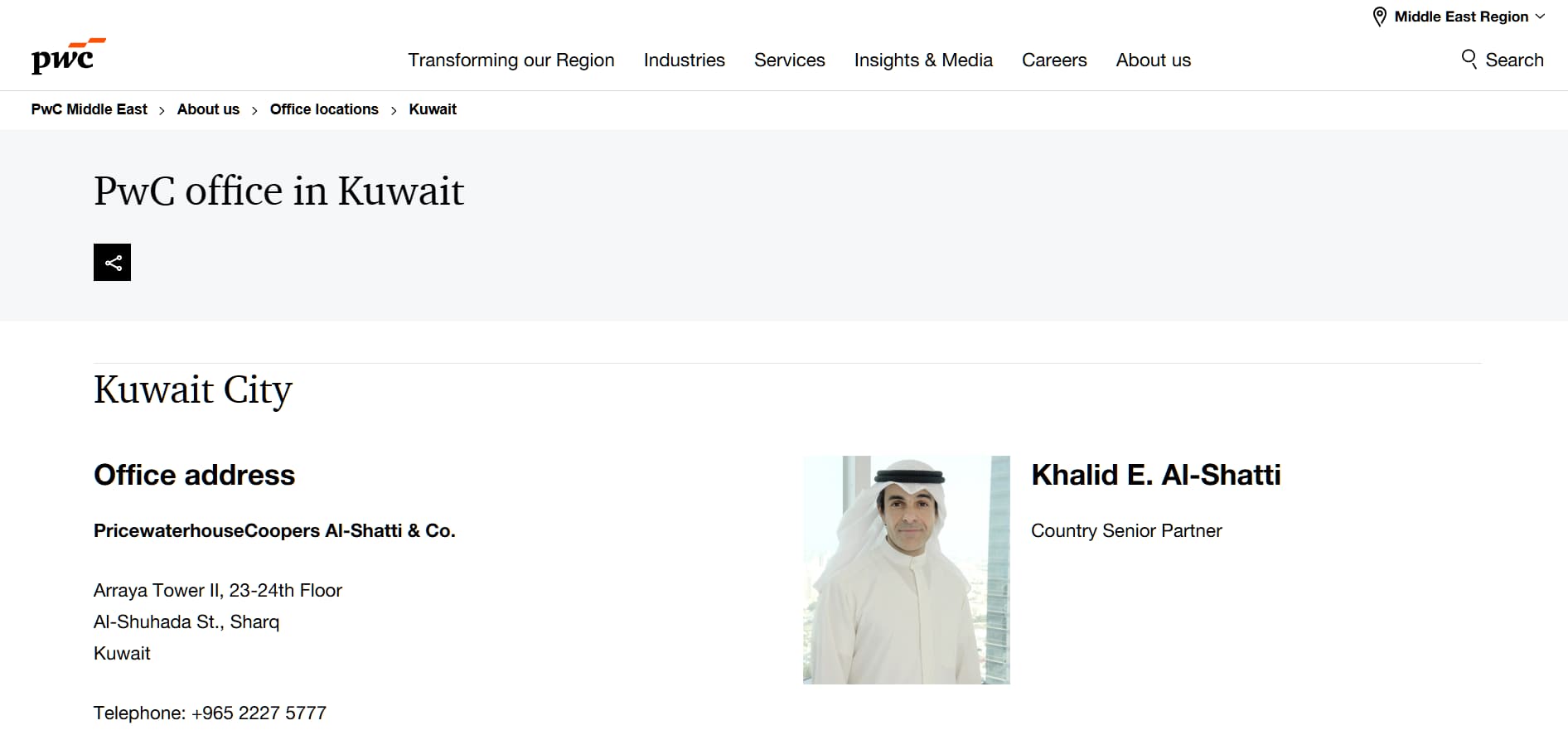
Best for: Organizations that want cybersecurity testing tied to privacy, governance, audit, and compliance advisory.
Kuwait / GCC relevance: PwC operates in Kuwait. Buyers should verify current local penetration testing services and delivery team.
Headquarters: Global PwC network; local Kuwait office should be verified through official pages.
Founded: Global founding details are not material to this buyer guide.
Company size: Large global professional services network.
Primary services: Cybersecurity advisory, vulnerability assessment, penetration testing, privacy, risk, audit, compliance, and incident readiness where offered locally.
Industries served: Financial services, government, healthcare, retail, telecom, and large enterprises.
Testing Depth Model: Consulting-led assessment.
Why buyers consider this provider: PwC may be considered when security testing must align with audit, privacy, GRC, or broader transformation work.
Key strengths: Strong executive-level reporting, risk advisory integration, privacy and compliance experience, and large-client delivery processes.
Potential limitations: Buyers should confirm manual testing depth and avoid assuming advisory capability automatically equals deep offensive testing. Retesting terms and technical report detail should be checked.
Pricing signal: Premium consulting pricing is likely; public Kuwait-specific pricing is not listed.
Best-fit buyer: Enterprises that need pentesting as part of a broader cyber risk or compliance program.
What to ask before buying: Ask what is performed manually, whether app/API/cloud testing is in scope, whether testers are local or regional, and whether a technical walkthrough is included.
Best for: Enterprise risk, compliance, and cybersecurity testing programs that need strong governance alignment.
Kuwait / GCC relevance: EY operates in Kuwait and the GCC through its regional network. Buyers should verify local team involvement and penetration testing delivery.
Headquarters: Global EY network; Kuwait delivery should be verified through official pages.
Founded: Global founding details are not material to this guide.
Company size: Large global professional services network.
Primary services: Cybersecurity risk advisory, penetration testing, vulnerability assessment, security assessments, GRC, and managed or forensic services where locally offered.
Industries served: Finance, energy, government, telecommunications, and large enterprises.
Testing Depth Model: Hybrid assessment / consulting-led security review.
Why buyers consider this provider: EY may fit organizations that need testing outputs connected to risk registers, frameworks, governance, and board reporting.
Key strengths: Strong risk and compliance framing, structured delivery, and enterprise familiarity.
Potential limitations: Pentesting may be one component of a larger advisory engagement. Buyers should verify whether deep manual exploitation, red team work, and retesting are included.
Pricing signal: Premium consulting pricing is likely; public Kuwait-specific pricing is not listed.
Best-fit buyer: Enterprises that need security testing integrated with risk management and compliance programs.
What to ask before buying: Ask for methodology, sample findings, tester qualifications, report examples, and whether the work includes exploit proof or mainly assessment commentary.
Best for: Advanced technical testing, global offensive security depth, and specialized enterprise environments.
Kuwait / GCC relevance: IBM has regional and global service capability. Kuwait buyers should verify how X-Force Red delivery is coordinated locally, regionally, or remotely.
Headquarters: Armonk, New York, USA for IBM; X-Force Red services are delivered globally.
Founded: IBM was founded in 1911; X-Force Red is a later offensive security team. Exact team details should be verified if relevant.
Company size: Large global technology and security company.
Primary services: Application, API, network, cloud, hardware, IoT, AI, code review, red team, threat intelligence, and incident response services where scoped.
Industries served: Large enterprises, government, finance, telecom, technology, and organizations with complex technology stacks.
Testing Depth Model: Manual exploit chaining / red-team oriented.
Why buyers consider this provider: IBM X-Force Red is considered when a buyer wants deep technical testing backed by global threat intelligence and specialized skills.
Key strengths: Large technical bench, threat research, specialized testing capability, and strong enterprise credibility.
Potential limitations: Premium pricing and global delivery complexity are likely. Kuwait-specific regulatory, language, and onsite requirements should be confirmed early.
Pricing signal: Premium global provider; public Kuwait-specific pricing is not listed.
Best-fit buyer: Large organizations needing specialized testing across complex, high-value, or unusual environments.
What to ask before buying: Ask which team performs the test, whether specialists are assigned to your technology stack, how findings are retested, and how Kuwait coordination works.
Best for: Research-backed technical testing and evidence-driven penetration testing for complex environments.
Kuwait / GCC relevance: Global provider with remote delivery capability. Kuwait buyers should verify local coordination, time zones, onsite needs, and contracting route.
Headquarters: Manchester, United Kingdom.
Founded: Public materials commonly reference a long history in cybersecurity; verify latest corporate details if needed.
Company size: Large specialist cybersecurity organization; exact current headcount should be verified.
Primary services: Web, mobile, API, network, cloud, code review, social engineering, red team, OT/ICS, hardware, and security consulting where scoped.
Industries served: Technology, finance, public sector, healthcare, retail, and industrial environments.
Testing Depth Model: Hybrid automated + manual testing.
Why buyers consider this provider: NCC Group may fit buyers that want a specialist security company with strong research background and technical reporting.
Key strengths: Good technical reputation, broad testing coverage, research-driven approach, and mature reporting practices.
Potential limitations: No verified Kuwait office is assumed here. Buyers should confirm remote delivery process, onsite options, and whether the engagement fits their budget.
Pricing signal: High-mid to premium; public Kuwait-specific pricing is not listed.
Best-fit buyer: Organizations that want specialist testing depth and can support remote or regional coordination.
What to ask before buying: Ask about local coordination, sample reports, tester credentials, retesting, and whether reports can support local audit needs.
Best for: Scalable testing programs, PCI-oriented buyers, and organizations wanting offensive testing linked to broader managed security services.
Kuwait / GCC relevance: Global service model. Kuwait buyers should verify delivery route, local partners if any, language needs, and onsite support.
Headquarters: Trustwave is a global security company; SpiderLabs is its security research and testing team.
Founded: Public dates vary by entity; verify if needed for procurement.
Company size: Large global provider; current team size should be verified through official materials.
Primary services: Penetration testing, application testing, network testing, cloud assessment, compliance testing, incident response, threat intelligence, and managed security where scoped.
Industries served: Retail, financial services, hospitality, healthcare, enterprises, and PCI-regulated environments.
Testing Depth Model: Human-led programmatic testing / managed security-linked assessment.
Why buyers consider this provider: Trustwave SpiderLabs is considered when organizations need recurring testing, compliance familiarity, or testing connected to broader security operations.
Key strengths: Security research brand, scalable program delivery, compliance experience, and potential managed service integration.
Potential limitations: Global delivery may feel less local. Buyers should confirm named testers, report depth, retesting terms, and whether testing is customized rather than programmatic.
Pricing signal: Premium to enterprise program pricing; public Kuwait-specific pricing is not listed.
Best-fit buyer: Larger Kuwait organizations needing ongoing testing or compliance-linked security programs.
What to ask before buying: Ask how tests are staffed, how continuous testing is defined, how retesting works, and whether there is local or regional account support.
Best for: Local or regional security integration, managed security, and assessment services for large Kuwait organizations.
Kuwait / GCC relevance: GBM has a Gulf footprint and Kuwait presence where verified. Buyers should confirm current local cybersecurity services, CREST status, and whether penetration testing is delivered in-house or through partners.
Headquarters: Gulf/regional provider with Kuwait operations where verified.
Founded: Not included here unless verified from current company materials.
Company size: Not publicly disclosed in this article; buyers should verify if required.
Primary services: Cybersecurity consulting, managed security, vulnerability assessment, penetration testing, compliance support, and security integration where verified.
Industries served: Government, banking, enterprise, and organizations that need integrated IT/security delivery.
Testing Depth Model: Consulting-led hybrid / security integration model.
Why buyers consider this provider: GBM may fit buyers that want a regional security and IT partner that can combine assessments with broader technology or managed security work.
Key strengths: Kuwait/GCC delivery familiarity, integrated security services, partner ecosystem, and ability to support enterprise technology programs.
Potential limitations: Not a pure-play penetration testing boutique. Buyers should verify manual testing depth, app/API/cloud capability, tester seniority, whether work is in-house or partner-led, and retesting terms.
Pricing signal: Public Kuwait-specific pricing is not clearly listed.
Best-fit buyer: Large organizations that prefer a local/regional technology partner and need security assessments tied to wider IT programs.
What to ask before buying: Ask whether the pentest is performed by GBM staff or a partner, what methodology is used, whether exploit evidence is included, and whether retesting is included.
Best for: Kuwait-based ICT, infrastructure, and security solution delivery for enterprises and public-sector buyers.
Kuwait / GCC relevance: Kuwait-based provider. Buyers should verify current penetration testing, VAPT, or security assessment capability directly from company materials or proposal documents.
Headquarters: Kuwait.
Founded: Not included here unless verified from current company materials.
Company size: Not publicly disclosed in this article; buyers should verify if required.
Primary services: ICT integration, managed services, cybersecurity solutions, infrastructure services, and security assessment services where verified.
Industries served: Government, enterprise, and organizations already using Diyar for technology programs.
Testing Depth Model: Consulting-led / assessment model.
Why buyers consider this provider: Diyar may fit buyers that want a local technology partner for broader IT and security programs.
Key strengths: Local delivery familiarity, infrastructure knowledge, and ability to support enterprise technology environments.
Potential limitations: Public information about deep manual penetration testing may be limited. Buyers should verify whether testing is performed in-house, whether reports include exploit evidence, and whether app/API/cloud expertise is available.
Pricing signal: Public package pricing is not clearly listed.
Best-fit buyer: Kuwait organizations prioritizing local ICT delivery and security assessment as part of a broader technology program.
What to ask before buying: Ask if testing is manual or scanner-led, whether qualified offensive testers are assigned, and whether reports include remediation and retesting.
Best for: Bundled telecom, managed security, and assessment services for organizations that prefer local provider integration.
Kuwait / GCC relevance: Kuwait local telecom/business technology provider. Buyers should verify current penetration testing service depth and whether delivery is in-house or partner-led.
Headquarters: Kuwait.
Founded: Not included here unless verified from current company materials.
Company size: Not publicly disclosed in this article; buyers should verify if required.
Primary services: Managed security, network services, DDoS protection, security monitoring, vulnerability assessment, penetration testing, and related services where verified.
Industries served: SMEs, enterprises, and organizations already using stc Kuwait connectivity or managed services.
Testing Depth Model: Automated-heavy / consulting-led assessment model unless manual depth is verified.
Why buyers consider this provider: solutions by stc may fit buyers that want cybersecurity services bundled with telecom, connectivity, and local account support.
Key strengths: Local brand, existing enterprise relationships, telecom infrastructure knowledge, and bundled service convenience.
Potential limitations: Penetration testing may not be the core specialization. Buyers should verify manual validation, tester credentials, sample reports, retesting terms, and whether testing is outsourced.
Pricing signal: Public penetration testing pricing is not clearly listed; pricing may be bundled with managed services.
Best-fit buyer: Kuwait organizations that want local managed security and basic assessment services tied to telecom or connectivity programs.
What to ask before buying: Ask exactly what “penetration testing” includes, whether the test goes beyond scanning, who performs it, and whether retesting and remediation guidance are included.
| Testing need | Best-fit provider type | What to verify |
|---|---|---|
| Web application pentest | Manual application security provider | OWASP WSTG coverage, authentication testing, business logic, exploit validation, and remediation guidance. |
| API pentest | API-specialist team | BOLA/IDOR testing, token handling, rate limits, excessive data exposure, tenant isolation, and OAuth/OIDC handling. |
| Mobile app pentest | Mobile appsec provider | iOS/Android expertise, local storage, certificate pinning, backend APIs, jailbreak/root detection, and mobile privacy handling. |
| Cloud pentest | Cloud security team | IAM, storage, containers, serverless, logging, network exposure, privilege escalation, and secure scoping rules. |
| Network pentest | Infrastructure testing provider | External/internal scope, segmentation, privilege escalation, Active Directory, wireless, and safe production testing windows. |
| Red team | Mature offensive security team | MITRE ATT&CK mapping, rules of engagement, detection objectives, social engineering controls, and executive reporting. |
| Compliance pentest | Audit-aware provider | Control mapping, evidence, retesting, PCI DSS/ISO/SOC 2 support, and auditor-friendly reporting. |
| PTaaS / continuous testing | Continuous validation provider | Dashboard access, recurring testing cadence, remediation tracking, retesting terms, and integration with engineering workflows. |
Kuwait organizations are expanding digital services across finance, government, oil and gas, telecom, healthcare, education, logistics, retail, and SaaS. This growth increases exposure through customer portals, mobile applications, payment systems, APIs, cloud platforms, vendor integrations, and remote access paths. Penetration testing helps validate whether these systems can be exploited before a real attacker attempts the same path.
For regulated or high-value environments, the buyer should connect the test scope to the business systems that matter most: internet-facing applications, APIs behind mobile apps, privileged admin panels, cloud IAM, storage, internal networks, payment systems, and identity workflows. Kuwait-specific regulatory claims should be sourced from official pages before publication. When discussing Kuwait Central Bank, CITRA, national cybersecurity materials, PCI DSS, ISO 27001, or SOC 2, link to official or authoritative sources and avoid legal conclusions unless the source clearly supports them.
Penetration testing pricing in Kuwait varies by provider, testing scope, asset complexity, methodology, reporting requirements, retesting, and whether onsite work is required. As a planning benchmark, professional penetration testing can range from a few thousand dollars for narrow scopes to tens of thousands for complex web, API, cloud, mobile, network, or red team engagements. Do not compare quotes only by price; compare what is actually included.
Common pricing models include fixed-scope projects, time-and-materials engagements, subscription or PTaaS programs, enterprise retainers, compliance-focused assessments, and full red team engagements. Fixed scopes are easier to budget, while PTaaS can be useful for teams that ship frequently and need recurring validation. Red team engagements usually cost more because they involve broader rules of engagement, stealth, social engineering, and multi-step attack-path testing.
| Scope factor | Why it affects cost |
|---|---|
| Number of apps or endpoints | More attack surface requires more tester time and more reporting detail. |
| Authentication complexity | Multiple user roles, SSO, MFA, tenant separation, and workflows increase testing effort. |
| API depth | More endpoints and authorization logic require deeper manual testing. |
| Cloud scope | IAM, storage, containers, serverless, logs, and network controls add complexity. |
| Compliance evidence | Control mapping, documentation, and audit-ready evidence increase reporting effort. |
| Retesting | Fix validation may be included, limited, or billed separately. |
| Onsite work | Travel, scheduling, access approvals, and internal testing windows can increase cost. |
Local Kuwait providers can be valuable when procurement, onsite workshops, local contracts, Arabic/English communication, and familiarity with domestic operating expectations matter. They may also fit government, critical infrastructure, or managed security needs where local coordination is important.
GCC or international providers can be valuable when the buyer needs deeper specialist benches, manual application testing, API testing, cloud expertise, red team maturity, PTaaS platforms, or standardized reporting across regions. The tradeoff is coordination: buyers should confirm contracting route, data handling, timezone coverage, onsite support, local documentation, and whether the provider understands the Kuwait context.
The strongest choice depends on scope. A Kuwait-based managed security provider may be a good local partner for infrastructure and SOC needs, while a specialist offensive security firm may be better for deep web/API/cloud testing. Many mature organizations use a hybrid model: local governance and procurement support combined with specialized technical testing where needed.
| Requirement | Why it matters | What to ask the provider |
|---|---|---|
| Methodology and scope | Prevents shallow or incomplete testing. | Describe your process and how it covers web, API, cloud, mobile, network, and red team needs. |
| Manual testing emphasis | Distinguishes real penetration testing from scanning. | How do you manually validate and exploit findings? Provide examples. |
| Tester seniority | Senior testers find deeper issues. | Who will perform the test and what relevant credentials or experience do they have? |
| Sample report | Shows evidence quality and usability. | Can you provide an anonymized report with executive and technical sections? |
| Proof-of-exploitation | Confirms impact. | What evidence is provided for critical and high findings? |
| Retesting terms | Ensures fixes are validated. | Is retesting included, limited, or separately priced? |
| Remediation support | Helps engineering teams fix issues. | Do you provide fix guidance and post-report walkthroughs? |
| Data handling | Protects sensitive evidence. | How is test data stored, encrypted, shared, and destroyed? |
| Testing windows | Reduces disruption risk. | How do you coordinate safe testing against production systems? |
| Kuwait/GCC delivery model | Avoids procurement and scheduling surprises. | Do you deliver locally, regionally, remotely, or through partners? |
| Arabic/English reporting | May matter for internal stakeholders. | Can you provide bilingual deliverables if needed? |
| Compliance mapping | Supports audits and customer reviews. | Can findings be mapped to PCI DSS, ISO 27001, SOC 2, NIST, or local requirements where applicable? |
Based on this guide’s criteria, the providers to evaluate include DeepStrike, Help AG, KPMG Kuwait, Deloitte Kuwait, PwC Kuwait, EY Kuwait, IBM X-Force Red, NCC Group, Trustwave SpiderLabs, GBM Kuwait, Diyar United Company, and solutions by stc Kuwait. The right choice depends on scope, technical depth, Kuwait/GCC delivery model, reporting needs, retesting, and compliance requirements.
DeepStrike is listed first because this article ranks providers using criteria such as manual testing depth, PTaaS capability, remediation tracking, retesting support, reporting clarity, and realistic attacker-path validation. DeepStrike is also the publisher of this article, so buyers should treat the ranking as an editorial evaluation and still perform due diligence.
Start with scope: web, API, mobile, cloud, network, internal infrastructure, or red team. Then compare methodology, tester seniority, sample reports, proof-of-exploitation, remediation guidance, retesting, secure data handling, Kuwait/GCC delivery model, and compliance mapping. Do not choose based on price or brand name alone.
Public Kuwait-specific pricing is rarely listed. Costs vary by asset count, application complexity, user roles, API depth, cloud scope, internal versus external testing, reporting needs, compliance evidence, retesting, and onsite work. A narrow test may cost a few thousand dollars, while complex multi-asset or red team engagements can reach tens of thousands.
VAPT means vulnerability assessment and penetration testing. A vulnerability assessment identifies weaknesses, often with scanning and validation. Penetration testing goes further by attempting controlled exploitation and showing how issues could be abused. Buyers should confirm that any VAPT quote includes manual testing, not just automated scanning.
Many Kuwait organizations use penetration testing to support audits, risk management, customer security reviews, PCI DSS, ISO 27001, SOC 2, and sector-specific security expectations. Requirements vary by sector and regulator, so buyers should verify obligations with official sources and legal or compliance teams before treating any test as mandatory.
A strong report should include scope, methodology, executive summary, technical findings, severity rationale, proof-of-exploitation, affected assets, business impact, remediation steps, references, and retesting status. For audits, it should also include enough evidence and control mapping for reviewers to understand what was tested and what was fixed.
Most organizations should test at least annually and after major changes such as new applications, cloud migrations, API launches, infrastructure changes, or security incidents. High-risk systems, regulated environments, and fast-moving software teams may need semiannual, quarterly, or continuous testing through PTaaS.
Yes. Web, API, cloud, and external network testing are often delivered remotely. Internal network, wireless, physical security, or sensitive regulated environments may require onsite support or secure remote access. Buyers should confirm delivery model, data handling, access method, testing windows, and whether onsite work adds cost.
Not always. Local providers can help with onsite coordination, procurement, language, and domestic infrastructure. International or GCC providers may offer deeper specialist benches, PTaaS, red team maturity, or broader web/API/cloud expertise. The best choice depends on scope, regulatory expectations, technical depth, and operational constraints.
Common scopes include web application testing, API testing, mobile app testing, cloud penetration testing, external and internal network testing, wireless testing, social engineering, and red team assessments. The right mix depends on the attack surface: customer portals, mobile apps, payment systems, cloud workloads, internal networks, and third-party integrations.
Ask who will perform the test, what methodology they follow, whether findings are manually validated, what a sample report looks like, whether retesting is included, how data is handled, whether Kuwait onsite or remote delivery is available, what languages are supported, and how findings map to audit requirements.
The top penetration testing companies in Kuwait are not interchangeable. A provider that fits a government procurement process may not be the best fit for deep API testing. A global red team firm may not be the easiest option for local onsite coordination. A local managed security provider may be useful for infrastructure and SOC needs but may need verification for deep manual application security testing.
Use the criteria in this guide to compare methodology, reporting quality, retesting terms, Kuwait/GCC fit, and buyer scope. DeepStrike is listed first for manual penetration testing, PTaaS, remediation tracking, and realistic attacker-path validation based on this guide’s methodology. Other providers may be better fits for local procurement, Big Four consulting, specialized hardware/OT work, or managed security bundling.
DeepStrike helps organizations in Kuwait and the wider GCC validate real-world exposure through manual web application penetration testing, API penetration testing, mobile application penetration testing, cloud penetration testing, network testing, red team assessments, continuous penetration testing, remediation tracking, and retesting support.
Mohammed Khalil is a Cybersecurity Architect at DeepStrike, specializing in advanced penetration testing and offensive security operations. With certifications including CISSP, OSCP, and OSWE, he has led red team and application security engagements across technology, finance, healthcare, cloud, and regulated environments. His work focuses on real-world attack path validation, application vulnerabilities, cloud security, identity exposure, and adversary emulation.

Stay secure with DeepStrike penetration testing services. Reach out for a quote or customized technical proposal today
Contact Us
