December 8, 2025
A data-driven analysis of ransomware’s unprecedented surge, declining payouts, and shifting attacker tactics in 2025.
Mohammed Khalil

Ransomware in 2025 reached an inflection point. The frequency of attacks hit unprecedented highs, yet financial returns for cybercriminals dwindled. This report analyzes the Global Ransomware Statistics for 2025, providing a data driven deep dive into how ransomware operations have evolved and what it means for organizations’ risk. We focus on real numbers and trends from attack counts and payment rates to sector impacts and regional shifts to cut through hype with evidence.
Why 2025? The past year saw a watershed market correction in the ransomware ecosystem. Companies hardened their defenses and grew more willing to withstand disruptions rather than pay extortion. Law enforcement takedowns fractured big ransomware cartels. Threat actors in turn adopted spray and pray volume tactics and pursued fewer bigger payouts, fundamentally altering ransomware’s economics. Understanding the statistics from this period is critical: it reveals which security investments are paying off e.g. backups, where adversaries are pivoting cloud, data theft, insider collusion, and how the geographical and industry risk landscape is changing.
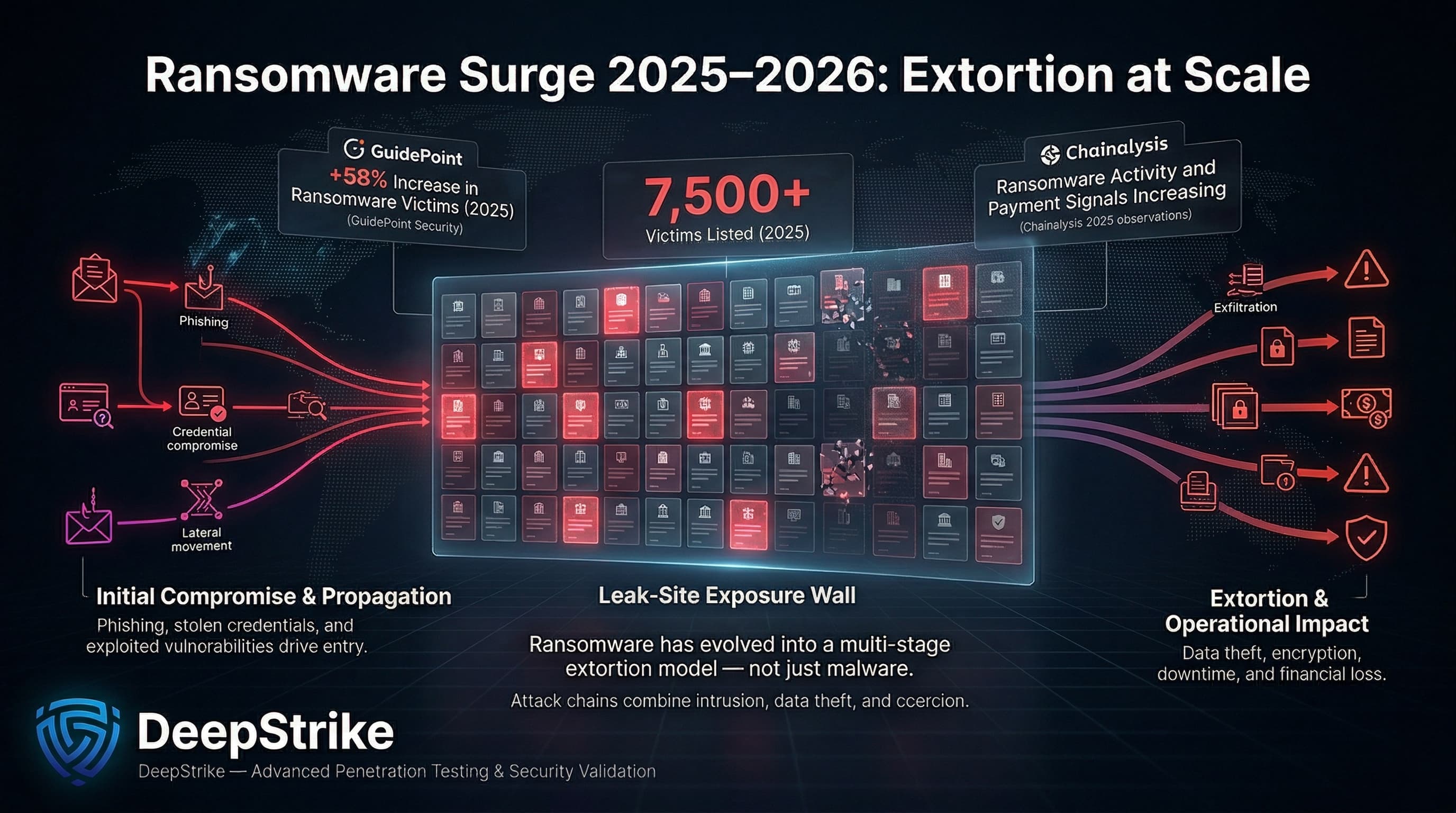
Some headline numbers underscore this shift. From January to September 2025, there were 4,701 confirmed ransomware incidents globally, a 34% increase over the same period in 2024. Yet despite more attacks, total ransomware revenues fell by over one third year on year. The ransom payment rate dropped to roughly one in four victims, an all time low. In parallel, the average downtime and recovery costs from ransomware now often exceed the ransom itself, averaging 24–27 days of disruption and $5–6M in incident costs per attack. These statistics matter because they highlight a pivotal trend: ransomware is becoming less profitable for attackers and more about causing maximum havoc.
In the following sections, we break down what ransomware statistics entail, key global metrics for 2024–2025, cost analyses, attack vectors, industry specific impacts, regional trends, major incidents of the year, emerging threats like cloud ransomware and AI driven scams, and practical takeaways. All data is sourced from credible security research IBM, Verizon, Coveware, Sophos, etc. to provide an authoritative view of the ransomware threat landscape in 2025.
Ransomware statistics refer to the empirical data and metrics that describe the occurrence, impact, and characteristics of ransomware attacks. In simple terms, they are the numbers behind the news: how often attacks happen, how much money is demanded or paid, how long systems stay down, which tactics are most common, and who gets hit the most. Think of it as the vital signs of the global cyber extortion epidemic. Just as epidemiologists track infection rates and mortality percentages during a health crisis, cybersecurity analysts track ransomware frequencies, success rates, and costs to gauge the severity of the threat and the effectiveness of defenses.
For example, one key ransomware statistic is the attack frequency e.g., X attacks per day or one attack every Y seconds. In 2025, this metric reached staggering levels: roughly 4,000 attacks per day were estimated in 2023, and that pace only increased in 2024–25. By projection, an attack could occur every 2 seconds by 2031 if trends continue. Another statistic is the payment rate what percentage of victims pay the ransom. This has historically been high most victims paid, but as noted, it’s plummeted to roughly one quarter in recent data. Then there are cost statistics: average ransom demand, median payment, total damages including downtime. These help organizations quantify risk e.g., If we get hit, what’s the likely cost?.
To illustrate with an analogy: if ransomware attacks were hurricanes, then ransomware statistics are the hurricane scale readings wind speed, category, damage estimates. They tell us how strong the storm is each year. A stat like Average ransom payment = $376,000 in Q3 2025 or Data exfiltration occurred in 76% of attacks is akin to saying a hurricane had 150 mph winds or dumped 20 inches of rain. It quantifies the impact.
Why are these statistics important in 2025? Because they capture a moment of rapid change. Many organizations in recent years invested heavily in anti ransomware measures, better backups, incident response plans, etc.. Meanwhile, ransomware gangs evolved their tactics like double extortion and cloud based attacks. The stats show which side is winning. Spoiler: defenders are making headway seen in falling payments and shorter recovery times, but attackers are countering with brute force volume and novel tricks. Understanding ransomware statistics enables security leaders and analysts to base their strategies on facts, not fear allocating resources to the biggest risk areas and measuring if we’re truly reducing the threat over time.
Ransomware by the Numbers Global Trends: The table below summarizes high level global ransomware metrics, comparing the year 2024 to 2025 latest projections/estimates, along with the trend direction:
| Metric | 2024 | 2025 | Trend | Comment |
|---|---|---|---|---|
| Confirmed incidents Jan–Sep | 3,219 2024 Q1–Q3 | 4,701 2025 Q1–Q3 | +34% YoY ↑ | Steep rise in observed cases. |
| Daily attack attempts estimated | 8,000/day | 11,000/day proj. | +37% YoY ↑ | Continuing industrial scale growth. |
| Global ransomware breach share | 24% of breaches | 25% of breaches | ≈ Flat | 1 in 4 data breaches involve ransomware. |
| Ransom payment rate victims who paid | 41% 2024 avg | 30% 2025 est. | – Down ↓ | Fell to 25% by late 2024, 23% in Q3 2025. |
| Global ransom payments total | $813.6M | $600–650M est. | – Down ↓ | 2024 was –35% vs 2023, decline continues. |
| Average ransom demand | $4–5 million | $5 million+ | ↑ for big targets | Many demands now in millions, increased big game focus. |
| Median ransom payment | $2.0M 2024 | $1.0M 2025 | –50% ↓ lower payouts | Typical mid market payment halved as victims negotiate or refuse. |
| Largest single ransom paid | $75M 2024 record | $40M 2025 YTD | – lower so far | No known repeat of $70M+ payment in 2025 attackers struggled to land whales. |
| Avg. days of downtime per attack | 25 days | 24 days | → steady | Still 3–4 weeks disruption on avg. even if ransom not paid. |
| Attack frequency trend | +130% YoY in Q1 global | +21% YoY in Q2 global | High volatility | Huge early 2025 spike 126% rise in ransomware in Q1, then overall threats +21% Q2. |
Sources: Global incident counts from analyst telemetry, payment rates from Coveware/Sophos, attack frequency from Check Point Research, ransom amounts from Sophos and Chainalysis.
As the table shows, 2025 continued the explosion in ransomware activity. The sheer number of attacks surged some quarters saw 80–130% increases in ransomware incidents year over year. By Q3 2025, an organization somewhere falls victim to ransomware roughly every 19 seconds on average, contributing to a global cadence of thousands of attacks per day. This reflects the near automation of ransomware campaigns via botnets and Initial Access Brokers scanning for any foothold. One security report noted the global average was 1,984 attacks per week per organization in Q2 2025 across all attack types, a 21% YoY increase in general cyberattacks, with ransomware a major component.
However, beneath the rising volume, the success rate for attackers is declining. The data confirms a decoupling of attack volume from revenue. Despite thousands more attacks, far fewer victims are caving in to demands. By late 2024, only 25% of victims were paying ransoms, versus 85% just a few years prior. In Coveware’s Q3 2025 dataset, the payment rate hit 23%, a historic low. This collapse is largely due to companies refusing on principle backed by better recovery options and law enforcement guidance. For example, IBM’s 2025 data breach report noted 63% of ransomware victims refused to pay in 2025, up from 59% in 2024. Essentially, 3 out of 5 to 3 out of 4 organizations now choose data recovery over ransom payment, choking off criminal profits.
Correspondingly, total ransom revenue fell. After cresting above $1 billion in 2023, cybercriminal earnings from ransomware dropped to $813M in 2024, and were on track to drop further in 2025. Blockchain tracing by Chainalysis showed this stark decline even though the number of incidents hit a record. The average ransom paid jumped because the distribution skewed toward a few large extortions the average in 2024 was $2.0M, up 5× from 2023, with some multi-tens of million payouts. But the median payment more representative of a typical case fell sharply to six figures. These statistics paint a picture of an arms race attackers hit more targets hoping someone will pay, while defenders improve such that fewer yield.
Another global trend was the shrinking dwell time time hackers lurk before detonating ransomware versus persistent long recoveries. By 2025, many ransomware actors execute encryption quickly once in median dwell times reported around 12 days some as low as a few days. They know incident responders are faster at detection. But even when caught swiftly, the remediation still causes weeks of downtime. Government stats show public sector victims averaging 27 days of disrupted operations. The private sector averages 23 days of downtime. So while backups and incident response might avoid paying ransoms, business continuity still suffers for about a month on average per attack. This is why ransomware remains a top concern even unsuccessful extortion attempts can be enormously costly in terms of operational outage, cleanup, and legal/regulatory fallout.
In summary, the global ransomware statistics for 2024–25 indicate record breaking attack activity but also signs of attacker overreach. The cybercrime economy is being forced to adapt to a tougher market of victims. Next, we’ll examine the financial side in more detail, costs and payments followed by how these attacks are getting in vectors and who is getting hit the hardest industries, regions.
One of the most critical aspects of ransomware statistics is the cost not only the ransom amounts, but the full cost of an incident. This includes business downtime, recovery expenses, lost revenues, regulatory fines, and long term reputation damage. In 2025, while ransom demands and payments tell one story extortion pricing and trends, the all-in cost of ransomware incidents often far exceeds the ransom itself. Here we break down key cost metrics:
| Cost Indicator | 2024 Value | 2025 Value YTD | Change YoY | Notes |
|---|---|---|---|---|
| Average ransom demand global | $4 million median $2M | $5–6 million median $1.3M | Demand down for typical cases, up for top tier targets | Attackers often start at high sums for big companies >63% of demands ≥$1M. Many now lower asks to affordable levels for SMBs. |
| Average ransom payment paid cases | $553k Q4 2024 avg, $2.0M full year avg skewed by outliers | $500k Q3 2025 avg, $376k Q3 2025 Coveware | Down –30% vs 2024 when excluding 2024 outlier cases | Coveware Q3’25: avg $376K –66% QoQ. Big drop as fewer large enterprises pay. |
| Median ransom payment | $110,890 Q4 2024 | $140,000 Q3 2025 or $100k full year | Flat/low | Coveware Q3’25: median $140K down 65% QoQ. Sophos 2025 survey median $1.0M but that includes big orgs. Different datasets vary, but medians are way down from 2021–22. |
| Total cost per incident incl. downtime | $5.13 million avg 2024 | $5.5–6.0 million proj. 2025 | Up +7–17% ↑ | Estimated full incident cost rising due to longer responses, higher third party and legal costs. Often 10× the ransom amount. |
| Cost of downtime per day | $8.5 million/day for large enterprise est. | Similar or higher inflation | ↑ for critical sectors | e.g. Manufacturing downtime $260K/hour, so >$6M/day. Many incidents cause >$10M losses just from business interruption. |
| Average data breach cost global | $4.88M 2024 | $4.44M 2025 | –9% first decrease | Note: This is for all breaches, not just ransomware. IBM reported a slight global decrease due to faster response in many cases. |
| Average data breach cost U.S.Average data breach cost U.S. | $9.4M 2024 | $10.22M 2025 | +9% record high | U.S. breaches cost far more. Ransomware is likely a factor in pushing U.S. costs above $10M average. |
| Cost per record stolen data | $165 average 2024 | $154 average 2025, varies $128–$234 | –6% globally | Companies with AI based security saw $128/record vs $234 if breach found by regulator slow. Regulatory fines drive up per record costs. |
| Ransomware share of breach costs | 18% of breach costs in 2024 approx | Declining | ↓ | As fewer ransoms are paid, the ransom itself is a smaller portion of total breach cost. Bulk of cost is in response, restoration, and legal aftermath. |
Sources: Coveware Q4 2024 and Q3 2025 reports for payments, Sophos 2025 report for median demands, Chainalysis/DeepStrike for total payouts, LinkedIn/Palo Alto analysis for total incident cost, IBM 2025 Cost of Data Breach for breach costs, TotalAssure for per record figures.
Several insights emerge from the above figures:
In summary, the cost trend is a mixed bag: Ransom amounts are moderating and fewer ransoms are paid, but the impact costs of ransomware remain extremely high. This reinforces that preventing ransomware in the first place or detecting it early in the kill chain is far more cost effective than dealing with an incident, even if you don’t pay. Next, let’s examine how these ransomware incidents are occurring what entry points and tactics are most common in 2025.
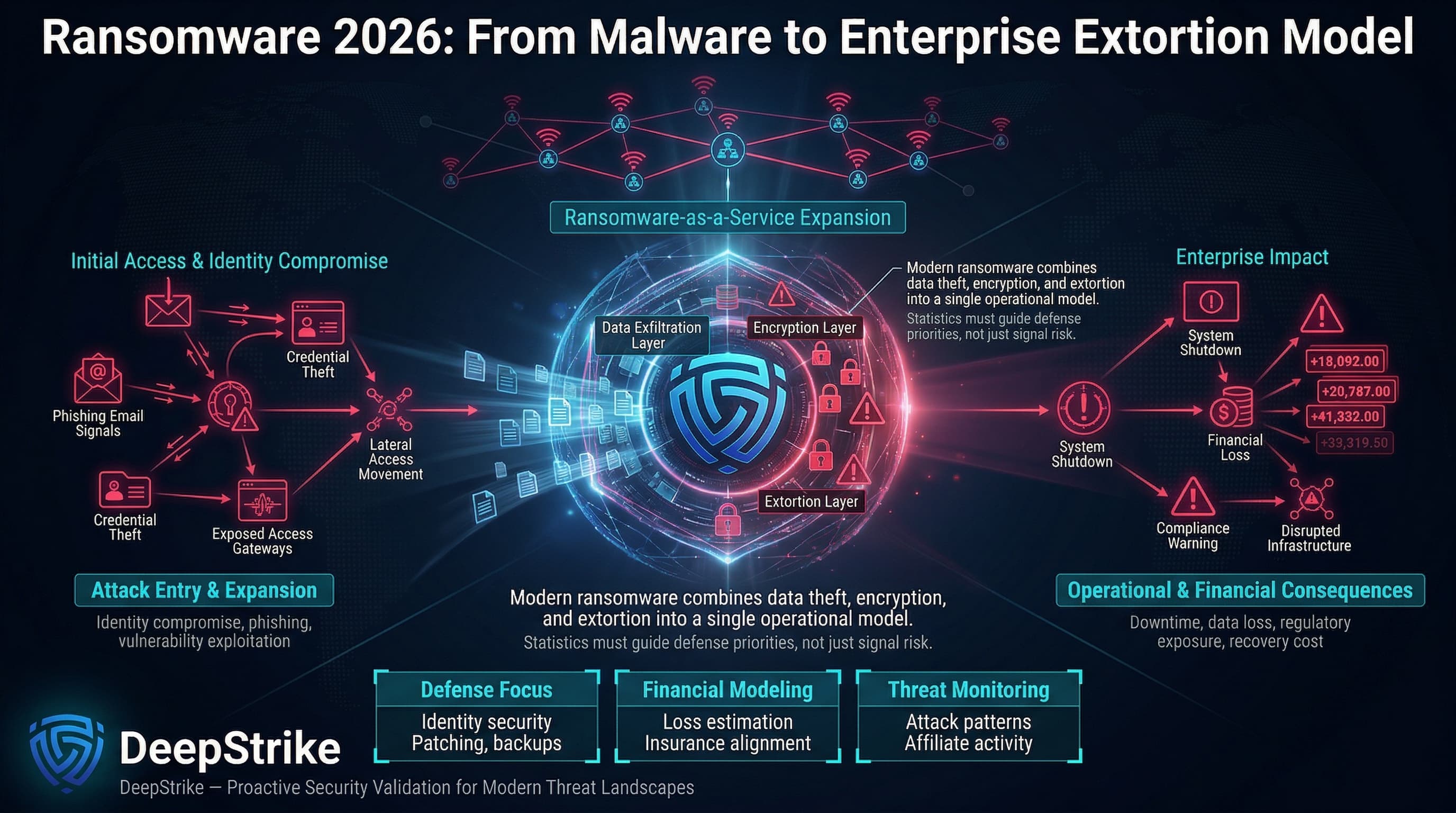
How are ransomware attackers breaching organizations? The attack vector refers to the initial entry method or vulnerability exploited. In 2025, the initial access vectors for ransomware are diversifying, but a few core avenues dominate: exploiting exposed remote services, phishing/social engineering, stolen credentials, and software vulnerabilities. We also see growing instances of insider help and novel cloud specific attacks like living off the cloud tactics. Below is a breakdown of major ransomware entry vectors and their prevalence:
| Initial Attack Vector | % of Incidents est. | Associated Average Incident Cost | Notes |
|---|---|---|---|
| Remote Access Compromise RDP/VPN often via stolen or brute forced credentials | 50% of ransomware attacks | High often $5M+ total cost hits core servers | #1 vector in 2025. Attackers log in using weak or leaked credentials for remote desktop or VPN. In Q3 2025, 50% of attacks began with remote access abuse. Poorly secured RDP and cloud admin consoles are prime targets. Once in, attackers can disable security tools and stage the ransomware widely, causing maximum damage. |
| Phishing / Social Engineering malicious emails or calls tricking users | 18–20% of incidents | Moderate $4M average cost limited initial access, but can escalate | Still common. Phishing was the top vector in 2024, but fell to 18% in Q3 2025 as remote access took lead. Phishing is often used to steal credentials or deliver malware droppers. Business email compromise and help desk scams hackers impersonating IT support also facilitate ransomware deployment. Trend: Attackers are using AI to craft extremely convincing phishing lures and even deepfake calls e.g., the Arup $25M incident via fake CFO video. While fewer attacks start with a simple email than before, social engineering has gotten more sophisticated, sometimes combined with other vectors phish someone to get VPN access. |
| Exploited Software Vulnerability unpatched internet facing apps or devices | 30–32% of attacks | High $5M+ cost full network compromise likely | A leading cause. About one third of ransomware incidents in 2025 started with hackers exploiting a known vulnerability. Examples: VPN/firewall appliances e.g., Ivanti, Fortinet CVEs, file transfer apps e.g., MOVEit zero day, or virtualization servers ESXi exploits for ransomware. These attacks need no user interaction automated scanners find vulnerable systems and launch attacks en masse. When successful, they often yield deep access e.g., domain admin and the ability to deploy ransomware enterprise wide. The notorious Clop attacks using a zero day in 2023 MOVEit exemplify this, and in 2024–25, multiple 0 days in popular business apps were hit. Patching and segmenting critical apps is key, yet many orgs lag especially in regions like Southern Europe where 30–35% of attacks began with vulnerabilities in countries like France, Italy. |
| Stolen Credentials Credential Abuse reused or leaked passwords, token theft | 22–25% of incidents | Moderate $3–5M depending on privilege of account | Widespread. The Verizon DBIR 2025 and IBM X Force note that credential abuse is now the top initial access method across all breaches around 30%. For ransomware specifically, credentials enable many RDP/VPN breaches counted above, so there’s overlap. Infostealer malware has flooded the dark web with passwords 1.8 billion credentials were stolen in H1 2025 alone by malware. Attackers purchase these login dumps and try them against enterprise services credential stuffing. If an employee reused their work VPN password on a hacked site, that could lead to ransomware. Also, cloud breaches often come down to stolen API keys or access tokens. In one cloud ransom technique Codefinger, attackers used leaked AWS keys to encrypt data in S3 buckets without any malware by abusing AWS’s own encryption API. This underscores that credential compromise in the cloud can facilitate malware free ransomware that traditional antivirus won’t catch. |
| Insider Threat Malicious Insider or Bribery | <5% of incidents but rising | Very high potentially $10M+ insiders bypass controls | Emerging concern. While still uncommon, insider assisted ransomware made headlines in 2025. Ransom gangs on forums started offering employees hefty cuts e.g. 15–20% to unleash ransomware internally. In one case, a Medusa ransomware affiliate offered a company’s employee 15% of a $1 million ransom to deploy the malware. There are also instances of disgruntled IT admins turning rogue. Insiders can neutralize security from within disabling EDR agents and running encryption directly on critical servers resulting in full compromise. Because this vector bypasses technical preventative controls, incidents involving insiders can be catastrophic affecting all systems but thankfully they remain a minority. Companies are now advised to treat unsolicited approaches to employees as a real threat vector and bolster insider threat monitoring. |
| Misconfiguration / Exposed Services no auth needed | 10% hard to quantify separately | Moderate High | Opportunistic openings. Some attacks don’t require an exploit or credentials because misconfigurations leave doors wide open. Examples: an S3 bucket left publicly writable could allow insertion of ransomware payload, or a critical system with default passwords. While these are fewer, they do contribute, often classified under hacking or error in breach reports. The cost of such incidents can rival any other because once in, attackers have free reign. Regular penetration testing and configuration audits help close this gap. |
| Supply Chain Attack third party breach | <5% direct ransomware cases higher for data breaches | Variable if widespread, can be huge | Target one to hit many. Supply chain compromises e.g. infecting a software update or abusing a managed service provider have caused ransomware mass deployment in the past case in point: Kaseya VSA incident of 2021. In 2024–25, pure supply chain ransomware events were rarer, but data theft via supply chain like the MOVEit hacks affecting hundreds of orgs was significant. Ransomware groups like Cl0p focus on these. One 2025 trend: attacking IT service providers or cloud platforms to then extort their clients e.g., an attack on a popular enterprise phone system cloud could ransom many customers at once. The cost here can be extreme, potentially thousands of companies hit in one stroke, each with their own costs. |
| Shadow IT / Shadow AI unauthorized apps, AI bots | <5% direct ransomware cases higher for data breaches | +$670k added cost on avg | Indirect risk. While not an entry vector per se, misuse of new technologies by employees can inadvertently open doors. For example, employees using unofficial AI tools might paste sensitive info that attackers later access one stat: 1 in 54 enterprise GenAI prompts included sensitive data and a potential leak. Also, mismanaged personal devices part of Shadow IT accounted for a significant portion of infostealer malware infections that lead to credentials theft. IBM noted 20% of organizations had a breach involving Shadow AI data exposure. These factors increase the likelihood or impact of ransomware but often work in tandem with primary vectors like phishing or stolen creds. |
Sources: Coveware and Sophos data on initial vectors, Coveware Q3 2025 for remote vs phishing stats, IBM X Force/Verizon for credential trends, Vectra/Cardiet for AWS S3 attack details, BBC report on Medusa insider bribe.
Overall, 2025 showed no single dominant attack vector instead, ransomware crews used a mix of methods, often blending them. A campaign might start with a phishing email that steals a VPN password, then use that for remote access. Was that phishing or credential abuse? It’s both. Coveware commented that the distinctions between intrusion types are increasingly blurred in modern ransomware incidents. Attackers exploit whatever weak link they find, whether human or technical.
A few notable tactics/trends deserve highlight:
Understanding these vectors is crucial for defense. The stats above show that focusing solely on one entry point e.g. just phishing training or just patching is insufficient. Ransomware crews will probe for any weakness: an unpatched server, an unwary employee, a misconfigured firewall, or a poorly monitored cloud account. A multilayered defense combining good identity management MFA, password managers, aggressive patching of external systems, robust email security, network segmentation, and monitoring for unusual activity is needed to tackle the top vectors collectively. We will revisit best practices in a later section.
Next, we examine which industries are bearing the brunt of ransomware attacks and how the impacts differ across sectors.

Ransomware is an equal opportunity menace, but not all industries suffer equally. Threat actors often prioritize certain sectors that promise bigger payoffs or are more likely to pay due to the nature of their operations. In 2025, data shows manufacturing, healthcare, education, government, and financial services among the top targets each for different reasons. Let’s dive into key industry stats and trends:
1. Manufacturing No Downtime Tolerated: For the fourth year in a row, manufacturing is the most targeted industry, accounting for about 26% of all ransomware attacks.
2. Healthcare Lives on the Line: Hospitals and healthcare providers continued to be prime ransomware targets, with some surveys indicating over 65% of healthcare organizations were attacked in 2024/25 at least attempted.
3. Education Schools & Universities Soft Targets, High Ransom Demands: The education sector from K 12 school districts to universities has been pummeled by ransomware. Over 60% of education organizations reported attacks in the past year.
4. Financial Services Cash is King, but Data too: Banks, insurance companies, and investment firms are prime targets for obvious reasons they manage money. While financial services typically have stronger cybersecurity than say education, they are still hit. Roughly 64% of financial orgs were targeted in 2024/25.
5. Government To Pay or Not to Pay Legally Can’t: Government agencies local municipalities, state, and federal are consistent ransomware targets. About 68% of government organizations were targeted by ransomware in recent stats, slightly higher incidence than even other sectors.
6. Other sectors: Technology companies especially software providers were targeted for supply chain value. Retail was targeted for customer data and to disrupt e-commerce e.g., a 2025 attack on a major UK retailer knocked out online shopping for weeks, costing an estimated £300M in sales. Energy/Utilities also remain on the hit list, although energy companies often face destructive attacks by nation states disguised as ransomware like the 2023 Colonial Pipeline incident by DarkSide. In 2025 at least half of all ransomware attacks globally were assessed to have hit critical sectors manufacturing, healthcare, energy, underscoring the attackers’ focus on targets with outsized leverage.
Let’s compile a quick comparison table from cross industry data to summarize some key stats:
| Industry | Attack Rate 2024–25 | Ransom Paid Rate | Median Ransom | Avg. Recovery Cost | Notable Impacts |
|---|---|---|---|---|---|
| Healthcare | 67% of orgs targeted | 53% paid | $1.5M | $10.93M 2024, $7M 2025 | Highest breach cost, patient safety risks, $22M paid in one case. |
| Manufacturing | 65% targeted | 62% paid | $1.2M | $8–9M | Highest volume of attacks, huge downtime costs, Jaguar LR £1.9B loss. |
| Education | 63% targeted | 55% paid | $6.6M K 12 demand | $14M | High downtime costs, often under secured, many multi million $ demands. |
| Financial Svcs | 64% targeted | 51% paid | $2.0M | $6M | Holds largest ransoms on average, heavy regulatory fallout. |
| Government | 68% targeted | 34% paid | $6.6M common demand | $9.4M | Often prohibited from paying, longest recovery times, public service disruption. |
| Tech/Telecom | N/A within overall stats | N/A | Varies widely | Varies | Targeted for IP theft and supply chain e.g., IT providers. |
| Retail | N/A approx. 5th 6th place target | N/A | Varies, often mid range | Varies | Customer facing outages cause immediate revenue loss e.g. £300M event. |
Sources: DeepStrike, Varonis, BrightDefense aggregated stats, IBM Cost of Data Breach 2023/2025.
It’s important to note: the attack rate percentages in the table mean e.g. 67% of healthcare orgs experienced at least one ransomware attack attempt in the period not that 67% of all attacks were on healthcare that global share was lower, around 11–15%. Manufacturing was 26% of attacks by share, healthcare 12%, finance 10%, etc..
Key industry insights:
Having looked at industries, next we consider the regional breakdown how ransomware trends vary across geographies and what geopolitical factors are in play.

Ransomware is a global threat, but the intensity and nature of attacks can vary by region due to differences in wealth, cyber readiness, and even geopolitics. Here’s a 2025 regional outlook:
North America U.S. & Canada: Epicenter of Targeting and Costs
Europe: Rising Attacks, Stronger Regulations
Asia Pacific APAC: Growing Target, Lower Payments
Latin America: Emerging Hotspot
Middle East & Africa MEA: Steady Targeting, Infrastructure in Crosshairs
Geopolitical factors: The war in Ukraine blurred lines between state cyber operations and criminal ransomware. Russian patriotic hacker groups like KillNet, NoName057 launched ransomware or pseudo ransomware attacks against Western targets mostly to disrupt rather than for money. Ukraine itself became the 5th most targeted country globally in 2022–2023 though many attacks there were destructive wipers masquerading as ransomware as seen in the Russia Ukraine conflict. NATO countries saw an uptick in ransomware that looked politically motivated, such as attacks timed around political events e.g., a German oil supply firm was hit in 2022 amidst energy tensions. In 2025, one could argue some attacks on defense contractors like the UK Dodd Group hack by Lynx were more about intelligence gathering than extortion, but the use of ransomware tools complicates attribution.
Summary: Ransomware is everywhere, but North America and Europe are at the epicenter in terms of volume and consequences. Attackers are, however, shifting attention to regions like Latin America and Asia where they perceive easier wins. Each region’s legal and cultural context e.g., legality of paying ransom, prevalence of cyber insurance, law enforcement strength influences how attacks play out. For instance, an American company might call the FBI and refuse to pay, whereas a company in another region might quietly pay to make it go away. The net effect globally is that ransomware groups operate without strict borders. A Russian hacker may hit a South African company one week and a Canadian one the next. International cooperation in law enforcement is improving e.g., the FBI, Europol, Interpol working together on multi country busts, but as long as safe havens exist notably Russia for Russian nationals, the threat persists globally.
Next, let’s recount a few major ransomware incidents of 2025 to illustrate how these stats manifest in real world attacks and what lessons they carried.

While statistics give us the big picture, individual breach stories highlight the impact and often drive improvements. Here are a few of the most significant ransomware incidents or campaigns that occurred or came to light in 2025:
1. Jaguar Land Rover September 2025: Most Expensive Cyberattack in UK History In Sept 2025, luxury automaker Jaguar Land Rover JLR suffered a massive ransomware attack that disrupted operations across multiple manufacturing plants in the UK. The attack, claimed by a group calling itself Scattered Lapsus$ Hunters, forced production line stoppages and impacted JLR’s IT systems company wide. It was estimated to cost £1.9 billion in losses, due to halted production and recovery costs. If that figure is accurate, it makes it the costliest cyber incident in UK to date. Notably, the attackers’ identity was not fully confirmed by authorities. The name implies maybe a mix of tactics from the Lapsus$ group which previously did data extortion, and Scattered Spider, but the impact showed how devastating ransomware can be to manufacturing. Lesson: Even companies that invest heavily in security an automaker of this size certainly has significant IT security can fall if attackers get in and the cost can dwarf the ransom demand. It’s unclear if any ransom was paid, likely not, as law enforcement was involved and it was treated as a national security issue given the economic impact.
2. Lynx Breach of Dodd Group UK MoD Contractor October 2025: Espionage meets Ransomware A Russian cybercrime gang called Lynx with suspected Kremlin ties infiltrated Dodd Group, a contractor for the UK Ministry of Defence. They deployed ransomware to mask extensive data theft: around 4TB of sensitive files were stolen, including security procedures and base layouts for RAF and Royal Navy installations, csis. The attackers then leaked hundreds of those documents online when a ransom wasn’t paid, causing a potential security nightmare as even names of security personnel were exposed. The UK MOD had to scramble to assess damage and issue guidance to bases. Lesson: This incident showed how ransomware is used by state aligned actors as part of hybrid warfare. The money may be secondary to the espionage. It also highlighted a supply chain risk: attackers didn’t hack the Ministry directly but a less protected contractor. The use of ransomware encryption was mainly to lock the contractor’s systems and give the hackers leverage/time to exfiltrate data.
3. Kido Daycare Breach September 2025: Ransomware Exposes Children’s Data In London, a network of nurseries Kido International was breached by a new gang calling itself Radiant. They exfiltrated and encrypted data including photographs and personal info of over 8,000 children from 18 nursery schools. The initial access was reportedly via a phishing email that allowed RDP access. The hackers demanded ransom amount undisclosed, likely in the low millions. Public backlash was huge, leaking kids’ photos crosses a line even for criminals. Under pressure, the Radiant group claimed to delete the data without payment after media exposure perhaps they got cold feet given the outrage. Lesson: Some attacks target vulnerable parts of society schools, and while criminals rationalize targeting companies for money, going after a childcare provider created PR blowback. It also underscores how any organization, even a small preschool chain can be swept up in this. From a data protection view, regulators no doubt took interest, even if the gang said they deleted data, those families will live with fear of misuse.
4. Collins Aerospace Airport Outage September 2025: Flights Grounded by Ransomware A ransomware attack hit the vMUSE airport check in system operated by Collins Aerospace a contractor in Sept 2025. This system is used in multiple airports, the ransomware encrypted backend servers, causing check in and boarding systems to go down at Heathrow London, Brussels, and Berlin airports simultaneously. Airlines had to switch to manual check ins, leading to huge lines and hundreds of flight delays. European aviation authorities did not publicly attribute it to a known group, but the assumption is a criminal gang targeted the vendor to extort them, with collateral damage to major transport hubs. Lesson: Ransomware on critical logistic infrastructure can have far reaching consequences beyond one company here one attack impacted three international airports and thousands of passengers. It was a wake up call for the aviation industry to segment and secure operational networks. Also, it showed the risk of single points of failure . One IT service provider serving many clients can be an attractive target to cause widescale impact similar to Kaseya VSA in 2021 affecting hundreds of MSP clients.
5. Medusa vs. BBC Insider Bribery Attempt 2025: Inside Job Thwarted Although not resulting in an actual breach, a notable incident was reported where the Medusa ransomware group directly approached an employee of a BBC subsidiary in Q3 2025. They offered the insider a 15% cut of any ransom if he would deploy their ransomware on his company’s network via his work PC. The employee fortunately reported this to authorities instead. This incident became public and showed the novel tactic of recruiting insiders. Medusa is a known criminal group, this was one of the first documented cases of a ransomware crew attempting to recruit in a major Western company. Lesson: Trust barriers have shifted now companies have to worry about their own staff being recruited by cybercriminals. It also indicated how desperate or creative groups became as external defenses improved, if you can’t phish in, maybe someone will let you in through the front door. This is a major concern for CISOs technical controls mean little if an IT admin intentionally lets the fox into the henhouse.
6. Bonus ALPHV/BlackCat Exit Scam Early 2024: When Ransomware Gangs Rob Their Own This technically happened in early 2024 but its ripple effects were felt into 2025. The infamous ALPHV aka BlackCat ransomware gang faked a shutdown claiming law enforcement seizure only to actually abscond with their affiliates’ escrowed ransom funds an exit scam. They stole possibly tens of millions from their own affiliate hackers. This caused chaos in the underground: trust in Ransomware as a Service took a huge hit. Many affiliates left big RaaS programs like LockBit or ALPHV and either went solo the lone wolves or joined smaller upstarts. This fragmentation likely contributed to the rise of groups like Qilin and the increase in independent actors 15% market share as noted. Lesson: There’s no honor among thieves, even criminals defraud each other. But from the defender angle, sowing distrust in the criminal ecosystem can be a powerful tool some speculate law enforcement may have had a hand in fueling those fears. This incident significantly altered the threat landscape we see in 2025, with more unpredictable, smaller groups in play.
Each of these incidents reinforces aspects of the statistics we discussed: enormous financial impact JLR, data theft blending with ransom Lynx/Dodd, the human element Kido, Medusa/BBC, and the interconnected fallout airports.
One can see how operational disruption has become perhaps the main weapon of ransomware whether it’s halting car production or grounding flights. Even as ransom payments dwindle, attackers find value in the chaos itself either to extort indirectly or to serve a political goal.
Now, let’s look ahead: what new or evolving trends are emerging in the ransomware space, and what do experts expect next?

Ransomware is continuously evolving. Based on 2024–2025 developments, several emerging trends are shaping the future of this threat:
1. Data Only Extortion & Multi Extortion: We’ve touched on this, but it’s accelerating. Many threat actors are moving to extort without encrypting at all stealing data and threatening leaks pure data ransom. In 2025, Coveware noted that in data exfiltration only cases, only 19% of victims paid victims are more willing to gamble that a leak won’t be too damaging or that the criminals won’t follow through. In response, attackers are layering multiple extortion methods: they might encrypt data, steal data, and even harass victims’ customers or employees e.g., calling them or DDoSing their website to pile on pressure. This is often called triple extortion. There’s also a trend of re extortion hitting the same victim again if they paid, or selling the data to other criminals to extort like data of customers for phishing. The statistics showing 80% of those who paid get hit again underscores this. We expect data privacy issues to dominate ransomware discussions because even if you can restore your systems, you can’t restore the confidentiality of stolen data. Organizations will need to invest more in encryption of data at rest and in data loss prevention, not just backup.
2. RaaS Decentralization and Affiliate Chaos: The big RaaS cartels are fractured. LockBit is still active but less dominant, Conti is gone, BlackCat ALPHV self sabotaged, others like REvil vanished after arrests. Rising stars like Qilin, Akira, RansomHub, Fog have gained share, but none have achieved the monopoly of prior gangs. A Coveware stat from Q3 2025 shows Akira at 34% of cases, Qilin 10%, then a long tail including Lone Wolf at 6%. This suggests that no single strain now accounts for more than a third of attacks, a big change from when LockBit or Conti each had 30%+ consistently. What this means: the ransomware scene is more volatile. New variants pop up, old ones rebrand. One trend to watch is open source ransomware. Some source code like Babuk’s leaked online, so any low skilled criminal can build off it. We might see more one off or copycat groups making attribution hard. However, the affiliate model still exists, groups like Royal, BlackBasta operate semi privately with select affiliates. We may also see consolidation in a different way: some affiliates could team up to form their own mini cartels as possibly happened with Scattered Lapsus$ Hunters. For defenders, this means indicators of compromise are all over the place you can’t just profile one or two actor TTPs, you must be ready for a zoo of variants.
3. Cloud Ransomware Attackers target the cloud infrastructure: With more businesses moving data to cloud services, attackers are following. The Codefinger S3 attacks discussed are a prime example of ransomware not by malware but by abusing cloud management. Another scenario: attackers compromise Azure or Google Cloud accounts and tamper with or delete data backups stored there, or spin up expensive resources as secondary extortion cryptojacking ransom where they run crypto miners on your cloud and rack up a huge bill, then demand money to stop. Cloud infrastructure is also a target for Denial of service extortion: e.g., threatening to delete entire cloud environments via admin console if not paid. One emerging tactic is going after SaaS data e.g., ransomware groups have tried to breach cloud file storage like SharePoint/OneDrive or collaboration tools to both steal and encrypt files. A Trend Micro analysis in 2025 broke down S3 attack paths and defenses, highlighting this is a known issue. As organizations improve endpoint security, expect more incidents where the attack never touches the endpoint it’s cloud to cloud. This challenges traditional detection, network defenders need to monitor cloud API logs and behaviors for signs of mass encryption or unusual data lifecycle changes.
4. AI in Both Offense and Defense: Attackers are leveraging AI primarily to enhance social engineering and automation. We’ve seen how deepfakes enabled a huge fraud Arup case. It’s plausible ransomware negotiators might face deepfake voices of their CEO urging them to pay, or employees might get AI generated phone calls that sound exactly like IT support. On the defensive side, companies are deploying AI for anomaly detection which partially contributed to that drop in global breach cost faster detection. IBM’s 2025 report explicitly calls out that organizations using security AI and automation saw on average $1.76M lower breach costs than those that don’t. So it’s an arms race: AI generated phishing vs AI filtering phishing. Another aspect is AI written malware so far, ransomware code is still largely human made, but AI could help optimize malware packing, generate polymorphic code to evade AV, or find vulnerabilities faster. Already, tools like ChatGPT with some coaxing can produce working ransomware code samples OpenAI tries to prevent this, but determined actors find ways. We might see unique ransomware strains created with AI that have novel evasion techniques. On defense, there’s interest in AI that can automatically isolate a suspected ransomware outbreak in progress some EDRs do attempt auto quarantine based on behavioral signs of encryption. AI driven incident response could drastically cut down encryption time window if successful.
5. Focus on Big Game and Critical Infrastructure: Paradoxically, even as many attacks scatter to smaller victims, some groups double down on trying to snag whales. The numbers about average payment going up 500% reflect that if a Fortune 50 is compromised, the payout can be enormous, the $75M example. We expect a continued split: commodity ransomware hitting SMBs for quick wins, and a few elite crews chasing government agencies, large enterprises, or critical infrastructure with custom tailored intrusions. The latter might involve APT like operations: multi month network intrusion, carefully mapped and then ransomware deployed as the coup de grace. Some ransomware groups may effectively become indistinguishable from nation state actors in how they operate. For instance, Black Basta and Lockbit have been known to maintain persistence and do extensive reconnaissance. The worry is critical infrastructure e.g., energy grids or pipelines could be targeted by ransomware crews either purely for profit they think the org will pay big to resume service or as false flag for state actors cause chaos and make it look like crime. The trends already show more incidents in manufacturing, oil & gas, and utilities Industrial Cyber reported half of 2025 attacks hitting critical sectors. So governments are increasingly treating major ransomware as national security events, not just criminal matters.
6. Extended Recovery & Insurance Shifts: Another emerging aspect is how organizations handle recovery. With cyber insurance not reliably covering ransoms, companies are investing in more resilient architectures, immutable backups, isolated recovery environments, etc. A trend is practicing ransomware drills akin to disaster recovery drills. Some stats show improvement: in 2025, 97% of organizations were able to recover their encrypted data eventually, which is encouraging. Also, interestingly, the average recovery costs excluding ransom seem to be dropping. One stat said average recovery cost not counting ransom fell from $3.1M in 2024 to $1.7M in 2025 globally. This could indicate that companies are getting better at recovery, maybe through better backups, segmentation limiting blast radius, etc., or that more smaller incidents cheaper to fix are happening. If true, that’s a promising trend. Cyber insurers, meanwhile, are pushing insureds hard to improve controls some won’t cover you if you don’t have MFA everywhere, for instance. While not a technical trend, the insurance evolution means in future, companies who don’t harden might simply be uninsurable or extremely costly to insure. That will force better baseline practices, which could reduce successful attacks.
7. Legal and Regulatory Responses: Governments are not sitting idle. We see more law enforcement takedowns like the coordinated hit on the QakBot botnet in Aug 2023 which was used by many ransomware groups. New laws are being proposed: some want to ban paying ransoms. This debate might deter attackers if universally enforced, but could also bankrupt victims who can’t recover. The EU’s NIS2 directive and U.S.’s critical infrastructure reporting law are requiring that ransomware incidents be reported within 24 72 hours to authorities, which will improve collective response. There’s also talk of treating ransomware groups as terrorists to use tougher financial sanctions. If such policies become more common, it might crimp the ransom economy by making it outright illegal for companies to transfer funds to these groups. However, enforcement is tricky globally.
To sum up, ransomware is at a crossroads. The past year’s statistics hint that the easy money days might be ending, and threat actors will evolve into either more specialized, high skill operations fewer but more potent attacks or spray attacks augmented by automation lots of noise to snare easy victims. It’s likely we’ll see a bit of both.
Next, let’s interpret these statistics and trends into strategic insights. What do they mean for organizations in practical terms?

The numbers and trends we’ve discussed aren’t just trivia they have real implications for how organizations should strategize their cybersecurity and risk management. Here are the key takeaways and interpretations from the 2025 ransomware stats:
In essence, these statistics collectively mean ransomware is increasingly a manageable risk, not an apocalyptic inevitability, IF you prepare properly. The dramatic drop in payment rates suggests that with solid backups, incident response and a willingness to absorb some pain, companies can survive ransomware hits without funding criminals. That is a huge positive shift compared to a few years ago. However, the flip side is attackers are not giving up, they’re innovating and casting a wider net, which means the threat remains acute.
For a CISO or security team, the data driven approach would be: invest in the areas that statistics show pay off backup and recovery, rapid detection, least privilege, patching critical external systems and be skeptical of areas that don’t have clear impact e.g., buying ransomware decryptor services is moot if you never plan to pay. Use the stats to justify budget: e.g., our industry’s average downtime is 12 days, but if we implement network segmentation and incident response drills, we aim to cut that in half, saving X million according to downtime cost stats.
Finally, let’s translate these insights into concrete best practices.

Given the evolving landscape depicted by these statistics, here are the recommended best practices and steps organizations should take or continue to protect against ransomware in 2025:
1. Implement 3 2 1 Backups with Offline Copies: Ensure you have at least 3 copies of critical data, on 2 different media types, with 1 kept offline or immutable in cloud. Regularly test restoring from backups. Use immutable storage for backups when possible cloud providers offer write once storage options. The goal is that even if attackers get domain admin, they cannot erase your last resort backup. Also keep a generation of backups off site and not continuously connected. Since 97% of those with good backups recovered data, this is your lifeline. Treat backups like gold: secure them with separate credentials, multi factor auth, and network isolation.
2. Strengthen Identity and Access Management Zero Trust: With credential abuse in 30% of incidents, multi factor authentication MFA is a must for all remote access, admin accounts, and especially VPN/RDP connections. Enforce least privilege users should not have more access than necessary, and admin accounts should be tightly controlled use just in time admin privileges if possible. Disable or tightly monitor RDP and other remote protocols, if RDP is needed internally, restrict it by network rules. Implement password policies that mitigate credential stuffing: encourage a password manager and unique passwords, monitor for your company’s credentials in breach dumps. Consider phasing out passwords entirely for critical access in favor of passwordless auth like FIDO2 tokens. Adopt a Zero Trust Network Architecture assume an internal breach will happen and segment networks so that a compromised account in one segment e.g., an employee PC VLAN can’t directly reach crown jewels like servers with sensitive data without going through additional security checks.
3. Patch Critical Vulnerabilities Especially on Edge Devices: As 32% of attacks start via vulnerabilities, maintain a strong vulnerability management program. Prioritize patching externally facing systems: VPN appliances, firewalls apply firmware updates, web servers, and software like email gateways or file sharing apps. Use virtual patching or workarounds if a patch isn’t available. Subscribe to threat intelligence feeds for any signs of ransomware groups exploiting specific CVEs e.g., the Ivanti or Fortinet CVEs used in 2024. If you have appliances that can’t be patched quickly, at least ensure they are not accessible to the whole internet, put them behind a VPN or restrict IP ranges. Also patch internal high value targets domain controllers, etc. since if an attacker gets in, they’ll go after unpatched internal systems to elevate privileges.
4. Enhance Detection and Response Capabilities: Given the importance of catching attackers pre encryption, deploy Endpoint Detection & Response EDR on all servers and endpoints. Use behavior based alerting e.g., alert on mass file encryption activity, or on tools like Mimikatz usage which often precedes ransomware deployment. Configure logging and monitoring of key things: PowerShell logs, Windows Event logs for suspicious logon patterns, and network traffic for large data exfiltration. Invest in a Security Operations Center SOC or managed detection service that can monitor 24/7. Since dwell times can be as short as <2 weeks, you need continuous monitoring to spot night/weekend intrusions. Run regular threat hunting for known indicators of ransomware presence for example, if you find Cobalt Strike beacons or network scans, that could indicate a ransomware affiliate staging. Also, test your IR plan with ransomware tabletop exercises simulate an attack and ensure your team knows how to isolate affected machines quickly, how to communicate, etc. The faster you respond ideally within minutes of detection, the more you limit damage.
5. Segment and Protect Critical Assets: Don’t flat network your entire IT environment. Use network segmentation to separate critical servers like Active Directory, file servers, backups, OT networks from user workstations. Implement strict firewall rules between segments e.g., accounting PCs don’t need to talk to manufacturing control systems. Use application allowlisting on servers if possible so only approved applications run. Ransomware can traverse networks quickly, one attack every 19 seconds globally means automated propagation is common, so having choke points can stop it. Particularly, isolate backup networks and management networks. Also consider endpoint hardening: disable unneeded services, use controlled folder access or similar anti ransomware features on Windows 10/11 that block untrusted processes from modifying files. Remove or turn off old protocols SMBv1, LLMNR, etc. that ransomware often uses for lateral movement.
6. Prepare an Incident Response Plan and Don’t Neglect Communication: Have a detailed IR plan for ransomware: steps to isolate infected systems e.g., network kill switch procedures, contact info for law enforcement and cyber insurer, decision trees for whether to consider payment, etc. Form a ransom crisis team including IT, legal, communications, and executive leadership. Draft templates for internal and external communications you may need to quickly notify customers if data is stolen, per laws. Identify ahead of time an external incident response firm and legal counsel you’d call many companies lose precious hours figuring this out during the incident. Since many attacks occur around holidays or off hours, ensure your plan covers who is on call and how to reach key people 24/7. Test the plan with drills. A good plan can cut downtime significantly because everyone knows their role.
7. Harden Email and Train Users Next Gen Awareness: Since phishing is 18% of initial vectors and often the start of credential theft, invest in advanced email security filtering for phishing, sandboxing attachments, blocking known bad URLs. Implement DMARC to prevent spoofed emails from your domain and encourage partners to do same. Continue user training, but modernize it: include scenarios about deepfake calls, suspicious messages on chat platforms e.g., an unexpected WhatsApp from CEO. Teach users to verify requests out of band. Consider phishing drill exercises to keep employees alert, but also incorporate new forms like simulated phone scams. Encourage a culture where employees won’t be punished for reporting mistakes. You want them to quickly raise hand if they clicked something rather than hide it. Additionally, given the rise of insider bribery, educate staff that if they are approached by someone offering money for access, it’s a criminal act and encourage them to report it immediately, perhaps even reward them for reporting, as that’s as important as reporting phishing.
8. Secure and Monitor Cloud Environments: Treat cloud like an extension of your enterprise network. Use cloud provider tools to set up alerting on unusual activities e.g., in AWS, alert if large S3 lifecycle policy changes or if an IAM key downloads massive data from S3 unexpectedly, which could be cloud ransomware in action. Implement least privilege in cloud IAM roles, do not hardcode credentials in code since Codefinger attacks often start with leaked keys from GitHub. Use encryption and versioning in cloud storage encryption won’t stop ransomware but ensures stolen data can’t be read if the keys are separate. Versioning can help recover overwritten objects unless attacker also deletes versions. Regularly backup cloud data to alternate storage e.g., back up SaaS data to a different cloud or on prem. In short, apply the same backup, detection, and identity rigor to cloud as on prem.
9. Stay Informed and Share Intelligence: Subscribe to threat intel feeds about ransomware from ISACs or certs. If you see a peer organization get hit, assume the same technique may come for you proactively check your exposure to whatever got them e.g., if it was a Citrix vulnerability, have we patched ours?. Sharing info anonymously if needed about attacks with industry groups can help everyone. Government agencies like CISA US or NCSC UK often publish indicators of compromise for major ransomware, integrate those into your detection tools. Build relationships with local FBI or law enforcement cyber units before an incident, so if you need help, you know who to call and they know you.
10. Evaluate Your Cyber Insurance and Policy on Ransom: Re-examine your stance on paying ransoms. Most experts and governments advise against paying and stats support that low success rate, funds crime. Establish ahead of time your organization’s policy some boards formally resolve not to pay, unless perhaps life is at risk. If you do think you might pay in some extreme scenario, at least plan how to do so legally, ensuring not paying sanctioned entities, etc.. But overall, focus on making it so you don’t need to pay, that means strong backups and having data segmented such that even if some is leaked, it’s not your entire crown jewels. Work with your cyber insurer not just for financial risk transfer but as a partner in resilience many insurers now provide risk assessments or monitoring services as part of coverage. Leverage that to improve your posture proactively.
By following these best practices, organizations can drastically reduce both the likelihood of a ransomware incident and the impact if one occurs. The 2025 statistics show that companies who prepare with backups, training, etc. fared far better, many avoided paying and got back on their feet. No defense is 100% foolproof, but like preparing for a natural disaster, doing the drills and fortifying weak points can be the difference between a quick recovery vs. a company ending event.
Finally, let’s address some frequently asked questions FAQs to clarify common doubts about ransomware in 2025.
Ransomware attacks occur with alarming frequency by 2025, on average one attack happens somewhere in the world every few seconds. Industry data suggest roughly 4,000 attacks per day globally. Some projections even say by 2031 it could be one every 2 seconds. For perspective, mid 2025 saw about 520 new victim organizations per month being listed on dark web leak sites, double the rate of 2024. So, at an organization scale, roughly one company is falling victim every 90 minutes on average. It’s a constant barrage.
The number of attacks is on the rise, but profitability per attack is declining. Attack volumes in 2025 hit record highs 34% more incidents YoY, but fewer victims are paying ransoms than ever payment rates 25–30% vs 85% a few years ago. Total criminal revenue from ransoms actually dropped 35% from 2023 to 2024, and likely further in 2025. This suggests ransomware’s business model is under pressure attackers are working harder more attacks for less return. Some groups have responded by going after bigger fish hence some huge payouts skewing averages, others are doing high volume attacks on softer targets. So ransomware isn’t going away, but the easy money era is fading, forcing evolutions in tactics.
The average ransom payment in 2024 was around $2.0M inflated by a few big payments, but by late 2024, the average of typical cases was closer to $500k and the median most common was around $100–$140k. In Q3 2025 Coveware reported an average of $376k and median $140k. So, most payments are in the six figure range now, not millions. As for paying: The consensus from law enforcement and experts is not to pay if at all possible. The stats back this paying often doesn’t fully resolve the issue only 46% got their data back properly even after paying, and 80% get hit again. Plus, paying funds further criminal activity. Exceptions might be if lives are literally on the line e.g., a hospital with no backups and patients at risk. But even then, it’s a gamble. Building the capability to restore without paying is the best strategy.
It varies by preparedness and sector, but on average in 2025, organizations experienced about 24 days of downtime. Government entities had longer outages, averaging 27-28 days. Some well prepared companies have recovered in under a week 35% managed to be back in a week or less in 2024, though that dropped to 35% from 47% prior year. Conversely, about one third took more than a month to fully recover in 2024. Recovery includes not just getting systems decrypted/restored, but ensuring they are clean, rebuilding networks, etc. With good incident response and backups, many are able to resume core operations in a few days, but full restoration of all services can take weeks. And aftermath like investigations and strengthening security can stretch months. The key determinant is the quality of disaster recovery planning. Those who had plans and backups bounce back far faster.
The top initial attack vectors are phishing/social engineering, compromised remote access RDP/VPN via stolen credentials, and exploitation of vulnerabilities in internet facing systems. Roughly 50% of incidents involve hackers using stolen or weak credentials to log in via RDP or VPN. About 18-20% start with a phishing email that tricks a user often to steal credentials or run malware. Around 30% begin with attackers exploiting an unpatched server or firewall device to gain entry. Other less common vectors include malicious USB drives, insider help, or supply chain compromises. In short, weak credentials and unpatched systems are big openings, and people still fall for targeted phishing, so those remain prime paths for ransomware actors.
Yes, ransomware actors prioritize industries where attacks can cause maximum disruption or yield valuable data. Currently, Manufacturing is the #1 targeted sector 26% of attacks, due to high downtime costs. Healthcare is also heavily hit attack rate 67% because of life critical urgency and sensitive data. Education and Government are frequently targeted as well they often have weaker security and high impact if shut down. Financial services and critical infrastructure energy, transportation are targeted too, though their defenses are usually stronger. Essentially, any sector with low tolerance for downtime production lines, hospitals, pipelines or high value data PII, intellectual property is in crosshairs. Recent data shows manufacturing, government, and healthcare leading in attack counts, with finance, education, and tech not far behind. Even sectors like real estate and professional services see attacks e.g., law firms for their client data. No sector is immune, but the tactics might differ e.g., attackers threaten data leaks for a law firm high confidentiality need whereas they threaten operational paralysis for a factory.
Several new tactics emerged: data theft without encryption pure extortion has become common so even if you have backups, attackers might try to extort over stolen data. Double extortion encrypt + leak threats is the norm now, and even triple extortion add DDoS attacks or harassment. Another is the move to cloud targets e.g., ransomware actors abusing cloud admin tools to encrypt or delete cloud data as in the AWS S3 Codefinger scenario. Also, recruiting insiders is a worrying trend bribing employees to deploy ransomware internally. On the social engineering front, deepfake voice/video phishing is a new threat attackers using AI to impersonate executives to subvert verification. One group stole $25M that way. We’re also seeing more multi stage attacks where ransomware is the final payload after a long stealth intrusion behaving more like nation state APTs. And on the malware side, ransomware targeting Linux/VMware ESXi servers is big attackers hit virtual infrastructure to encrypt many servers at once. Lastly, some gangs are experimenting with wiping or damaging data if victims don’t pay quickly punitive ransomware. Staying aware of these emerging tactics is key, as they require adjustments in defense like training staff about deepfakes, or monitoring for insider threats.
With the FAQs covered, we will conclude with a short wrap up of the state of ransomware in 2025 and key points to remember.
The Global Ransomware Threat in 2025 is a story of extremes. On one hand, we’ve seen an unprecedented surge in attack volume automated campaigns hammering away at organizations every minute, new groups popping up in the wake of cartel collapses, and extortion attempts hitting schools, hospitals, factories, and governments alike. The threat has evolved beyond just locking up files for money, it now involves stealing sensitive data, sabotaging cloud resources, and even enlisting insiders, all to squeeze value out of victims. The stats show ransomware actors have effectively industrialized their operations, with projections of 11,000 attacks per day indicating a near constant global assault.
On the other hand, defenders have mounted an effective response that is beginning to turn the tide on profitability. Companies fortified by immutable backups, incident response plans, and perhaps a dose of hard earned cynicism no longer trusting criminals to honor their word are increasingly calling the bluff of ransomware gangs. Payment rates collapsing to 25% is a testament to this resilience. A few years ago, the idea that three quarters of victims would refuse to pay was unthinkable. This shift, coupled with aggressive law enforcement actions, has forced a market correction in the cybercrime economy. Total ransom revenues are down, some notorious gangs are dismantled, and affiliates are scrambling.
Yet, as the data and trends illustrate, the battle is far from over. Instead, we are entering a new phase. Ransomware attacks have become a high volume, high complexity hazard more like a persistent background threat that every organization must anticipate, much like one designs buildings in California to withstand earthquakes. The adversaries are adapting: when encryption stopped yielding payouts, they pivoted to extortion via data theft, when perimeter defenses improved, they looked to cloud and insiders, when big game hunting became harder, they carpet bombed smaller prey.
For organizations, the overarching lesson from 2024–2025 is one of cautious optimism: you can withstand ransomware without paying if you prepare well, as evidenced by the 97% recovery stat and cases of successful restores. However, preparation is non-negotiable. Ransomware is testing every link in the chain technical, human, procedural. A weakness anywhere an unpatched server, an inattentive employee, an offline backup plan that was never tested can be exploited.
Going forward, expect ransomware to further morph. We may see more synergy with nation state actors, more attacks aimed at critical infrastructure as geopolitics heat up, and possibly the advent of ransomware powered by AI finding new ways to evade defenses. Conversely, we’ll also see improved international cooperation to counter it, better baseline security in organizations due to insurance and regulatory pressure, and continued sharing of decryption keys by authorities as happened with the NoMoreRansom project helping many victims.
In summary, the statistics of 2025 paint a picture of a threat that is simultaneously peaking and transforming. The frequency and aggressiveness of ransomware have never been greater, but neither has our collective capability to counter it. By learning from the data which weak points are exploited, what defenses are effective, how attackers behave when cornered we can strategize the next moves. Ransomware may never fully disappear as long as there is money to be made, but if current trends continue, we could witness its evolution from a rampant cash cow to a more contained, if persistent, hazard. Organizations that invest in resilience, practice good cyber hygiene, and stay informed will tip the balance further, making it increasingly difficult for ransomware gangs to terrorize the digital economy as they have in recent years. The war is not won, but the tide is turning and the numbers tell the story.
Sources: This report was compiled with data from numerous cybersecurity reports and surveys including Coveware quarterly ransomware trends, the IBM 2025 Cost of a Data Breach report, the Verizon Data Breach Investigations Report, industry analyses by Sophos, Check Point Research, DeepStrike research, BrightDefense statistics compilation, and incident chronicles from news sources. These sources collectively provide a factual basis for the trends and figures discussed.
About the Author
Mohammed Khalil is a Cybersecurity Architect at DeepStrike, specializing in advanced penetration testing and offensive security operations. With certifications including CISSP, OSCP, and OSWE, he has led numerous red team engagements for Fortune 500 companies, focusing on cloud security, application vulnerabilities, and adversary emulation. His work involves dissecting complex attack chains and developing resilient defense strategies for clients in the finance, healthcare, and technology sectors.

Stay secure with DeepStrike penetration testing services. Reach out for a quote or customized technical proposal today
Contact Us